.png)


By Robin Simon, President, Harpoon Capital · About · LinkedIn · Author, The Book on DSCR Loans (Available on Amazon)

The best Kansas markets for real estate investors in 2027 offer entry points from about $190,000 in Topeka and strong short-term rental potential, led by an AirDNA score of 97 in Wichita and $39,580 in average annual STR revenue in the Kansas City market. Kansas is one of the more affordable states in the country for rental investors, running from the aviation city of Wichita and the state capital in Topeka to the university towns of Lawrence and Manhattan, the Kansas side of the Kansas City metro and the small towns of the western prairie. Median sale prices in the five larger cities run up to about $333,000 in Lawrence (Redfin, 2026), and the “rent-to-price ratios” on BiggerPockets sit between roughly 0.36% and 0.53% a month. Investors buying here typically finance with Kansas DSCR loans, which are qualified primarily based on the property rather than the borrower's personal income, and the “DSCR Ratio” on a single-family rental in Wichita or Topeka often clears 1.00x with room to spare.
This breakdown uses market data collected as of October 2026, the most current snapshot available heading into next year's buying season. If you're evaluating a purchase in the final months of 2026, keep in mind that your first full year of rental income, appreciation, or short-term rental revenue lands in 2027 regardless of when you close. A deal you underwrite today is already a 2027 investing decision, just one made with the freshest data available right now.
Kansas has no statewide short-term rental license (a state lodging license applies only to properties hosting seven or more guests in three or more sleeping rooms), but stays carry the state's 6.5% sales tax plus local sales tax and, in most cities, a local transient guest tax, and since July 2021 booking platforms such as Airbnb with more than $100,000 in Kansas sales must collect both (Kansas Department of Revenue). The local rules vary a great deal: Lawrence bars non-owner-occupied STRs in its single-family zones, Kansas City, Kansas requires a special use permit for them and limits them to one per block, and Wichita and Topeka allow them with a city license or administrative permit. In practice, i.e. for an investor buying a nightly rental, the zoning at a specific address typically matters more than the market averages below.
Redfin's “Compete Scores” run from 83 in Topeka and 81 in Kansas City, Kansas (“very competitive”) down to 41 in Lawrence (“somewhat competitive”), and homes in Topeka and Wichita are selling in a median of 12 and 20 days. Redfin's search data, which tracks home searches rather than actual moves, shows Oklahoma City (a net 72) and Denver (40) buyers looking hardest at Wichita, while the tables for Lawrence and Kansas City, Kansas repeat the Kansas City metro table and are left out.
Below, we break down six Kansas markets worth watching, using current data from Zillow, Redfin, BiggerPockets, and AirDNA.
Note: Home price appreciation and rent-growth figures below come from Redfin's median sale price data, Zillow's Home Value Index and BiggerPockets' Market Finder, which use different methodologies and can vary from one another, so treat them as directional. Kansas City, Kansas and Ness City do not have BiggerPockets pages of their own, so Zillow's figures are used for them. Several of Redfin's Kansas pages show figures that look unreliable (e.g. price-per-square-foot swings of 30% or more and near-zero shares of homes sold over list in Topeka and Manhattan), so those figures are left out, and Ness City's Redfin page rests on only two sales. AirDNA's Wichita and Kansas City figures cover each full metro market (the Kansas City market is mostly on the Missouri side), while Topeka, Lawrence, Manhattan and Ness City are submarkets of its Kansas Area market.
Air Capital affordability

Wichita is the state's largest city and calls itself the Air Capital of the World, with a tenant base built on aircraft manufacturing and healthcare, the deepest sales market in the article and an STR market where occupancy holds up year-round. It is a classic cash-flow city, i.e. prices that are low relative to rents and a large pool of renters.
BiggerPockets points to aerospace, healthcare and manufacturing, with Spirit AeroSystems and Via Christi Health among the major employers, and Redfin search data (April to June 2026) shows Oklahoma City (a net 72) and Denver (40) buyers looking at Wichita more than any other metros. However, First Street data on Redfin rates the flood risk as “major” (12% of properties) and the heat risk as “major” as well. On the STR side, the City of Wichita approved rules in September 2023 that require an annual license for every STR unit ($225 a year) and $250,000 in liability insurance per unit, with inspections based on complaints. Non-owner-occupied STRs in residential districts also need an administrative permit, and a neighbor protest can send the application to a conditional use hearing, while STRs are not allowed in the residential zones of unincorporated Sedgwick County. Stays carry a 6% city transient guest tax on top of sales tax.
The Wichita market posts an AirDNA score of 97/100, with Rental Demand (98), Investability (96) and Seasonality (90) leading, and Revenue Growth (68) and Regulation (60) the “soft spots.” Annual revenue per listing averages $26,830 (up 4.4% year-over-year), with an average daily rate of $120.65 (up 3.9%) and occupancy of 67% (up 2.8%), the highest on the list. Total active listings sit at 930, up 17.6%, and the Wichita (score 97, $25K a year at 68% occupancy) and Derby (96, $23K at 58%) submarkets lead the area.
Financing note: Harpoon Capital offers industry leading DSCR Loans for properties in Wichita and all throughout the market area. Check out our full DSCR Loans Program here, or if you want a quote on what terms look like today, fill out this two-minute form!
Sources: Redfin Housing Market↗ · BiggerPockets Market Finder↗ · KWCH: Wichita STR Rules↗ · AirDNA Market Data↗
Investor Takeaway: Wichita offers the deepest market, a near-perfect STR score and the steadiest STR occupancy in Kansas, at prices that leave room for cash flow. Investors should generally buy single-family homes and small multifamily for the long-term rent, license any STR with the city before booking, and check the flood map for each address.
Capital-city cash flow on the Kaw

Topeka is the state capital on the Kansas River, with a tenant base anchored by state government and Stormont Vail Health, the best BiggerPockets rent ratio and lowest prices in the article and the fastest-moving sales market on this list. It is a slow-growth city, which is often exactly what a cash-flow landlord wants.
BiggerPockets points to government, healthcare and education, with the State of Kansas and Stormont Vail Health among the major employers, which gives Topeka one of the steadier tenant bases in the state. However, First Street data on Redfin rates the flood risk as “moderate” (12% of properties) and the heat risk as “major.” On the STR side, BNBCalc reports that Topeka sorts STRs into three types, with owner-occupied (Type I) and non-owner-occupied (Type II) rentals of up to five bedrooms allowed with an administrative permit (good for two years) in most residential and commercial districts, homes with six or more bedrooms (Type III) needing a conditional use permit in designated districts, and Type II and III rentals established after March 1, 2021 in residential and light-industrial districts kept 500 feet apart. The city's transient guest tax is 7%, rising to 8.5% on January 1, 2027.
The Topeka submarket posts an AirDNA score of 90/100, with Investability (97), Rental Demand (96) and Seasonality (86) leading, and Revenue Growth (54) and Regulation (50) the “soft spots.” Annual revenue per listing averages $24,610 (up 4.4% year-over-year), with an average daily rate of $123.22 (up 9.2%) and occupancy of 60% (down 3.9%). Total active listings sit at 161, up 7.3%, and lake-view homes carry the top end, such as a five-bedroom home with a lake view ($66K a year at 49% occupancy).
Financing note: Harpoon Capital offers industry leading DSCR Loans for properties in Topeka and all throughout the market area. Check out our full DSCR Loans Program here, or if you want a quote on what terms look like today, fill out this two-minute form!
Sources: Redfin Housing Market↗ · BiggerPockets Market Finder↗ · BNBCalc Topeka STR Guide↗ · AirDNA Market Data↗
Investor Takeaway: Topeka offers the best BiggerPockets rent ratio, the lowest prices and the fastest-selling homes in Kansas, with a clear permit path for STRs. Investors should generally move quickly on well-priced homes, buy for the long-term rent, and budget for the higher transient guest tax in 2027 before underwriting nightly stays.
Jayhawk demand, owner-first rules
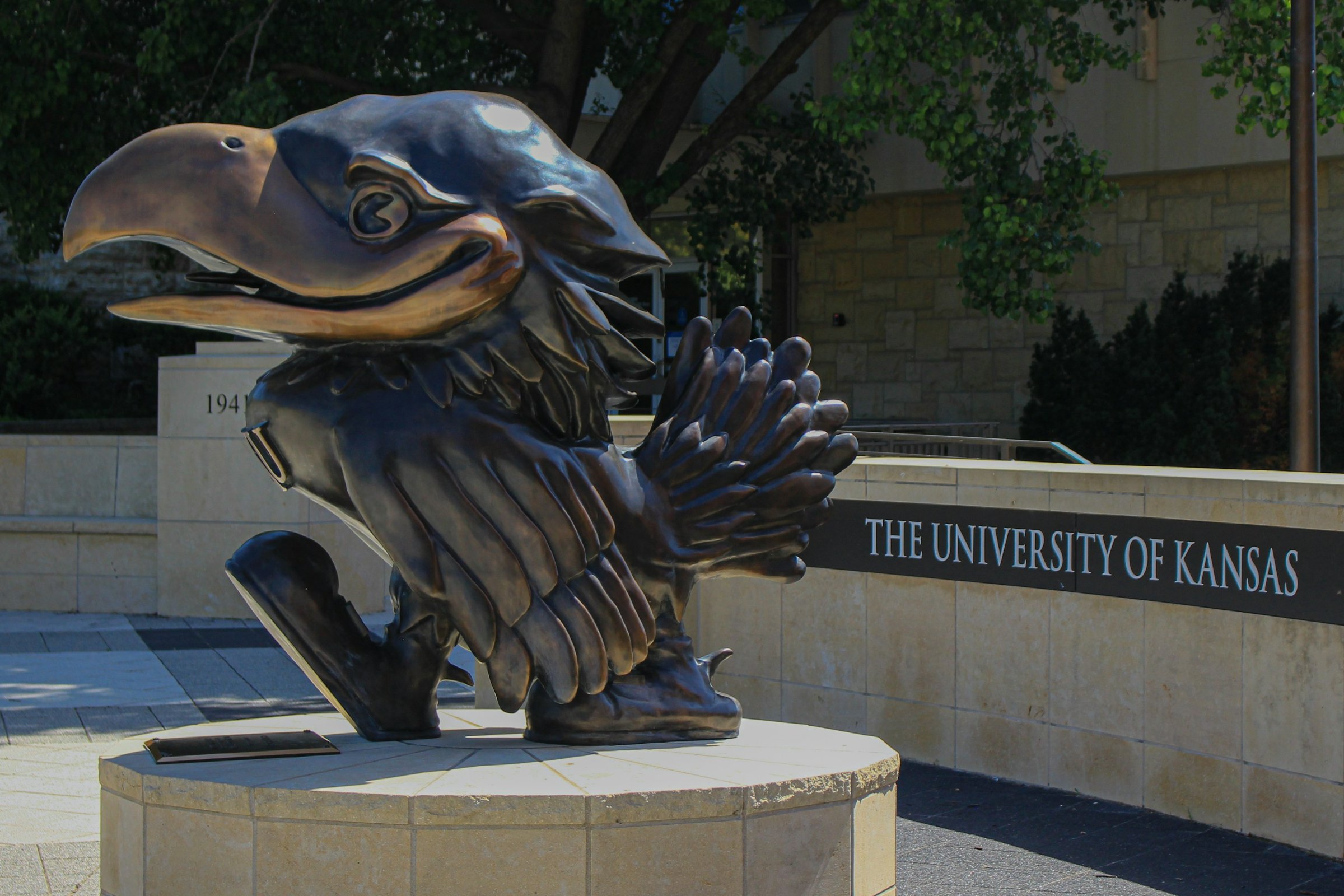
Lawrence is the home of the University of Kansas, about 40 miles west of Kansas City, with the highest prices and rents in the article, the fastest BiggerPockets appreciation and an STR rulebook that keeps investors out of its single-family neighborhoods. It is a university town first, with a sales market that has cooled into one of the more buyer-friendly on this list.
BiggerPockets points to education, healthcare, manufacturing and retail, with the University of Kansas and Lawrence Memorial Hospital among the major employers. However, First Street data on Redfin rates the heat risk as “major” and finds some wildfire risk at 91% of properties. On the STR side, BNBCalc reports that every STR needs a city license ($17 a year, issued after an inspection that costs $50 and repeats every two years), that no one may hold more than three licenses, and that non-owner-occupied STRs are not allowed in the single-family (R-1 and R-2, formerly RS) and planned-development districts, although they are allowed with a license in multifamily, mixed-use and most commercial zones. The city temporarily lifted the license cap and the zoning limit around the World Cup (May 25 to July 26, 2026), but both are back in force, and stays carry an 8% transient guest tax on top of sales tax.
The Lawrence submarket posts an AirDNA score of 62/100, the lowest in the article, with Rental Demand (84) and Seasonality (78) leading, Investability (71) next, and Regulation (53) and Revenue Growth (47) the “soft spots.” Annual revenue per listing averages $30,069 (up 0.6% year-over-year), with an average daily rate of $178.55 (up 9.6%) and occupancy of 51% (down 8.4%), the steepest occupancy drop on the list. Total active listings sit at 436, up 23.5%, and event-style homes carry the top end, such as an entertainment-focused retreat ($177K a year at 50% occupancy).
Financing note: Harpoon Capital offers industry leading DSCR Loans for properties in Lawrence and all throughout the market area. Check out our full DSCR Loans Program here, or if you want a quote on what terms look like today, fill out this two-minute form!
Sources: Redfin Housing Market↗ · BiggerPockets Market Finder↗ · BNBCalc Lawrence STR Guide↗ · AirDNA Market Data↗
Investor Takeaway: Lawrence offers the fastest appreciation, rent growth and population growth in Kansas, on the thinnest rent ratio in the article and with STRs in single-family zones limited to owner-occupants. Investors should generally buy for the long-term rent near campus, look at multifamily or mixed-use zones for any STR plan, and use the slower sales market to negotiate.
Thinking About One of These Markets?
Get a same-day DSCR Loan quote for a specific deal, or browse the full Harpoon Capital DSCR Loan Program to see rates, LTV, and qualification details before you keep reading.
Little Apple, steady yields
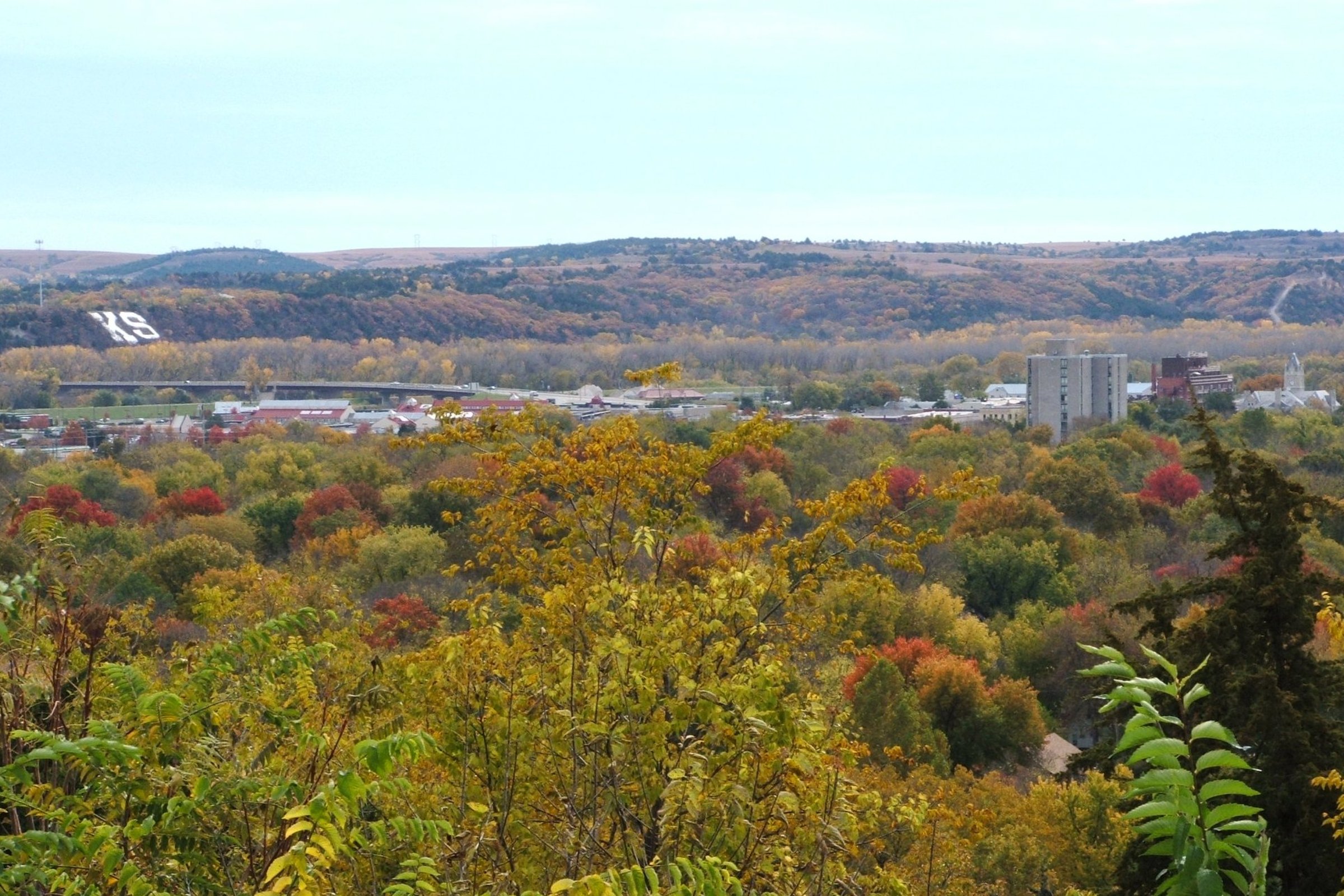
Photo: Kzollman, CC BY-SA 3.0 (cropped)
Manhattan, nicknamed the Little Apple, is the home of Kansas State University in the Flint Hills, next to Fort Riley and Tuttle Creek Lake, with a solid rent ratio, a near-perfect AirDNA score and STR revenue that grew faster than anywhere else on this list outside Kansas City. Between the university, the Army post and the lake, demand comes from more than one direction!
BiggerPockets points to education, healthcare and technology, with Kansas State University and Ascension Via Christi Hospital among the major employers, and Fort Riley nearby adds a steady stream of military households. However, rents dipped over the past year, and First Street data on Redfin rates the flood risk as “moderate,” with 22% of properties exposed, the highest share in the article. On the STR side, Manhattan has not adopted a short-term rental ordinance (a licensing proposal reported by the Manhattan Mercury has not been voted on), so stays carry the city's 7.5% transient guest tax on top of sales tax, and investors should still check zoning for a specific address.
The Manhattan submarket posts an AirDNA score of 96/100, with Revenue Growth (93), Seasonality (88) and Rental Demand (87) leading, and Investability (70) and Regulation (63) the “soft spots.” Annual revenue per listing averages $29,201 (up 11.8% year-over-year), with an average daily rate of $161.88 (up 0.6%) and occupancy of 54% (up 10.6%), the biggest occupancy gain on the list. Total active listings sit at 428, up 5.9%, and homes with pools or historic character carry the top end, such as a five-bedroom home with a pool ($143K a year at 56% occupancy).
Financing note: Harpoon Capital offers industry leading DSCR Loans for properties in Manhattan and all throughout the market area. Check out our full DSCR Loans Program here, or if you want a quote on what terms look like today, fill out this two-minute form!
Sources: Redfin Housing Market↗ · BiggerPockets Market Finder↗ · Manhattan Mercury: STR Proposal↗ · AirDNA Market Data↗
Investor Takeaway: Manhattan offers university, military and lake demand, a solid rent ratio and a near-perfect STR score, with rents that dipped over the past year. Investors should generally buy for the long-term rent near campus or Fort Riley, watch for any future STR ordinance, and check the flood map for each address.
Wyandotte value next to the metro core

Photo: Tim Kiser, CC BY-SA 4.0 (cropped)
Kansas City, Kansas is the Kansas side of the region's urban core, governed together with Wyandotte County as the Unified Government, with a competitive sales market, rising prices and access to an STR market that spans the whole Kansas City metro. It is the most urban market on this list, with STR rules to match.
The case for Kansas City, Kansas rests on its location in the middle of a large metro, with easy access to downtown Kansas City, Missouri. However, First Street data on Redfin rates the flood risk as “moderate” (7% of properties), and a third of listings saw price cuts. On the STR side, the Unified Government requires a Special Use Permit for non-owner-occupied STRs and limits them to one per block under its zoning code (BNBCalc), and stays carry a 10% transient guest tax (since April 1, 2026) on top of sales tax.
The Kansas City market, which covers the whole metro on both sides of the state line, posts an AirDNA score of 74/100, with Rental Demand (89), Investability (88) and Seasonality (87) leading, and Regulation (49) and Revenue Growth (45) the “soft spots.” Annual revenue per listing averages $39,580 (up 15.2% year-over-year), the highest on the list, with an average daily rate of $201.09 (up 24.9%) and occupancy of 61% (down 4.8%). Total active listings sit at 4,036, up 32.8%, and the Lee's Summit (score 97, $39K a year) and Liberty (93, $40K) submarkets on the Missouri side lead the area. Kansas City hosted six 2026 World Cup matches, including a quarterfinal, so the jump in rates and listings may include a one-time boost that will not repeat.
Financing note: Harpoon Capital offers industry leading DSCR Loans for properties in Kansas City, Kansas and all throughout the market area. Check out our full DSCR Loans Program here, or if you want a quote on what terms look like today, fill out this two-minute form!
Sources: Zillow Home Value Index↗ · Redfin Housing Market↗ · BNBCalc Kansas City, KS STR Guide↗ · AirDNA Market Data↗
Investor Takeaway: Kansas City, Kansas offers a competitive, rising market and the best Zillow rent ratio in the article, with STR rules that make investor-owned nightly rentals a special-use process. Investors should generally buy for the long-term rent, underwrite STRs on a year without the World Cup in it, and confirm the one-per-block limit before buying.
Prairie pricing and a near-perfect score

Ness City is a small county seat in western Kansas, known for the Ness County Bank building, nicknamed the “Skyscraper of the Plains,” with very low prices and an STR market that is tiny but scores higher than any other on this list. It is not a classic vacation town – the area is better known for farming than tourism – but the numbers make a case for it.
The case for Ness City rests on price and a steady trickle of guests across a wide rural area, with AirDNA's submarket stretching east to towns such as Larned. However, First Street data on Redfin rates the heat risk as “major” for every property and finds some wildfire risk across the whole town. On the STR side, Ness City has no short-term rental ordinance, so stays carry the state and local sales tax and the city's 5% transient guest tax, and investors should confirm local zoning before buying.
The Ness City submarket posts an AirDNA score of 99/100, the highest in the article, with Investability (100), Revenue Growth (92) and Rental Demand (87) leading, and Seasonality (79) and Regulation (74) the “soft spots.” Annual revenue per listing averages $17,650 (up 9.4% year-over-year), the lowest on the list, with an average daily rate of $96.50 (up 10.2%) and occupancy of 54% (down 1.9%). Total active listings sit at only 34, up 25.9%, and the top performers are modest homes and small inns, such as a two-bedroom unit in Larned ($30K a year at 78% occupancy). Note that in a field this small, a handful of listings can move the averages, so the score is a signal rather than a forecast.
Financing note: Ness City deals often qualify on TTM actuals or STR revenue projections given the seasonal revenue base, and Harpoon Capital offers industry leading DSCR Loans for properties throughout the market area. Check out our full DSCR Loans Program here, or if you want a quote on what terms look like today, fill out this two-minute form!
Sources: Zillow Home Value Index↗ · Redfin Housing Market↗ · AirDNA Market Data↗
Investor Takeaway: Ness City offers the highest STR score in Kansas at very low prices, on a field of only 34 listings and the lowest revenue on the list. Investors should generally underwrite on trailing twelve-month actuals, keep the purchase price low enough that modest revenue still covers the payment, and treat the score as a sign of thin competition rather than high demand.
| MARKET | AIRDNA SCORE |
ANNUAL REVENUE |
AVG. DAILY RATE |
OCCUPANCY | YOY LISTING GROWTH |
|---|---|---|---|---|---|
| Ness City | 99 | $17,650 (+9.4%) |
$96.50 (+10.2%) |
54% (-1.9%) | +25.9% (34 listings) |
| Wichita | 97 | $26,830 (+4.4%) |
$120.65 (+3.9%) |
67% (+2.8%) | +17.6% (930 listings) |
| Manhattan | 96 | $29,201 (+11.8%) |
$161.88 (+0.6%) |
54% (+10.6%) | +5.9% (428 listings) |
| Topeka | 90 | $24,610 (+4.4%) |
$123.22 (+9.2%) |
60% (-3.9%) | +7.3% (161 listings) |
| Kansas City (metro) | 74 | $39,580 (+15.2%) |
$201.09 (+24.9%) |
61% (-4.8%) | +32.8% (4,036 listings) |
| Lawrence | 62 | $30,069 (+0.6%) |
$178.55 (+9.6%) |
51% (-8.4%) | +23.5% (436 listings) |
Source: AirDNA, current as of 2026. Scores and figures reflect each market or submarket as defined by AirDNA and may not correspond 1:1 with city or county boundaries. As of October 2026
A few patterns stand out. Kansas City and Lawrence added listings fastest (33% and 24%) and both saw occupancy fall, i.e. new supply is outrunning demand in the two markets nearest Kansas City. Wichita, Topeka and Manhattan score 90 or higher on modest nightly rates and occupancy near or above 54%, which is what a steady, cash-flow STR market looks like on a scorecard. Additionally, Manhattan was the only market where occupancy rose sharply (10.6%), while nightly rates rose in every market on the list.
Kansas's real estate landscape offers a strategy for nearly every type of investor:
Market-level data is a starting point, not a substitute for underwriting the specific property, neighborhood and rental strategy in front of you. Kansas taxes short-term stays through state and local sales tax and local transient guest taxes and leaves the STR rulebook to its cities, which range from Topeka's administrative permit to Lawrence's owner-occupancy rule and Kansas City, Kansas's public-hearing process, so investors should confirm what is allowed at a specific address before they close.
If you are ready to invest in one of these markets, start with our Kansas DSCR loans page.
Sources: Redfin housing market data, BiggerPockets Market Finder, AirDNA market and submarket data (airdna.co), Airbnb Kansas tax collection, Kansas Department of Revenue, Zillow Home Value Index, city codes for Wichita, Topeka, Lawrence and Kansas City, Kansas, KWCH, Manhattan Mercury, and BNBCalc STR guides for Topeka, Lawrence and Kansas City, Kansas. Data collected as of October 2026, ahead of the 2027 investing season.
Not at the state level, although properties hosting seven or more guests in three or more sleeping rooms need a state lodging license. Stays carry the 6.5% state sales tax, local sales tax and, in most cities, a local transient guest tax, which large booking platforms must collect. Most of the cities on this list require their own license or permit: Wichita requires a $225 annual city license, Topeka an administrative permit, Lawrence a $17 annual license after an inspection, and Kansas City, Kansas a special use permit for investor-owned rentals, while Manhattan has no STR ordinance.
No. Out-of-state and first-time investors can buy investment property in Kansas without any license. A DSCR loan qualifies you primarily based on the property itself rather than your personal income or professional credentials, which is part of why it's such a common financing tool for out-of-state buyers.
A DSCR (Debt Service Coverage Ratio) loan qualifies a property primarily based on the property (its rent, value and location) relative to its mortgage payment, rather than the borrower's personal income or tax returns. If the property's projected or actual rent covers the mortgage payment (a DSCR of 1.00x or higher), it's generally easier to qualify, and Harpoon Capital also offers options for deals below 1.00x.
It depends on the zone. Lawrence bars non-owner-occupied STRs in its single-family and planned-development districts but allows them with a license in multifamily, mixed-use and most commercial zones. Kansas City, Kansas allows them only with a Special Use Permit and limits them to one per block, so investors should check both the zoning and the block before buying.
Harpoon Capital's DSCR loan program allows as little as 15% down on qualifying purchases, up to 85% LTV, with cash-out refinances available up to 80% LTV. Exact terms depend on the property, credit profile, and DSCR ratio. Fill out our DSCR Loan Application to see specific numbers for your deal.
Ready to Run the Numbers on a Kansas Deal?
Whether you're eyeing Topeka's rent ratio or STR stays in Wichita, get a same-day rate and terms with our two-minute DSCR quote form, or explore the full Kansas DSCR Loans Program to see how we qualify the property, not just the borrower.
This article is for informational purposes only and does not constitute investment, legal, or financial advice. Harpoon Capital encourages investors to conduct independent due diligence before making any real estate investment decision.