.png)


By Robin Simon, President, Harpoon Capital · About · LinkedIn · Author, The Book on DSCR Loans (Available on Amazon)

The best New Hampshire markets for real estate investors in 2027 offer entry points from about $388,000 in Conway and strong short-term rental potential, led by $49,593 in average annual STR revenue in Conway and average nightly rates of $379 in Wolfeboro. New Hampshire packs a lot of variety into a small state, running from the mill city of Manchester and the state capital in Concord to the college towns of Hanover and Durham, the lakefront of Wolfeboro and the ski and hiking country around Conway in the White Mountains. Median sale prices run up to about $1.17 million in Hanover (Redfin, 2026), and the state has no broad-based income or sales tax, which is part of its appeal to buyers from neighboring states. Investors buying here typically finance with New Hampshire DSCR loans, which are qualified primarily based on the property rather than the borrower's personal income, although the state's high prices mean the “DSCR Ratio” on a long-term rental is often tight, so the numbers generally need more work here than elsewhere in New England.
This breakdown uses market data collected as of October 2026, the most current snapshot available heading into next year's buying season. If you're evaluating a purchase in the final months of 2026, keep in mind that your first full year of rental income, appreciation, or short-term rental revenue lands in 2027 regardless of when you close. A deal you underwrite today is already a 2027 investing decision, just one made with the freshest data available right now.
New Hampshire has no statewide short-term rental license beyond a state Meals and Rooms operator's license, whose number must appear in every STR listing (RSA 78-A:4-a), and stays of fewer than 185 consecutive days carry the state's 8.5% Meals and Rooms (Rentals) Tax, which booking platforms are required to collect and which Airbnb collects on stays of 184 nights or fewer. However, STR rules are set town by town through zoning, the legislature has repeatedly declined to limit local bans, and the state Supreme Court has gone both ways: in 2019 it upheld Portsmouth's position that nightly rentals were not a permitted use where the zoning code did not list them, while in 2023 it ruled that Conway's code permits non-owner-occupied STRs in residential districts. In practice, i.e. for an investor buying a nightly rental, the zoning at a specific address typically matters more than any of the market averages below, and in at least three of these six towns the rules limit STRs to owner-occupants or require zoning relief.
Redfin's “Compete Scores” run from 86 in Manchester and 83 in Concord (“very competitive”) down to 46 in Conway (“somewhat competitive”), and 62.3% of Manchester homes sold above list price, the highest share in the article, so investors in the southern cities should generally plan to pay full price or better. Redfin's search data, which tracks home searches rather than actual moves, shows Boston buyers looking hardest at Hanover (a net 634), while the tables for Manchester, Concord and Durham repeat Boston's regional table and are left out.
Below, we break down six New Hampshire markets worth watching, using current data from Zillow, Redfin, BiggerPockets, and AirDNA.
Note: Home price appreciation and rent-growth figures below come from Redfin's median sale price data, Zillow's Home Value Index and BiggerPockets' Market Finder, which use different methodologies and can vary from one another, so treat them as directional. Only Manchester has a BiggerPockets page (for the Manchester–Nashua metro), so Zillow's figures are used for the other five markets, and Zillow rents that rest on very few listings are left out. Several of Redfin's New Hampshire pages rest on small samples (Hanover had 14 sales and Durham 15 over three months), so some figures are left out. AirDNA's figures come from the submarket that contains or sits nearest each town: Manchester, Concord, Hanover (Claremont/Lebanon) and Dover, which includes Durham, sit within its Vermont/New Hampshire Area market, Wolfeboro within its New Hampshire Lakes Region market, and Conway within its White Mountains market. Note that the Manchester submarket covers the rural towns to the west of the city as well.
Mill-city momentum and a zoning hurdle

Manchester is the state's largest city, built around the old Amoskeag mills on the Merrimack River, with the hottest bidding in the article, fast-rising rents and a tenant base anchored by healthcare and Southern New Hampshire University. It is a long-term rental market first, since zoning in the city makes whole-home nightly rentals an uphill climb.
BiggerPockets points to healthcare, education and technology, with Elliot Health System and Southern New Hampshire University among the major employers, and the metro's rent grew 5.94% over the past year. However, First Street data on Redfin rates the flood risk as “major” (4% of properties) and the wind risk as “major” as well. On the STR side, Manchester has no STR-specific ordinance (a new zoning ordinance took effect March 1, 2026), so owners have sought approval as a “bed and breakfast” use through a variance or special exception from the Zoning Board of Adjustment (BNBCalc). On March 12, 2026 the board denied a variance for one such use on Chestnut Street as “not in-keeping with the character” of the R-1B neighborhood and a special exception on Ray Street, so investors should generally treat Manchester as a long-term rental market, where every rental unit needs a city Certificate of Compliance ($25 per unit plus a $50 inspection, valid for three years).
The Manchester submarket posts an AirDNA score of 61/100, with Seasonality (82) and Rental Demand (76) leading, Revenue Growth (60) and Investability (57) in the middle, and Regulation (55) the “soft spot,” which fits the zoning picture. Annual revenue per listing averages $32,439 (up 0.3% year-over-year), with an average daily rate of $175.07 (up 3.7%) and occupancy of 59% (down 1.7%). Total active listings sit at 627, down 2.5%, and the top performers are rural getaways west of the city, such as a six-bedroom mountaintop complex ($221K a year at 48% occupancy), which shows how much of this submarket's revenue comes from outside Manchester itself.
Financing note: Harpoon Capital offers industry leading DSCR Loans for properties in Manchester and all throughout the market area. Check out our full DSCR Loans Program here, or if you want a quote on what terms look like today, fill out this two-minute form!
Sources: Redfin Housing Market↗ · BiggerPockets Market Finder↗ · BNBCalc Manchester STR Guide↗ · AirDNA Market Data↗
Investor Takeaway: Manchester offers the most competitive sales market and some of the fastest rent growth in New Hampshire, with zoning that keeps most nightly rentals out. Investors should generally buy two- and three-family properties for the long-term rent, expect to pay over list, and get a zoning opinion before planning any STR.
Lakefront luxury on Winnipesaukee
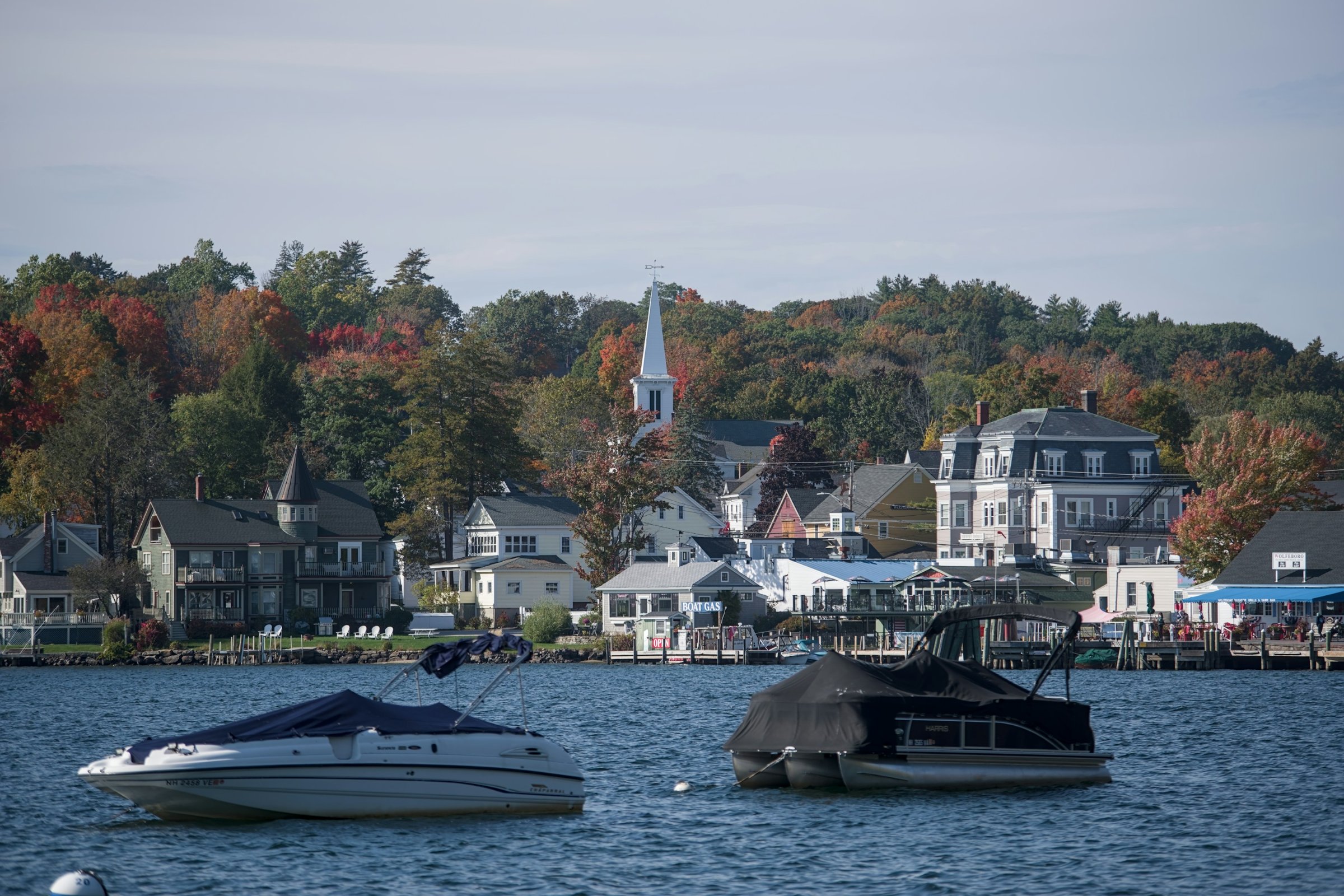
Wolfeboro sits on the southeastern shore of Lake Winnipesaukee and bills itself as the oldest summer resort in America, with the highest nightly rates in the article and an STR market built on lake houses and summer weeks. It is a resort town first – so the numbers revolve around a short, lucrative season.
The case for Wolfeboro rests on the lake, which draws summer visitors from across New England and fills rental calendars from late spring to early fall, and on a revenue line that grew 9.4% over the past year. However, First Street data on Redfin finds some wildfire risk at 55% of properties and severe-flood risk at 10%. On the STR side, the town's short-term rental ordinance, adopted by voters in March 2025, allows STRs by conditional use permit in every zoning district ($300 to apply plus $150 for the public hearing notice), with fire and code inspections at approval and every two years after, on-site parking, a state Meals and Rooms license and a reachable contact person. Guests are capped at two per bedroom plus two, with the bedroom count set by the lower of the approved septic design or the town's assessing records.
The Wolfeboro submarket posts an AirDNA score of 52/100, the lowest in the article, with Revenue Growth (90) leading by a wide margin, Regulation (64) and Investability (61) in the middle, and Rental Demand (52) and Seasonality (48) the “soft spots,” i.e. a summer-only market. Annual revenue per listing averages $46,179 (up 9.4% year-over-year), the fastest revenue growth on the list, with an average daily rate of $379.00 (up 5.0%), the highest, and occupancy of 48% (down 0.3%). Total active listings sit at 244, up 2.5%, and lakefront homes carry the top end, such as a lakefront log cabin with a hot tub ($140K a year at 54% occupancy).
Financing note: Harpoon Capital offers industry leading DSCR Loans for properties in Wolfeboro and all throughout the market area. Check out our full DSCR Loans Program here, or if you want a quote on what terms look like today, fill out this two-minute form!
Sources: Zillow Home Value Index↗ · Redfin Housing Market↗ · Town of Wolfeboro STR Ordinance↗ · STR Profit Map Wolfeboro Regulations↗ · AirDNA Market Data↗
Investor Takeaway: Wolfeboro offers the highest nightly rates and the fastest STR revenue growth in New Hampshire, on a season that is short but lucrative. Investors should generally underwrite on summer-weighted trailing actuals, budget about $450 for the conditional use permit plus the inspections, and check the septic design before counting bedrooms.
Capital-city steadiness in the Merrimack Valley

Concord is the state capital, about 20 miles north of Manchester on I-93, with a tenant base anchored by state government and healthcare, a sales market nearly as competitive as Manchester's and slightly lower prices. It is a steadier, quieter version of Manchester, which suits a long-term landlord well.
The case for Concord rests on state government, the regional hospital and the city's position on I-93 between Manchester and the Lakes Region, which give it one of the steadier tenant bases in the state. However, the market is cooling slightly, with homes taking longer to sell and fewer selling over list than a year ago, and First Street data on Redfin rates the flood risk as “minor” (3% of properties). On the STR side, Concord's zoning ordinance does not address short-term rentals at all, and its closest use, a bed and breakfast, must be the operator's or owner's principal residence (up to six lodging units, by special exception or conditional use in most residential districts), so under the state Supreme Court's 2019 Portsmouth ruling investors should get a zoning determination from the city before buying for nightly stays.
The Concord submarket posts an AirDNA score of 60/100, with Rental Demand (71) and Seasonality (69) leading, Investability (67) and Revenue Growth (62) in the middle, and Regulation (61) the “soft spot.” Annual revenue per listing averages $34,121 (flat year-over-year), with an average daily rate of $216.08 (up 4.2%) and occupancy of 53% (down 3.3%). Total active listings sit at 458, up 8.8%, the fastest supply growth on the list, and the top performers are large group homes toward Lake Sunapee, such as a 12-bedroom home with an indoor pool ($347K a year at 46% occupancy).
Financing note: Harpoon Capital offers industry leading DSCR Loans for properties in Concord and all throughout the market area. Check out our full DSCR Loans Program here, or if you want a quote on what terms look like today, fill out this two-minute form!
Sources: Zillow Home Value Index↗ · Redfin Housing Market↗ · AirDNA Market Data↗
Investor Takeaway: Concord offers a competitive, steady market with a government-backed tenant base and slightly lower prices than Manchester. Investors should generally buy for the long-term rent, expect to pay around list, and confirm with the city how its zoning treats nightly rentals before planning any STR.
Thinking About One of These Markets?
Get a same-day DSCR Loan quote for a specific deal, or browse the full Harpoon Capital DSCR Loan Program to see rates, LTV, and qualification details before you keep reading.
Dartmouth demand at a seven-figure price

Hanover is the home of Dartmouth College on the Connecticut River, across from Vermont, with the highest prices in the article, a Boston buyer pool and an STR market that peaks around graduation, reunions and football weekends. It is a small, expensive town where demand rarely seems to be the problem, although the town's STR rules are!
The case for Hanover rests on Dartmouth and the nearby Dartmouth Hitchcock Medical Center in Lebanon, which keep the area's rental demand high, and Redfin search data (April to June 2026) shows Boston buyers looking at Hanover more than any other metro by a wide margin (a net 634). However, First Street data on Redfin rates the heat risk as “moderate,” and the area's small housing stock keeps prices high. On the STR side, Hanover banned short-term rentals for about three decades before voters approved a zoning amendment at Town Meeting in July 2020, and the current rules (Zoning Ordinance §519.4) allow STRs only in the owner's principal residence, never in investor-owned dwellings. Rentals are capped at 90 days a year, no more than 30 of them unhosted, unhosted stays are limited to three unrelated guests and require a special exception in the main residential districts, and every STR must register with the town, so Hanover is a long-term rental market for investors.
The Claremont/Lebanon submarket, which includes Hanover, posts an AirDNA score of 62/100, with Revenue Growth (76) and Seasonality (70) leading, Investability (68) next, and Regulation (60) and Rental Demand (59) the “soft spots.” Annual revenue per listing averages $39,964 (up 9.3% year-over-year), with an average daily rate of $251.25 (up 11.4%), the fastest rate growth on the list, and occupancy of 54% (flat). Total active listings sit at 363, up 3.7%, and homes near campus carry the top end, such as a home within walking distance of the Dartmouth Green ($302K a year at 85% occupancy), which is far above a typical listing. Note that this submarket covers Lebanon, Claremont and other towns with their own rules, so the figures describe the region rather than Hanover alone.
Financing note: Harpoon Capital offers industry leading DSCR Loans for properties in Hanover and all throughout the market area. Check out our full DSCR Loans Program here, or if you want a quote on what terms look like today, fill out this two-minute form!
Sources: Zillow Home Value Index↗ · Redfin Housing Market↗ · Valley News: Hanover STR Rules↗ · AirDNA Market Data↗
Investor Takeaway: Hanover offers Dartmouth demand and a Boston buyer pool at the highest prices in New Hampshire, with STRs limited to owner-occupants. Investors should generally expect a tight DSCR Ratio on the long-term rent and look at Lebanon and the surrounding towns, after checking their own rules, for STR exposure within the same submarket.
UNH rentals and Seacoast spillover

Durham is the home of the University of New Hampshire, a short drive from Portsmouth and the Seacoast, with a tiny, competitive sales market and STR rules that keep nightly rentals with owner-occupants. It is a college town first, with all of the steady demand and turnover that comes with one.
The case for Durham rests on UNH, which supplies a deep pool of student and staff renters, and on its position between Portsmouth, Dover and the Seacoast, which brings visitors through the year. However, First Street data on Redfin rates the wind risk as “major” and the heat risk as “moderate.” On the STR side, Durham's short-term rental ordinance (Ordinance 2020-03, adopted February 2020) treats an STR as an accessory use only in an owner-occupied single-family home that is the owner's primary residence, with no more than three sleeping rooms and the owner or family on the premises overnight whenever it is rented. Hosts need a permit from the Zoning Administrator and, in the residential zones, a special exception, so Durham is a long-term rental market for investors.
AirDNA groups Durham into its Dover submarket, so the figures below describe the wider area rather than Durham itself. The Dover submarket posts an AirDNA score of 85/100, the highest in the article, with Revenue Growth (88) and Rental Demand (86) leading, Regulation (74) next, and Seasonality (63) and Investability (59) the “soft spots.” Annual revenue per listing averages $36,393 (up 3.3% year-over-year), with an average daily rate of $172.11 (up 6.3%) and occupancy of 67% (down 2.3%), the highest on the list. Total active listings sit at only 97, down 5.8%, and waterfront homes carry the top end, such as a waterfront home with a deck and dock ($100K a year at 73% occupancy).
Financing note: Harpoon Capital offers industry leading DSCR Loans for properties in Durham and all throughout the market area. Check out our full DSCR Loans Program here, or if you want a quote on what terms look like today, fill out this two-minute form!
Sources: Zillow Home Value Index↗ · Redfin Housing Market↗ · Town of Durham STR Ordinance Page↗ · AirDNA Market Data↗
Investor Takeaway: Durham offers university demand and a competitive sales market near the Seacoast, on the thinnest rent ratio in the article and with STRs limited to owner-occupants. Investors should generally expect a tight DSCR Ratio, buy for student or staff rentals near campus where zoning allows, and look to nearby Dover, which AirDNA scores well, for STR exposure after checking its rules.
Mountain weekends in every season
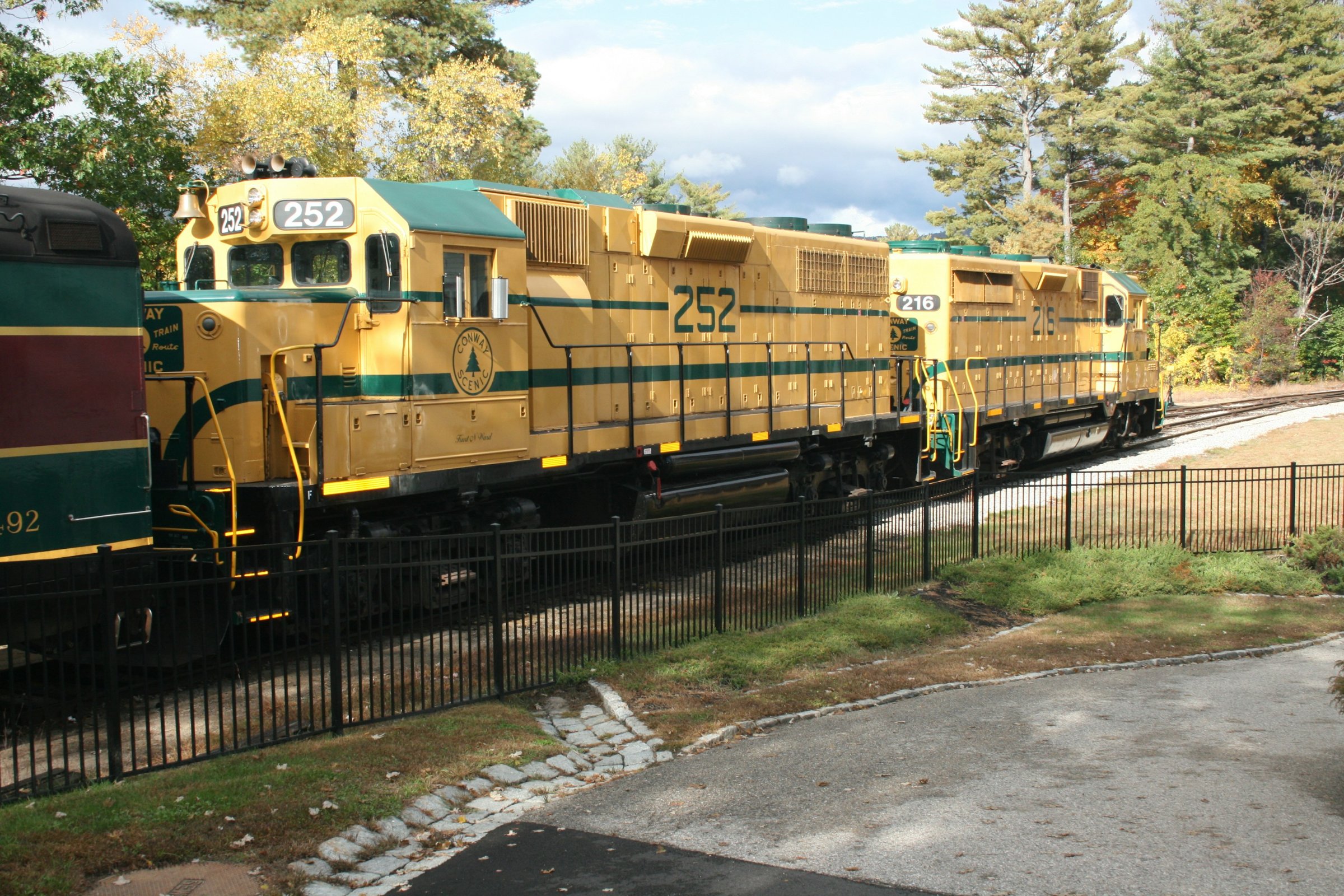
Conway and North Conway sit at the gateway to the White Mountains, with skiing at Cranmore and nearby Attitash, hiking in the national forest and outlet shopping drawing visitors through the year, along with the highest STR revenue in the article and the lowest prices on this list. It is the classic New Hampshire vacation market – and, after a 2023 court ruling, one of the more open ones for STR investors.
The case for Conway rests on four-season tourism, with ski areas, hiking, fall foliage and the North Conway outlets keeping visitors coming through most of the year. However, First Street data on Redfin rates the flood risk as “major,” with 17% of properties exposed, the highest share in the article. On the STR side, the state Supreme Court ruled 4-1 in May 2023 (Town of Conway v. Kudrick) that the town's zoning permits non-owner-occupied STRs in residential districts (NH Business Review), and in 2024 voters rejected a petition to restrict them by 1,144 to 566. The town now requires a rental property permit for every rental unit, short-term or not ($50 for a one- or two-family home), with an inspection when a rental starts or changes hands and annual self-certification after that.
The Conway/Attitash submarket posts an AirDNA score of 67/100, with Investability (78) and Revenue Growth (77) leading, Regulation (68) and Rental Demand (63) in the middle, and Seasonality (55) the “soft spot.” Annual revenue per listing averages $49,593 (up 4.1% year-over-year), the highest on the list, with an average daily rate of $348.62 (up 0.9%) and occupancy of 47% (up 2.4%). Total active listings sit at 1,980, up 3.8%, the deepest STR market in the article, and the top performers are inns and large group homes, such as a historic inn in North Conway ($486K a year at 83% occupancy), which are outliers rather than a guide to a typical rental.
Financing note: Conway deals often qualify on TTM actuals or STR revenue projections given the seasonal revenue base, and Harpoon Capital offers industry leading DSCR Loans for properties throughout the market area. Check out our full DSCR Loans Program here, or if you want a quote on what terms look like today, fill out this two-minute form!
Sources: Zillow Home Value Index↗ · Redfin Housing Market↗ · NH Business Review: Conway STRs↗ · AirDNA Market Data↗
Investor Takeaway: Conway offers the highest STR revenue and the deepest STR market in New Hampshire, at the lowest prices on this list and with a court ruling on its side. Investors should generally underwrite on trailing twelve-month actuals, negotiate below list, budget for the town's rental permit and inspection, and check the flood map for each address before buying.
| MARKET | AIRDNA SCORE |
ANNUAL REVENUE |
AVG. DAILY RATE |
OCCUPANCY | YOY LISTING GROWTH |
|---|---|---|---|---|---|
| Dover (near Durham) | 85 | $36,393 (+3.3%) |
$172.11 (+6.3%) |
67% (-2.3%) | -5.8% (97 listings) |
| Conway/Attitash | 67 | $49,593 (+4.1%) |
$348.62 (+0.9%) |
47% (+2.4%) | +3.8% (1,980 listings) |
| Hanover (Claremont/Lebanon) | 62 | $39,964 (+9.3%) |
$251.25 (+11.4%) |
54% (0.0%) | +3.7% (363 listings) |
| Manchester | 61 | $32,439 (+0.3%) |
$175.07 (+3.7%) |
59% (-1.7%) | -2.5% (627 listings) |
| Concord | 60 | $34,121 (0.0%) |
$216.08 (+4.2%) |
53% (-3.3%) | +8.8% (458 listings) |
| Wolfeboro | 52 | $46,179 (+9.4%) |
$379.00 (+5.0%) |
48% (-0.3%) | +2.5% (244 listings) |
Source: AirDNA, current as of 2026. Scores and figures reflect each market or submarket as defined by AirDNA and may not correspond 1:1 with city or county boundaries. As of October 2026
A few patterns stand out. The vacation markets earn the most per listing, with Conway and Wolfeboro both above $46,000 a year on nightly rates near $350 or more, but they also book the fewest nights (under 50%), i.e. fewer, pricier stays. The Dover submarket near Durham sits at the other end, with the highest score and occupancy on modest nightly rates, which is what steady year-round demand looks like on a scorecard. Additionally, the Claremont/Lebanon submarket around Hanover raised nightly rates the most (11.4%), while Concord added listings faster than any other market on the list, even though the college towns themselves limit STRs to owner-occupants.
New Hampshire's real estate landscape offers a strategy for nearly every type of investor:
Market-level data is a starting point, not a substitute for underwriting the specific property, neighborhood and rental strategy in front of you. New Hampshire taxes short-term stays at a flat 8.5% and leaves the STR rulebook to its towns' zoning codes, which range from Conway's court-confirmed openness and Wolfeboro's conditional use permit to the owner-occupancy rules in Hanover and Durham and Manchester's zoning-relief process, so investors should confirm what is allowed at a specific address before they close.
If you are ready to invest in one of these markets, start with our New Hampshire DSCR loans page.
Sources: Redfin housing market data, BiggerPockets Market Finder, Zillow Home Value Index, AirDNA market and submarket data (airdna.co), Airbnb New Hampshire tax collection, BNBCalc guides for New Hampshire and Manchester, the Town of Wolfeboro STR ordinance, STR Profit Map, the Town of Durham, NH Business Review and Valley News. Data collected as of October 2026, ahead of the 2027 investing season.
At the state level, only a Meals and Rooms operator's license, whose number must appear in every STR listing. Stays of fewer than 185 consecutive days carry the 8.5% Meals and Rooms (Rentals) Tax, which booking platforms must collect, and Airbnb collects only that statewide tax in New Hampshire. The real rules are local and set through zoning: Wolfeboro requires a conditional use permit, Hanover and Durham limit STRs to owner-occupants, Manchester's whole-unit rentals have needed zoning relief, and Conway requires a rental permit for every rental unit after a 2023 state Supreme Court ruling confirmed that STRs are permitted in its residential districts.
No. Out-of-state and first-time investors can buy investment property in New Hampshire without any license. A DSCR loan qualifies you primarily based on the property itself rather than your personal income or professional credentials, which is part of why it's such a common financing tool for out-of-state buyers.
A DSCR (Debt Service Coverage Ratio) loan qualifies a property primarily based on the property (its rent, value and location) relative to its mortgage payment, rather than the borrower's personal income or tax returns. If the property's projected or actual rent covers the mortgage payment (a DSCR of 1.00x or higher), it's generally easier to qualify, and Harpoon Capital also offers options for deals below 1.00x.
Generally, yes, through zoning. New Hampshire has no state law limiting local STR bans (a 2022 bill was sent to interim study and 2024 bills were killed), and in 2019 the state Supreme Court upheld Portsmouth's position that nightly rentals were not allowed where its zoning code did not list them. However, the same court ruled in 2023 that Conway's code permits non-owner-occupied STRs in residential districts, so the answer depends on how each town's ordinance is written.
Harpoon Capital's DSCR loan program allows as little as 15% down on qualifying purchases, up to 85% LTV, with cash-out refinances available up to 80% LTV. Exact terms depend on the property, credit profile, and DSCR ratio. Fill out our DSCR Loan Application to see specific numbers for your deal.
Ready to Run the Numbers on a New Hampshire Deal?
Whether you're eyeing Manchester's rent growth or mountain stays in Conway, get a same-day rate and terms with our two-minute DSCR quote form, or explore the full New Hampshire DSCR Loans Program to see how we qualify the property, not just the borrower.
This article is for informational purposes only and does not constitute investment, legal, or financial advice. Harpoon Capital encourages investors to conduct independent due diligence before making any real estate investment decision.