.png)

By Robin Simon, President, Harpoon Capital · About · LinkedIn · Author, The Book on DSCR Loans (Available on Amazon)

The best New Jersey markets for real estate investors in 2027 offer entry points from about $320,000 in Vineland and strong short-term rental potential, led by $61,220 in average annual STR revenue in Hoboken and an AirDNA score of 89 in Absecon. New Jersey covers a lot of ground for a small state, running from the Hudson River waterfront of Hoboken and Jersey City and the transit hub of Newark down through the farm country around Vineland to the Atlantic shore at Ocean City and Absecon. Median sale prices run up to about $1.1 million in Ocean City (Redfin, 2026), and the “rent-to-price ratios” in this article range from roughly 0.44% a month in Newark (based on Zillow's figures) to 0.58% for the Vineland area on BiggerPockets. Investors buying here typically finance with New Jersey DSCR loans, which are qualified primarily based on the property rather than the borrower's personal income, and the “DSCR Ratio” on a two- or three-family property in North Jersey often pencils out better than the price tags suggest.
This breakdown uses market data collected as of October 2026, the most current snapshot available heading into next year's buying season. If you're evaluating a purchase in the final months of 2026, keep in mind that your first full year of rental income, appreciation, or short-term rental revenue lands in 2027 regardless of when you close. A deal you underwrite today is already a 2027 investing decision, just one made with the freshest data available right now.
New Jersey has no statewide short-term rental license, but the Division of Taxation applies the state's sales tax (6.625%) and State Occupancy Fee (5% in most towns, 1% in Atlantic City, Elizabeth, Newark and Jersey City) to stays booked through a platform such as Airbnb or Vrbo, or in a “professionally managed unit” (an owner renting three or more units in the state), while stays booked directly with a smaller owner or through a licensed real estate broker are generally exempt. Towns can add their own occupancy tax and their own STR rules, and in North Jersey those rules are tight: Jersey City limits STRs to the owner's principal residence and caps unhosted rentals at 60 nights a year, and Newark also limits STRs to the owner's principal residence. In practice, i.e. for an investor who will not live in the property, the local ordinance at a specific address typically matters more than the market averages below.
Redfin's “Compete Scores” cover nearly the full range on this list, from 85 in Hoboken (“very competitive”) down to 30 in Ocean City (“somewhat competitive”), and the share of homes selling over list runs from 64.2% in Newark to 13.4% in Ocean City, so the bidding strategy depends heavily on the market. However, Redfin's search-based migration tables for all six markets repeat a regional table (New York City's for the three North Jersey cities and Philadelphia's for Vineland, Ocean City and Absecon), so they are left out of this article.
Below, we break down six New Jersey markets worth watching, using current data from Zillow, Redfin, BiggerPockets, and AirDNA.
Note: Home price appreciation and rent-growth figures below come from Redfin's median sale price data, Zillow's Home Value Index and BiggerPockets' Market Finder, which use different methodologies and can vary from one another; Redfin's recent price changes (-5.1% to +14.4%) and the BiggerPockets and Zillow figures do not always agree, so treat them as directional. Newark, Hoboken, Jersey City, Ocean City and Absecon do not have BiggerPockets pages of their own (they share regional metro pages), so Zillow and Redfin figures are used for them, and BiggerPockets figures for Vineland cover the Vineland–Bridgeton metro. AirDNA's Newark, Hoboken and Jersey City submarkets sit within its Jersey City/Newark market, Vineland's figures come from its Bridgeton submarket (which AirDNA describes as containing Vineland), and Ocean City and Absecon sit within its Atlantic City/Ocean City market.
Brick City buyers bidding over list

Newark is the largest city in New Jersey and a regional transit hub, with Newark Liberty International Airport and a direct rail line into Manhattan. It has the hottest bidding in the article, a rental pool fed by the airport, the port and several universities, and a short-term rental ordinance that keeps investors out of nightly rentals unless they live on the property.
The case for Newark rests on its location and its tenant base, with the airport, Port Newark and several universities all within the city, and a commute into Manhattan that is shorter than from much of New York City itself. However, First Street data on Redfin rates the heat risk as “severe” (95% of properties) and the wind risk as “major,” while the flood risk is “minor” (10% of properties). On the STR side, Newark's ordinance (Chapter 18:14) defines an STR as a stay of 28 continuous days or fewer and only allows one at the owner's principal residence, i.e. in the owner's own unit, in another unit of the same building, or in up to two rooms of an owner-occupied single-family home, and tenants may not apply. Hosts need an annual $250 permit and $500,000 in general liability insurance, stays carry a 6% city hotel tax, and fines run up to $2,000 per violation, per day (Patch, BNBCalc), so Newark is a long-term rental market for most investors.
The Newark submarket posts an AirDNA score of 55/100, with Seasonality (76) and Revenue Growth (74) leading, Rental Demand (61) and Regulation (61) in the middle, and Investability (49) the “soft spot.” Annual revenue per listing averages $27,252 (up 5.4% year-over-year), with an average daily rate of $143.92 (up 9.0%) and occupancy of 57% (down 2.5%). Total active listings sit at 2,101, down 1.2%, and the top listings are larger homes marketed to World Cup visitors (e.g. a four-bedroom “World Cup Home Base” at $235K a year), since nearby MetLife Stadium hosted 2026 World Cup matches, including the final on July 19, so the past year's figures may include a one-time boost that will not repeat.
Financing note: Harpoon Capital offers industry leading DSCR Loans for properties in Newark and all throughout the market area. Check out our full DSCR Loans Program here, or if you want a quote on what terms look like today, fill out this two-minute form!
Sources: Zillow Home Value Index↗ · Redfin Housing Market↗ · Patch: Newark STR Permits↗ · BNBCalc Newark STR Guide↗ · AirDNA Market Data↗
Investor Takeaway: Newark offers the most competitive bidding in New Jersey and rising prices per square foot, with a deep tenant base tied to the airport and the port. Investors should generally buy two- and three-family properties for the long-term rent, expect to pay over list, and set aside nightly rentals unless they plan to live in the building.
Mile Square prices and PATH-side premiums
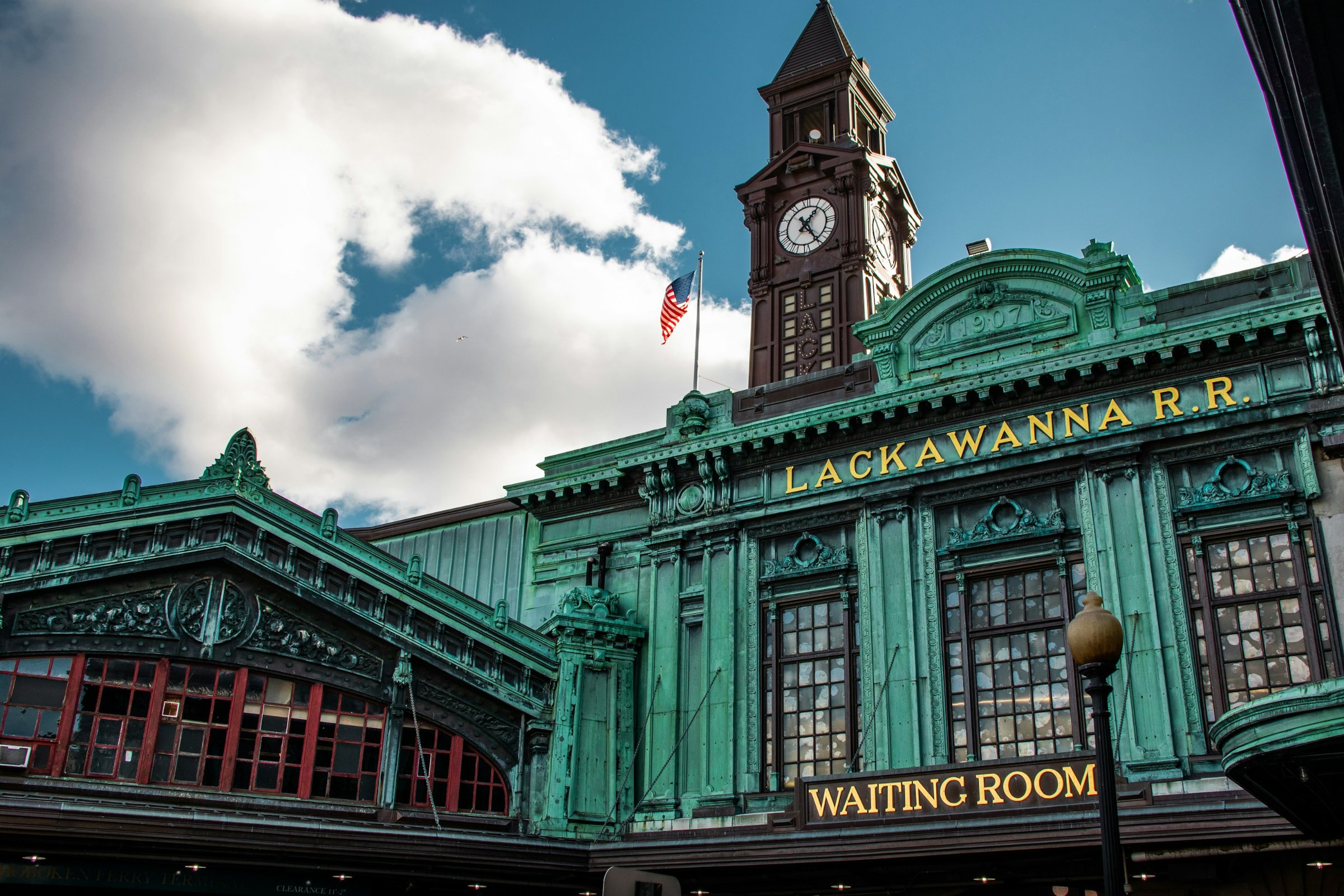
Hoboken is a square mile of brownstones and condos on the Hudson River, one PATH stop from Manhattan, with the highest prices in North Jersey, the highest Compete Score in the article and STR numbers that lead the state. The catch is water – nearly nine in ten properties face severe flood risk, which is not a small detail for a buyer!
The draw in Hoboken is the commute, with PATH trains and ferries into Manhattan, and a renter base of young professionals willing to pay close to New York rents for a little more space. However, First Street data on Redfin rates the flood risk as “extreme,” with 88% of properties exposed over the next 30 years, and the heat risk as “severe,” so flood insurance and the building's flood history belong at the top of the due diligence list. On the STR side, BNBCalc and the city code confirm that Hoboken has no short-term rental ordinance, license or owner-occupancy rule, and that the city's own 3% hotel tax does not yet apply to STRs. However, a councilmember was drafting rules in April 2026 (a permit system, a ban in rent-controlled units and a hotel tax), although no ordinance had been introduced as of October 2026, so investors should treat the current freedom as subject to change.
The Hoboken submarket posts an AirDNA score of 80/100, with Rental Demand (94) and Revenue Growth (84) leading, Seasonality (67) and Regulation (64) in the middle, and Investability (53) the “soft spot,” which fits the price of entry. Annual revenue per listing averages $61,220 (up 6.4% year-over-year), the highest on the list, with an average daily rate of $290.08 (up 14.6%) and occupancy of 68% (down 7.2%), tied for the highest. Total active listings sit at 522, up 17.8%, and multi-bedroom homes near the PATH, such as a three-bedroom with three full baths ($264K a year at 61% occupancy), carry the top end.
Financing note: Harpoon Capital offers industry leading DSCR Loans for properties in Hoboken and all throughout the market area. Check out our full DSCR Loans Program here, or if you want a quote on what terms look like today, fill out this two-minute form!
Sources: Zillow Home Value Index↗ · Redfin Housing Market↗ · BNBCalc Hoboken STR Guide↗ · AirDNA Market Data↗
Investor Takeaway: Hoboken offers the highest STR revenue and the fastest-selling homes in New Jersey, at prices near $1 million and with flood risk across most of the city. Investors should generally price flood insurance before making an offer, expect a tight DSCR Ratio on the long-term rent, and watch for a city STR ordinance before counting on nightly income.
Waterfront wages and a sixty-night ceiling

Jersey City is the state's second-largest city, with a financial-district waterfront across the river from Lower Manhattan, PATH and light-rail service and a skyline that has grown quickly over the past two decades. It pairs big STR growth with one of the strictest STR ordinances in the state, which is an awkward combination for an investor.
The case for Jersey City rests on its waterfront office base, often called “Wall Street West” for the financial firms that moved across the river, and on rents that run well below Manhattan's for a similar commute. However, First Street data on Redfin rates the flood risk as “major,” with 26% of properties exposed, and the heat risk as “severe.” On the STR side, Jersey City's ordinance (Chapter 255), which voters upheld in a 2019 referendum with 69% in favor, only issues permits ($250, then $200 a year, after an inspection) to owners renting their principal residence, bars tenants from hosting and caps unhosted rentals at 60 nights a year. Unhosted stays are barred in buildings with more than four units, while in two- to four-unit buildings outside condo or co-op associations, up to two units may be rented if another unit is owner-occupied, and condo or co-op units in larger buildings can host if the association permits it (BNBCalc). Stays carry a 6% city hotel tax on top of the state taxes, plus a 3% Meadowlands assessment in the part of the city that sits inside the Meadowlands District. In practice, i.e. for an investor who will not live there, Jersey City is a long-term rental market.
The Jersey City submarket posts an AirDNA score of 73/100, with Revenue Growth (93) and Rental Demand (80) leading, Seasonality (67) and Regulation (62) in the middle, and Investability (48) the “soft spot.” Annual revenue per listing averages $43,480 (up 12.5% year-over-year), with an average daily rate of $194.90 (up 15.7%), the fastest rate growth on the list, and occupancy of 68% (down 2.9%), tied for the highest. Total active listings sit at 1,977, up 20.8%, the fastest supply growth in the article, and the top performer is a corporate-housing unit run by a professional operator ($308K a year at 73% occupancy). Note that growth this fast under rules this strict likely includes event demand and longer stays, so investors should not read it as an opening for investor-owned STRs.
Financing note: Harpoon Capital offers industry leading DSCR Loans for properties in Jersey City and all throughout the market area. Check out our full DSCR Loans Program here, or if you want a quote on what terms look like today, fill out this two-minute form!
Sources: Zillow Home Value Index↗ · Redfin Housing Market↗ · BNBCalc Jersey City STR Guide↗ · AirDNA Market Data↗
Investor Takeaway: Jersey City offers the best Zillow rent ratio of the three Hudson River cities and fast STR growth, but its STR ordinance keeps nightly rentals in the hands of owner-occupants. Investors should generally buy for the long-term rent, check the flood map for each address, and treat the AirDNA numbers as a sign of demand rather than a business plan.
Thinking About One of These Markets?
Get a same-day DSCR Loan quote for a specific deal, or browse the full Harpoon Capital DSCR Loan Program to see rates, LTV, and qualification details before you keep reading.
Farm-country cash flow at a fraction of the price

Vineland is a South Jersey city in Cumberland County with an economy built on agriculture, food processing and manufacturing. It has the lowest prices and the best rent ratio in the article, which makes it the cash-flow market on a list otherwise dominated by expensive coastal cities.
BiggerPockets points to agriculture, manufacturing and healthcare, with Cumberland Dairy and the region's healthcare providers among the major employers, and Route 55 gives the city a direct connection to the Philadelphia suburbs. However, First Street data on Redfin rates the heat risk as “severe” (83% of properties) and the wildfire risk as “moderate,” with 77% of properties exposed to some risk given the surrounding pinelands, so insurance should be priced early. On the STR side, Vineland has no short-term rental ordinance, but every non-owner-occupied rental unit must be registered with the city's Director of Licenses and Inspections ($75 a year, or $125 if late) and inspected at least every 12 months and at each change of occupancy, which typically means more inspections for a busy STR than for a long-term rental.
The Bridgeton submarket, which covers Vineland and the rest of Cumberland County, posts an AirDNA score of 55/100, with Investability (98) leading by a wide margin, Rental Demand (64) next, Regulation (57) and Seasonality (53) behind it, and Revenue Growth (49) the “soft spot.” Annual revenue per listing averages $41,170 (up 10.4% year-over-year), with an average daily rate of $270.52 (down 0.9%) and occupancy of 51% (up 10.5%). Total active listings sit at only 72, up 7.5%, and large group homes with pools and hot tubs, such as a 12-guest property ($116K a year at 45% occupancy), carry the top end.
Financing note: Harpoon Capital offers industry leading DSCR Loans for properties in Vineland and all throughout the market area. Check out our full DSCR Loans Program here, or if you want a quote on what terms look like today, fill out this two-minute form!
Sources: Redfin Housing Market↗ · BiggerPockets Market Finder↗ · AirDNA Market Data↗
Investor Takeaway: Vineland offers the lowest prices and the best rent ratio in New Jersey, with a small STR market whose revenue is growing. Investors should generally buy for the long-term rent, use the rising share of price drops to negotiate, and treat larger homes with amenities as the STR play, since that is where the revenue is concentrated.
Boardwalk bookings at beachfront prices

Ocean City is a barrier-island resort town in Cape May County known for its boardwalk and its long-standing ban on alcohol sales – a rule that has not kept it from becoming one of the most expensive towns on the Jersey Shore. It has the highest prices and nightly rates in the article, and the weakest AirDNA score.
Ocean City's economy runs on summer tourism, with a boardwalk, beaches and a family-friendly reputation that keep rental demand concentrated in the warm months. However, First Street data on Redfin rates the flood risk as “extreme,” with 97% of properties exposed over the next 30 years, and the wind risk as “severe,” so flood and wind insurance will be among the largest line items in any budget. On the STR side, every rental unit needs an annual rental registration (a mercantile license) renewed by June 30, which costs $175 a unit for a seasonal rental of fewer than 175 days ($30 for the license plus a $145 Ocean City Tourism Commission assessment), and one- and two-family homes need smoke and carbon monoxide alarm certification. Groups of more than three unrelated people must register with the City Clerk, and since November 2025 a 3% Transient Accommodations Fee applies to rentals booked through platforms such as Airbnb and Vrbo, while state taxes generally do not apply to stays booked directly with a smaller owner or through a licensed broker. The town is also dry, i.e. no alcohol sales and no BYOB at restaurants, which suits the family crowd it is built around!
The Ocean City submarket posts an AirDNA score of 41/100, the lowest in the article, with Revenue Growth (67) leading, Regulation (57), Rental Demand (53) and Investability (51) in the middle, and Seasonality (42) the “soft spot,” which is what a summer-only beach town looks like on a scorecard. Annual revenue per listing averages $51,863 (up 4.9% year-over-year), with an average daily rate of $490.42 (up 9.6%), the highest on the list, and occupancy of 54% (down 7.3%). Total active listings sit at 1,269, up 3.3%, and the top listings are three brand-new units in a single building earning between roughly $350K and $412K a year at nightly rates of $3,000 or more, which are outliers rather than a guide to a typical Ocean City rental.
Financing note: Harpoon Capital offers industry leading DSCR Loans for properties in Ocean City and all throughout the market area. Check out our full DSCR Loans Program here, or if you want a quote on what terms look like today, fill out this two-minute form!
Sources: Redfin Housing Market↗ · AirDNA Market Data↗
Investor Takeaway: Ocean City offers the highest nightly rates in New Jersey and the most negotiating room in the article, at the top of the state's price range. Investors should generally underwrite on a realistic summer season rather than the top listings, price flood and wind insurance first, and budget for the annual rental registration and the 3% platform fee.
Bayside base camp for the Atlantic City shore

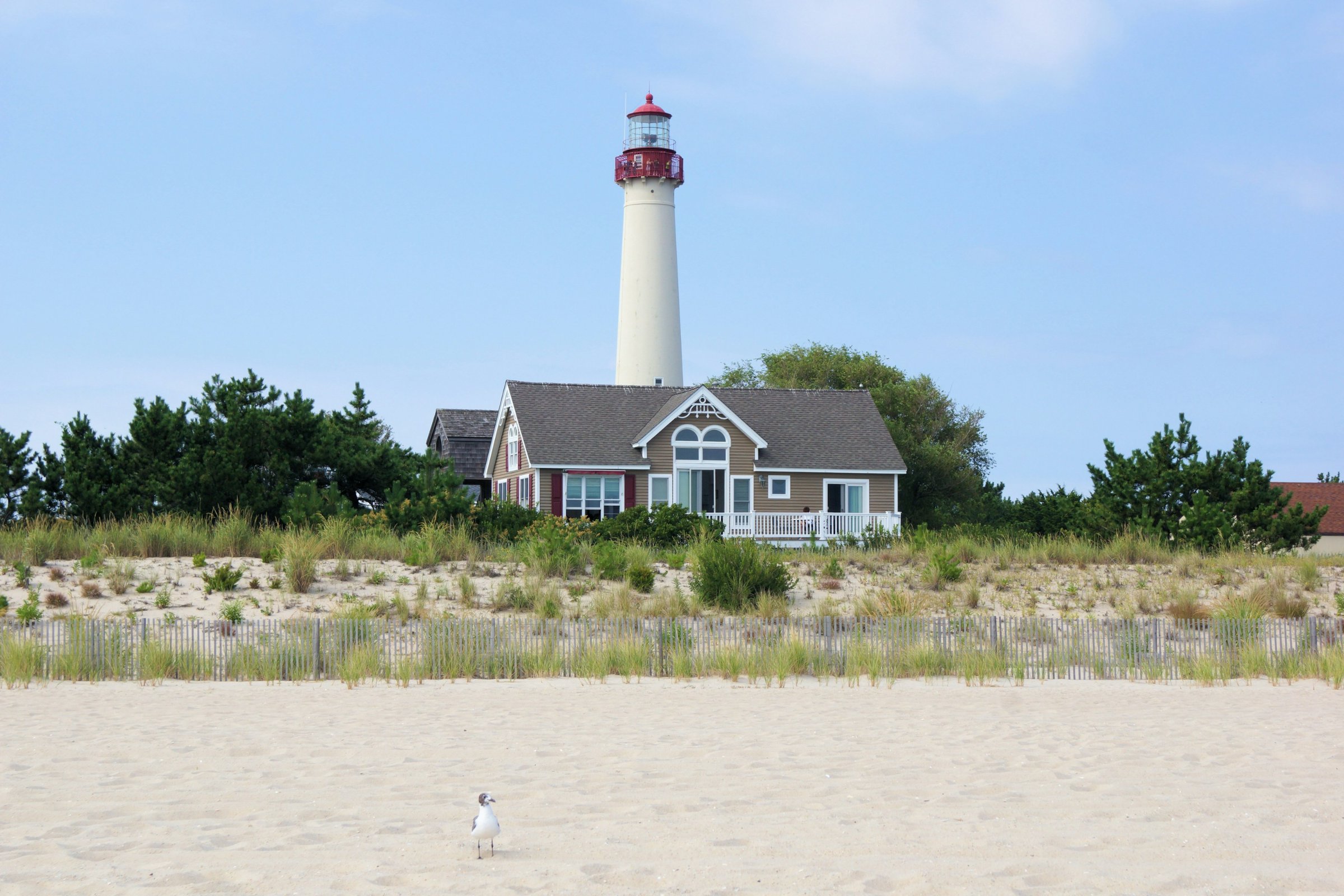
Absecon is a small mainland city on the bay just west of Atlantic City, a short drive from the casinos and the beaches, with prices a fraction of the island towns and a top-tier AirDNA score. It is the quieter side of the shore, which is either a feature or a bug depending on the strategy.
The draw in Absecon is its position, a few minutes from Atlantic City's casinos and beaches and from Stockton University, at roughly a third of Ocean City's prices. However, First Street data on Redfin rates the flood risk as “moderate,” with 34% of properties exposed, and both the heat and wind risks as “severe.” On the STR side, the city's rental ordinance (Ordinance 08-2020, as amended by 09-2020) allows short-term rentals with a Rental Property Permit (which includes registration and a $100 inspection) followed by a $500 Transient Accommodation License, with transient units inspected every year, and the city adds a 3% occupancy tax on top of the state taxes (STR Profit Map).
The Absecon submarket posts an AirDNA score of 89/100, the highest in the article, with Investability (95) and Revenue Growth (91) leading, Regulation (79) next, Rental Demand (64) behind it, and Seasonality (49) the “soft spot.” Annual revenue per listing averages $35,159 (down 6.5% year-over-year), with an average daily rate of $270.48 (up 7.0%) and occupancy of 45% (down 15.3%), the steepest occupancy drop on the list. Total active listings sit at only 54, up 1.9%, and family homes with outdoor amenities, such as a pool home near the water ($64K a year at 77% occupancy), carry the top end. Note that in a field this small, a few homes can move the averages, so the score is a signal rather than a forecast.
Financing note: Absecon deals often qualify on TTM actuals or STR revenue projections given the seasonal revenue base, and Harpoon Capital offers industry leading DSCR Loans for properties throughout the market area. Check out our full DSCR Loans Program here, or if you want a quote on what terms look like today, fill out this two-minute form!
Sources: Zillow Home Value Index↗ · Redfin Housing Market↗ · STR Profit Map Absecon Regulations↗ · AirDNA Market Data↗
Investor Takeaway: Absecon offers the highest STR score in New Jersey and shore access at mainland prices, with a clear license process for short-term rentals. Investors should generally underwrite on trailing twelve-month actuals, model a summer-weighted season given the occupancy drop, and focus on family-sized homes with outdoor amenities, where the revenue is concentrated.
| MARKET | AIRDNA SCORE |
ANNUAL REVENUE |
AVG. DAILY RATE |
OCCUPANCY | YOY LISTING GROWTH |
|---|---|---|---|---|---|
| Absecon | 89 | $35,159 (-6.5%) |
$270.48 (+7.0%) |
45% (-15.3%) | +1.9% (54 listings) |
| Hoboken | 80 | $61,220 (+6.4%) |
$290.08 (+14.6%) |
68% (-7.2%) | +17.8% (522 listings) |
| Jersey City | 73 | $43,480 (+12.5%) |
$194.90 (+15.7%) |
68% (-2.9%) | +20.8% (1,977 listings) |
| Newark | 55 | $27,252 (+5.4%) |
$143.92 (+9.0%) |
57% (-2.5%) | -1.2% (2,101 listings) |
| Vineland (Bridgeton) | 55 | $41,170 (+10.4%) |
$270.52 (-0.9%) |
51% (+10.5%) | +7.5% (72 listings) |
| Ocean City | 41 | $51,863 (+4.9%) |
$490.42 (+9.6%) |
54% (-7.3%) | +3.3% (1,269 listings) |
Source: AirDNA, current as of 2026. Scores and figures reflect each market or submarket as defined by AirDNA and may not correspond 1:1 with city or county boundaries. As of October 2026
A few patterns stand out. Hoboken and Jersey City lead on revenue and occupancy, with nightly rates up roughly 15% in both, but their listing counts grew 18% and 21% as well, and the rules in Jersey City (and possibly soon in Hoboken) keep most of that upside with owner-occupants. Ocean City earns the highest nightly rate by far but scores lowest, i.e. a high-priced, summer-only market, while Absecon scores highest despite falling revenue and occupancy. Additionally, nightly rates rose in five of the six markets, with Vineland's flat rate the only exception, and its occupancy jumped 10.5% instead.
New Jersey's real estate landscape offers a strategy for nearly every type of investor:
Market-level data is a starting point, not a substitute for underwriting the specific property, neighborhood and rental strategy in front of you. New Jersey taxes platform bookings at the state level and leaves the STR rulebook to its towns, which range from Jersey City's and Newark's owner-occupancy rules to Absecon's straightforward license and Ocean City's annual registration, so investors should confirm what is allowed at a specific address before they close and check flood maps in Hoboken, Jersey City and Ocean City.
If you are ready to invest in one of these markets, start with our New Jersey DSCR loans page.
Sources: Redfin housing market data, BiggerPockets Market Finder, Zillow Home Value Index, AirDNA market and submarket data (airdna.co), New Jersey Division of Taxation and Tax Bulletin TB-81(R), city ordinances for Newark, Jersey City, Ocean City, Absecon and Vineland, Patch, BNBCalc STR guides for Newark, Hoboken and Jersey City, and STR Profit Map. Data collected as of October 2026, ahead of the 2027 investing season.
Not at the state level. New Jersey has no statewide short-term rental license, but stays booked through a platform such as Airbnb or Vrbo carry the state sales tax and State Occupancy Fee, and owners renting three or more units must register and collect the taxes themselves. Local rules vary widely: Jersey City and Newark require a city permit and limit STRs to the owner's principal residence, Absecon requires a $500 Transient Accommodation License, Ocean City requires an annual rental registration, and Hoboken had no STR ordinance as of October 2026.
No. Out-of-state and first-time investors can buy investment property in New Jersey without any license. A DSCR loan qualifies you primarily based on the property itself rather than your personal income or professional credentials, which is part of why it's such a common financing tool for out-of-state buyers.
A DSCR (Debt Service Coverage Ratio) loan qualifies a property primarily based on the property (its rent, value and location) relative to its mortgage payment, rather than the borrower's personal income or tax returns. If the property's projected or actual rent covers the mortgage payment (a DSCR of 1.00x or higher), it's generally easier to qualify, and Harpoon Capital also offers options for deals below 1.00x.
It depends on how the stay is booked. Since August 9, 2019, the state's 6.625% sales tax and State Occupancy Fee apply only to stays booked through a platform or travel agency, or in a professionally managed unit (an owner offering three or more units). Stays booked directly with an owner of fewer than three units are exempt, as are rentals handled by a licensed New Jersey real estate broker when the keys are picked up at the broker's office, the property is a private residence and no hotel-style services are provided. Towns can add their own charges, e.g. Absecon's 3% occupancy tax or Ocean City's 3% fee on platform bookings, so investors should confirm the local rate for a specific property.
Harpoon Capital's DSCR loan program allows as little as 15% down on qualifying purchases, up to 85% LTV, with cash-out refinances available up to 80% LTV. Exact terms depend on the property, credit profile, and DSCR ratio. Fill out our DSCR Loan Application to see specific numbers for your deal.
Ready to Run the Numbers on a New Jersey Deal?
Whether you're eyeing Vineland's rent ratio or shore stays in Absecon, get a same-day rate and terms with our two-minute DSCR quote form, or explore the full New Jersey DSCR Loans Program to see how we qualify the property, not just the borrower.
This article is for informational purposes only and does not constitute investment, legal, or financial advice. Harpoon Capital encourages investors to conduct independent due diligence before making any real estate investment decision.