.png)


By Robin Simon, President, Harpoon Capital · About · LinkedIn · Author, The Book on DSCR Loans (Available on Amazon)

The best New York markets for real estate investors in 2027 pair low entry prices, from about $166,000 in Binghamton, with strong short-term rental potential, led by a 91 AirDNA score in Binghamton and $45,449 in average annual STR revenue in Watkins Glen. New York is really two investing stories under one name: a global city with some of the highest prices and tightest short-term rental rules in the country, and an upstate landscape of affordable cities, college towns and lake country where the rent-to-price math looks like a different state entirely. Home prices run up to about $899,000 in New York City (Redfin, 2026), and the “rent-to-price ratios” on BiggerPockets climb from roughly 0.30% a month in New York City to 0.60% in Binghamton, which is a wide spread for a single state. Investors buying here typically finance with New York DSCR loans, which are qualified primarily based on the property rather than the borrower's personal income, and upstate is where the “DSCR Ratio” on a long-term rental usually has the most room to breathe.
This breakdown uses market data collected as of October 2026, the most current snapshot available heading into next year's buying season. If you're evaluating a purchase in the final months of 2026, keep in mind that your first full year of rental income, appreciation, or short-term rental revenue lands in 2027 regardless of when you close. A deal you underwrite today is already a 2027 investing decision, just one made with the freshest data available right now.
New York's 2025 short-term rental law runs through the counties rather than the state: hosts register with a county (or multi-county) registry and renew every two years, though counties could opt out (Monroe County, home to Rochester, did), and the state Department of Taxation and Finance reports that booking platforms have collected the 4% state sales tax plus local sales taxes on short-term stays since March 1, 2025. Counties layer their own occupancy taxes on top, e.g. 5% in Oneida County (Utica) and 4% in Schuyler County (Watkins Glen), and some cities add another layer. New York City sits outside the registry law, since it excludes cities of a million or more, but state sales tax still applies there, and the city runs its own, much stricter system under Local Law 18.
One pattern shows up in Redfin's search data, which tracks home searches rather than actual moves: New York City buyers are the top inbound source for both Rochester (a net 1,147) and Buffalo (295), and Rochester ranks fifth among the destinations New York City buyers search when they look elsewhere. Redfin's “Compete Scores” run from 91 in Rochester (“most competitive”) down to 51 in Binghamton (“somewhat competitive”), so upstate offers everything from bidding wars to patient sellers.
Below, we break down six New York markets worth watching, using current data from Zillow, Redfin, BiggerPockets, and AirDNA.
Note: Home price appreciation and rent-growth figures below come from Redfin's median sale price data and BiggerPockets' Market Finder, which use different methodologies and can vary from one another; BiggerPockets' appreciation figures (4.56% to 7.87%) and Redfin's recent price changes (+0.5% to +9.1%) do not always agree, so treat them as directional. BiggerPockets figures cover the metro named on each page (New York–Newark–Jersey City, Buffalo–Cheektowaga, Utica–Rome, Binghamton and Rochester), and Watkins Glen has no BiggerPockets page. Redfin's Watkins Glen data rests on about six sales a quarter, so its median price is left out and Zillow's typical home value is used instead.
Rent-led returns in a rule-heavy city

New York City is the largest rental market in the country, with a tenant pool deep enough to absorb almost anything and an STR occupancy rate that leads this article by a wide margin. However, it is also the market where the short-term rental playbook is effectively off the table for investors, so the realistic plan here is a long-term rental underwritten on a thin rent-to-price ratio, i.e. a bet on stability and appreciation more than cash flow.
BiggerPockets points to finance, technology, healthcare and education, with JPMorgan Chase, Columbia University and Mount Sinai Health System among the major employers. Redfin search data shows 22% of New York City buyers looking to leave the metro, with Miami (a net 3,577) and Philadelphia (3,108) the top destinations, and inbound interest is small by comparison, which fits a city where the people already there do most of the buying. First Street data on Redfin rates the flood risk as “major,” with 19% of properties exposed over the next 30 years, and the heat risk as “severe.” On the STR side, the city's Office of Special Enforcement states that stays under 30 days are allowed only when the host is staying in the same unit, with no more than two guests, and that an entire apartment or home cannot be rented for less than 30 days. Only permanent occupants can register (a four-year registration with a $145 fee), so investment and secondary properties are effectively shut out, and state sales tax plus a $1.50 per unit per day city fee still apply to the stays that are allowed.
The New York market posts an AirDNA score of 51/100, with Seasonality (93) far in front, Regulation (70) next, Rental Demand (59) and Revenue Growth (52) in the middle, and Investability (46) the “soft spot,” which is what high purchase prices typically do to a score. Annual revenue per listing averages $46,229 (up 1.3% year-over-year), the highest on the list, with an average daily rate of $183.65 (up 4.7%) and occupancy of 77% (down 2.5%), also the highest. Total active listings sit at 14,125, down 3.9%, and the Prospect Heights (score 87, $43K a year at 80% occupancy) and Fort Greene (score 84, 80% occupancy) submarkets lead the area. Note that these numbers generally describe the hosts who remain under Local Law 18, i.e. hosts sharing the unit they live in, and not a whole apartment an investor could buy and list.
Financing note: Harpoon Capital offers industry leading DSCR Loans for properties in New York City and all throughout the market area. Check out our full DSCR Loans Program here, or if you want a quote on what terms look like today, fill out this two-minute form!
Sources: Redfin Housing Market↗ · BiggerPockets Market Finder↗ · NYC Office of Special Enforcement↗ · AirDNA Market Data↗
Investor Takeaway: New York City offers the deepest tenant pool in the country and the highest STR occupancy in the article, on the thinnest rent ratio in this article. Investors should generally underwrite the city as a long-term rental market, budget for flood insurance near the water, and expect the DSCR Ratio to be tight, since a 0.30% rent-to-price ratio rarely covers a full payment on its own.
Bargain buys and the best STR score
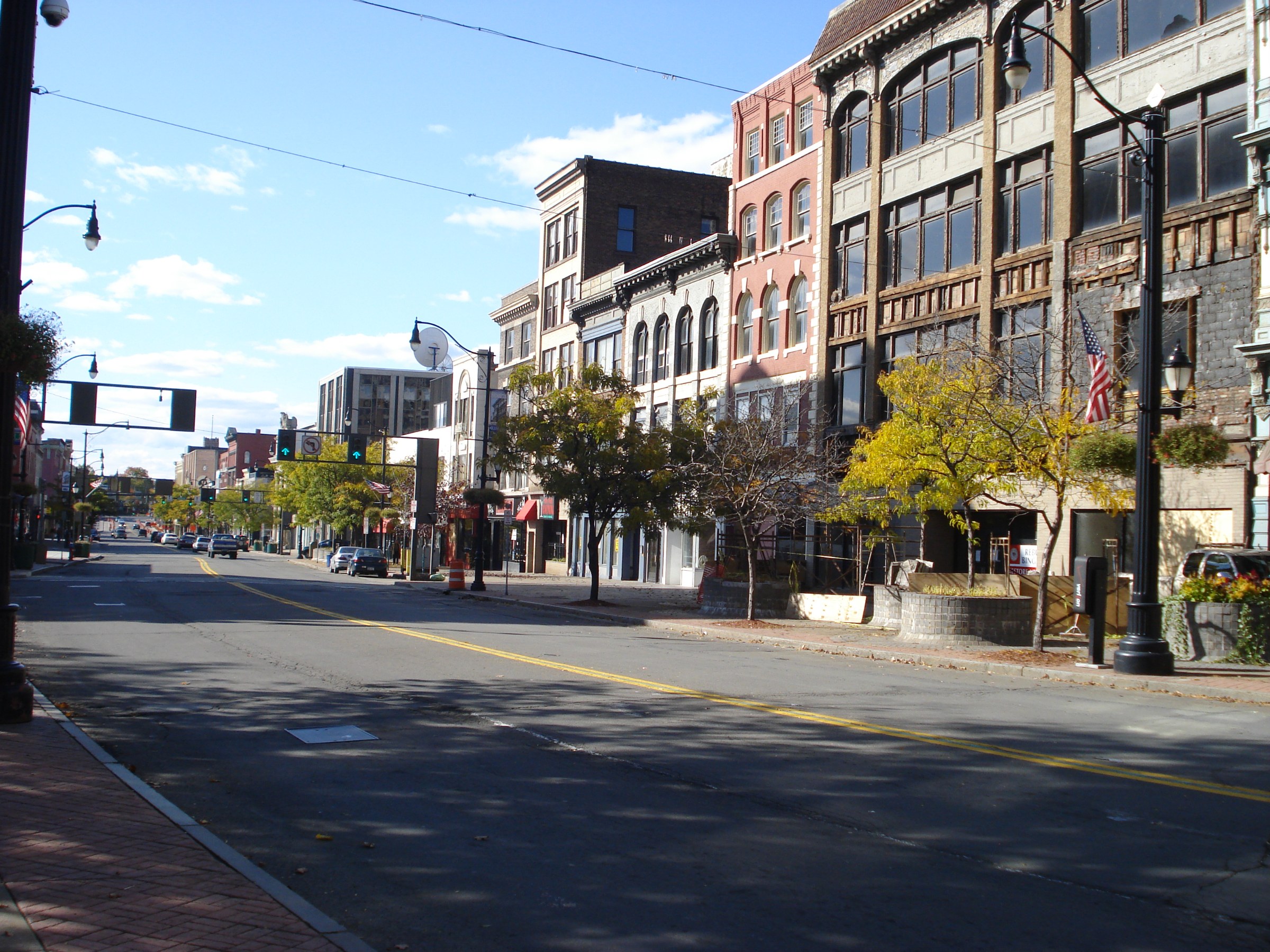
Binghamton sits in New York's Southern Tier, where the Susquehanna and Chenango rivers meet, and it combines the lowest prices, the best rent-to-price ratio and the highest AirDNA score in the article, with Binghamton University playing a significant role in the local economy. It is the closest thing in New York to the classic buy-and-hold math investors look for in the Midwest.
BiggerPockets points to education, healthcare and manufacturing, with Binghamton University playing a significant role in the local economy, and the 24.4% jump in sales suggests buyers are finding value here even as listings sit longer. However, the population is shrinking, rent growth is the slowest upstate, and Redfin shows no migration data for Binghamton, so the case generally rests on yield rather than growth. First Street data on Redfin also rates the flood risk as “moderate” but broad, with 30% of properties exposed over the next 30 years, the highest share in the article. On the STR side, stays carry 8% in sales tax (4% state and 4% Broome County), plus a 5% Broome County occupancy tax and a separate 5% City of Binghamton occupancy tax adopted in 2024, which hosts file quarterly with the city. Neither office states how the two occupancy taxes apply together, so investors should confirm with both before modeling the tax stack, and no dedicated city STR permit was confirmed in the city's zoning or housing codes.
The Binghamton submarket posts an AirDNA score of 91/100, the highest in the article, with Rental Demand (84) and Seasonality (81) leading, Investability (79) and Revenue Growth (71) close behind, and Regulation (68) the “soft spot.” Annual revenue per listing averages $22,224 (up 3.8% year-over-year), with an average daily rate of $117.89 (up 4.7%) and occupancy of 58% (up 0.3%). Total active listings sit at 407, up 6.8%, and large estate listings such as a 30-acre property with a pool ($231K a year at 37% occupancy) carry the top end.
Financing note: Harpoon Capital offers industry leading DSCR Loans for properties in Binghamton and all throughout the market area. Check out our full DSCR Loans Program here, or if you want a quote on what terms look like today, fill out this two-minute form!
Sources: Redfin Housing Market↗ · BiggerPockets Market Finder↗ · City of Binghamton Occupancy Tax↗ · Broome County Occupancy Tax↗ · AirDNA Market Data↗
Investor Takeaway: Binghamton offers the best yield and the lowest entry price in New York, with STR demand that holds up across the calendar. Investors should generally buy for the long-term rent, check the flood map for each address, and use the much slower 2026 sales pace as negotiating room, since homes that sit for more than two months typically come with more flexible sellers.
Mohawk Valley value with a new county registry

Photo: Andrey Volk, CC BY-SA 4.0 (cropped)
Utica sits in the Mohawk Valley in central New York, with a healthcare and education economy, a 0.53% rent-to-price ratio, prices rising faster than anywhere else on this list, and a short-term rental market that now runs through a brand-new Oneida County registry. It is a quiet market by most measures, and for a yield-focused investor that is not necessarily a drawback.
BiggerPockets points to healthcare, education and manufacturing, with Mohawk Valley Health System among the major employers, and its 0.53% rent-to-price ratio ranks third on this list, behind Binghamton and Rochester, which gives the long-term rent a fair chance of carrying the payment. However, the metro population is shrinking, so the price gains generally reflect a tight supply of homes more than a wave of newcomers, and First Street data on Redfin rates the flood risk as “moderate,” with 17% of properties exposed over the next 30 years. On the STR side, Oneida County began requiring every host to register with the county by January 1, 2026, according to WKTV, with free registration and a 5% county occupancy tax on top of the 8.75% sales tax, which booking platforms collect, and no separate City of Utica STR rules were found.
The Utica submarket posts an AirDNA score of 80/100, with Investability (86) leading, Seasonality (79), Rental Demand (74) and Revenue Growth (66) in the middle, and Regulation (56) the “soft spot,” which likely reflects the new county rules. Annual revenue per listing averages $26,627 (up 3.6% year-over-year), with an average daily rate of $150.80 (up 5.4%) and occupancy of 55% (down 1.8%). Total active listings sit at 432, up 2.6%, and top listings such as River Retreat ($115K a year at 81% occupancy) show what a well-run property can do.
Financing note: Harpoon Capital offers industry leading DSCR Loans for properties in Utica and all throughout the market area. Check out our full DSCR Loans Program here, or if you want a quote on what terms look like today, fill out this two-minute form!
Sources: Zillow Home Value Index↗ · Redfin Housing Market↗ · BiggerPockets Market Finder↗ · WKTV Oneida County Registry Report↗ · AirDNA Market Data↗
Investor Takeaway: Utica offers a 0.53% rent ratio at a low entry price, with prices climbing and a clear, recently updated STR registration process. Investors should generally buy for the long-term rent first, expect to pay close to list in a moderately competitive market, and register any short-term unit with the county before it goes live.
Thinking About One of These Markets?
Get a same-day DSCR Loan quote for a specific deal, or browse the full Harpoon Capital DSCR Loan Program to see rates, LTV, and qualification details before you keep reading.
Bidding wars at budget prices

Buffalo is the largest city in western New York, with a healthcare and education economy anchored by Kaleida Health and the University at Buffalo, a sales market where homes typically draw three offers, and the only short-term rental market in the article where occupancy rose by more than a point over the past year. It pairs a low entry price with real competition, so investors usually need to move quickly.
BiggerPockets points to healthcare, education and technology, and Redfin search data shows New York City buyers looking at Buffalo more than any other metro (a net 295), far ahead of Los Angeles (26), while the top destination for local buyers searching elsewhere is Rochester (102). First Street data on Redfin rates the flood risk as “minor” (9% of properties) and the wind risk as “minimal.” On the STR side, the City of Buffalo requires an annual short-term rental license and treats any stay under six months as a short-term rental. Owner-occupied rentals are allowed in most zones, while an investor-owned (non-owner-occupied) rental needs a Special Use Permit with a Planning Board review and a Common Council public hearing, and is not allowed in apartment buildings, co-ops, condos or three-family homes. Licenses cost $650 for non-owner-occupied units ($400 to renew), buildings are capped at two STR units, and owners living outside Erie County must name a local agent.
The Buffalo submarket posts an AirDNA score of 82/100, with Revenue Growth (82) and Investability (81) leading, Rental Demand (75) and Seasonality (66) in the middle, and Regulation (62) the “soft spot.” Annual revenue per listing averages $30,613 (up 5.8% year-over-year), with an average daily rate of $156.42 (up 0.6%) and occupancy of 60% (up 4.6%), the largest occupancy gain on the list. Total active listings sit at 1,337, down 4.8%, which likely explains much of that gain, i.e. fewer hosts are splitting the same demand.
Financing note: Harpoon Capital offers industry leading DSCR Loans for properties in Buffalo and all throughout the market area. Check out our full DSCR Loans Program here, or if you want a quote on what terms look like today, fill out this two-minute form!
Sources: Redfin Housing Market↗ · BiggerPockets Market Finder↗ · City of Buffalo STR Code↗ · AirDNA Market Data↗
Investor Takeaway: Buffalo offers the fastest rent and value growth on BiggerPockets at a low entry price, plus an STR market where shrinking supply is lifting occupancy. Investors should generally expect to pay over list, underwrite the long-term rent first, and treat a non-owner-occupied STR as a permit process with a public hearing, not a given, which also rules out condos and three-family homes.
Red-hot bidding and rising rents

Rochester is the most competitive housing market in this article by almost any measure – homes draw nine offers on average and sell in about ten days – and it is drawing more search interest from New York City buyers than any other city in the state. For investors, that means a market with solid fundamentals and very little patience for slow offers.
BiggerPockets points to healthcare, education and technology, with the University of Rochester and Rochester Regional Health among the major employers, and Redfin search data shows New York City buyers looking at Rochester more than any other metro (a net 1,147), followed by Buffalo (102). Fewer sales and a 117% sale-to-list ratio point to a market where demand is outrunning supply. In Rochester, a list price appears to be more of an opening suggestion than a price. First Street data on Redfin rates the flood risk as “moderate” (4% of properties) and the wind risk as “minimal.” On the STR side, the City of Rochester does not currently have a dedicated short-term rental ordinance, and Monroe County voted in December 2025 to opt out of the state registry, so investors should confirm zoning and certificate-of-occupancy requirements with the city before buying.
The Rochester market posts an AirDNA score of 64/100, with Investability (90) leading, Seasonality (70), Rental Demand (68) and Regulation (65) behind it, and Revenue Growth (50) the “soft spot.” Annual revenue per listing averages $28,742 (up 0.4% year-over-year), with an average daily rate of $146.43 (up 2.3%) and occupancy of 61% (down 1.3%). Total active listings sit at 1,738, down 1.7%, and the West Rochester (score 86, $28K a year at 54% occupancy) and Downtown Rochester (score 75, 64% occupancy) submarkets lead the area.
Financing note: Harpoon Capital offers industry leading DSCR Loans for properties in Rochester and all throughout the market area. Check out our full DSCR Loans Program here, or if you want a quote on what terms look like today, fill out this two-minute form!
Sources: Redfin Housing Market↗ · BiggerPockets Market Finder↗ · AirDNA Market Data↗
Investor Takeaway: Rochester offers a 0.56% rent ratio in the hottest sales market in the article, with demand from New York City buyers that shows no sign of cooling. Investors should generally budget to pay well over list, underwrite the long-term rent rather than the STR numbers, and resist stretching the purchase price so far that the DSCR Ratio no longer works!
Seneca Lake stays and slow-moving sales
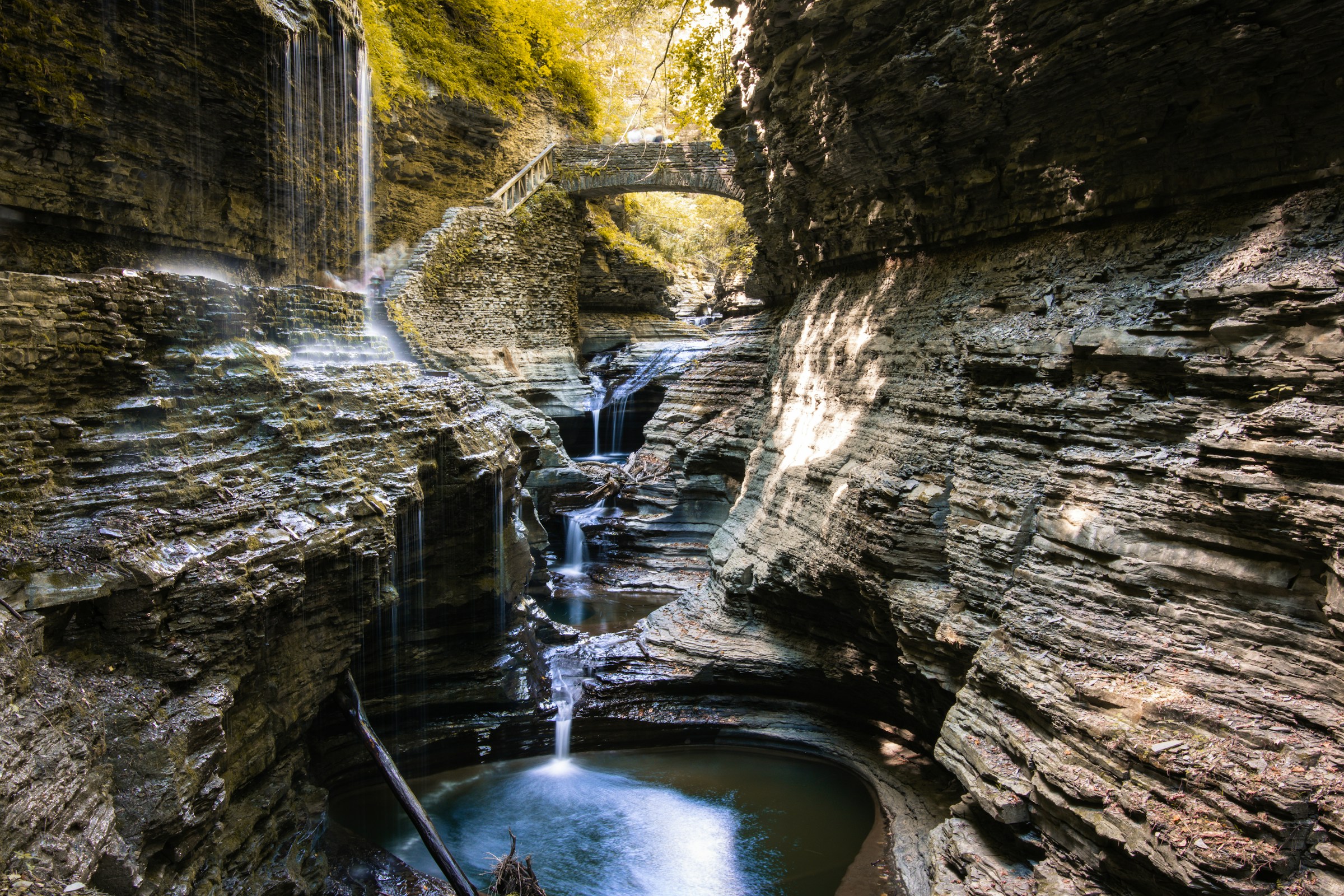
Watkins Glen sits at the southern tip of Seneca Lake in the Finger Lakes, and it earns the highest nightly rate and the fastest STR revenue growth in the article from a calendar that typically leans on summer, wine country weekends and race events. It is also one of the slowest sales markets here, with homes taking more than two months to sell, which can work in a patient buyer's favor.
The Finger Lakes economy around Watkins Glen runs heavily on tourism, and AirDNA's wider Finger Lakes market posts a score of 72 with $45,191 in average revenue, led by submarkets such as Lansing (score 93, $61K a year) and Hector/Burdett (score 89, $44K). However, First Street data on Redfin rates the flood risk as “major,” with 9% of properties exposed over the next 30 years, so lakefront and creekside addresses deserve extra scrutiny. On the STR side, the village zoning law requires a Special Use Permit for each short-term rental unit, valid for 24 months and not transferable to a new owner, and caps permits at 8% of the village's residential units, with a first-come waiting list once the cap is reached. Hosts also need a 24-hour local contact who can reach the property within 30 minutes, and Schuyler County charges a 4% occupancy tax that Airbnb, Vrbo and Expedia collect.
The Watkins Glen submarket posts an AirDNA score of 81/100, with Investability (99) leading, Revenue Growth (80) and Rental Demand (76) close behind, Regulation (62) next, and Seasonality (49) the “soft spot,” which is what a summer-heavy calendar typically does to a score. Annual revenue per listing averages $45,449 (up 8.9% year-over-year), with an average daily rate of $304.51 (up 9.8%), both the fastest growth on the list, and occupancy of 55% (essentially flat, down 0.1%). Total active listings sit at 258, up 2.4%, and group properties such as Your Group's Home Base ($206K a year at 56% occupancy) set the top end.
Financing note: Watkins Glen deals often qualify on TTM actuals or STR revenue projections given the seasonal revenue base, and Harpoon Capital offers industry leading DSCR Loans for properties throughout the market area. Check out our full DSCR Loans Program here, or if you want a quote on what terms look like today, fill out this two-minute form!
Sources: Zillow Home Value Index↗ · Redfin Housing Market↗ · Schuyler County Room Tax↗ · AirDNA Market Data↗
Investor Takeaway: Watkins Glen offers the highest nightly rates and the fastest STR growth in New York, in a sales market where homes typically take months to sell. Investors should generally check the village's permit cap and waiting list before making an offer, underwrite on trailing twelve-month actuals, and model the winter months honestly, because a lake view pays the mortgage in July and mostly just looks nice in January.
| MARKET | AIRDNA SCORE |
ANNUAL REVENUE |
AVG. DAILY RATE |
OCCUPANCY | YOY LISTING GROWTH |
|---|---|---|---|---|---|
| Binghamton | 91 | $22,224 (+3.8%) |
$117.89 (+4.7%) |
58% (+0.3%) | +6.8% (407 listings) |
| Buffalo | 82 | $30,613 (+5.8%) |
$156.42 (+0.6%) |
60% (+4.6%) | -4.8% (1,337 listings) |
| Watkins Glen | 81 | $45,449 (+8.9%) |
$304.51 (+9.8%) |
55% (-0.1%) | +2.4% (258 listings) |
| Utica | 80 | $26,627 (+3.6%) |
$150.80 (+5.4%) |
55% (-1.8%) | +2.6% (432 listings) |
| Rochester | 64 | $28,742 (+0.4%) |
$146.43 (+2.3%) |
61% (-1.3%) | -1.7% (1,738 listings) |
| New York City | 51 | $46,229 (+1.3%) |
$183.65 (+4.7%) |
77% (-2.5%) | -3.9% (14,125 listings) |
Source: AirDNA, current as of 2026. Scores and figures reflect each market or submarket as defined by AirDNA and may not correspond 1:1 with city or county boundaries. As of October 2026
A few patterns stand out. Revenue rose in all six markets, but only Buffalo and Binghamton grew occupancy, with Buffalo doing it on supply down 4.8%, while everywhere else hosts raised rates and filled slightly fewer nights. Watkins Glen and New York City earn about the same revenue per listing ($45,449 and $46,229) by opposite routes, i.e. a high nightly rate at 55% occupancy against a modest rate at 77%. Additionally, New York City posts the highest occupancy and revenue on the list but the lowest score, held down by Revenue Growth (52) and Rental Demand (59).
New York's real estate landscape offers a strategy for nearly every type of investor:
Market-level data is a starting point, not a substitute for underwriting the specific property, neighborhood and rental strategy in front of you. New York now layers a statewide registry and platform-collected sales tax on top of county and city rules, and New York City largely closes short-term rentals to investors, so investors should confirm what is allowed at a specific address before they close and check flood exposure in Binghamton, Watkins Glen and New York City.
If you are ready to invest in one of these markets, start with our New York DSCR loans page.
Sources: Redfin housing market data, BiggerPockets Market Finder, Zillow Home Value Index, AirDNA market and submarket data (airdna.co), NYS Department of Taxation and Finance, NYS Department of State STR reporting FAQ, NYC Office of Special Enforcement, City of Buffalo STR code, City of Binghamton and Broome County occupancy tax pages, Schuyler County room tax and WKTV on the Oneida County registry. Data collected as of October 2026, ahead of the 2027 investing season.
Generally, yes, though with a county rather than the state. New York's 2025 short-term rental law has counties run the registries, with registrations renewed every two years, and booking platforms collect the 4% state sales tax plus local taxes on short-term stays. Counties could opt out, and Monroe County (Rochester) did. Local rules then vary: Oneida County (Utica) has required free registration since January 1, 2026, Buffalo requires an annual city license, and Watkins Glen requires a village Special Use Permit under an 8% cap. New York City is excluded from the registry law and runs its own stricter system under Local Law 18.
No. Out-of-state and first-time investors can buy investment property in New York without any license. A DSCR loan qualifies you primarily based on the property itself rather than your personal income or professional credentials, which is part of why it's such a common financing tool for out-of-state buyers.
A DSCR (Debt Service Coverage Ratio) loan qualifies a property primarily based on the property (its rent, value and location) relative to its mortgage payment, rather than the borrower's personal income or tax returns. If the property's projected or actual rent covers the mortgage payment (a DSCR of 1.00x or higher), it's generally easier to qualify, and Harpoon Capital also offers options for deals below 1.00x.
Generally, no. The city's Office of Special Enforcement states that stays under 30 days are allowed only when the host is staying in the same unit, with no more than two guests, and that an entire apartment or home cannot be rented for less than 30 days. Only permanent occupants can register, so investors who want New York City exposure typically buy for long-term rental, while investors focused on short-term rentals usually look upstate, where most cities allow them under local rules.
Harpoon Capital's DSCR loan program allows as little as 15% down on qualifying purchases, up to 85% LTV, with cash-out refinances available up to 80% LTV. Exact terms depend on the property, credit profile, and DSCR ratio. Fill out our DSCR Loan Application to see specific numbers for your deal.
Ready to Run the Numbers on a New York Deal?
Whether you're eyeing Binghamton's rent ratio or lake stays in Watkins Glen, get a same-day rate and terms with our two-minute DSCR quote form, or explore the full New York DSCR Loans Program to see how we qualify the property, not just the borrower.
This article is for informational purposes only and does not constitute investment, legal, or financial advice. Harpoon Capital encourages investors to conduct independent due diligence before making any real estate investment decision.