.png)


By Robin Simon, President, Harpoon Capital · About · LinkedIn · Author, The Book on DSCR Loans (Available on Amazon)

The best Oregon markets for real estate investors in 2027 offer entry points from about $419,000 in Medford and strong short-term rental potential, led by $51,371 in average annual STR revenue in Bend and AirDNA scores of 81 in Corvallis and Lakeside. Oregon gives investors a high-desert resort town, a valley city in the south, three Willamette Valley cities built around a state capital and two major universities, and a quiet lake town on the Southern Coast, all under a state system that leaves most short-term rental rules to the cities. Home prices run up to about $699,000 in Bend (Redfin, 2026), and the “rent-to-price ratios” on BiggerPockets sit between roughly 0.27% and 0.33% a month, which is thin across the board and means the long-term rent alone will often struggle to cover the payment. Investors buying here typically finance with Oregon DSCR loans, which are qualified primarily based on the property rather than the borrower's personal income, and in this state the “DSCR Ratio” usually deserves a careful look before an offer goes in.
This breakdown uses market data collected as of October 2026, the most current snapshot available heading into next year's buying season. If you're evaluating a purchase in the final months of 2026, keep in mind that your first full year of rental income, appreciation, or short-term rental revenue lands in 2027 regardless of when you close. A deal you underwrite today is already a 2027 investing decision, just one made with the freshest data available right now.
Oregon has no statewide short-term rental license, so rules are set locally, and the Oregon Department of Revenue charges a 1.5% state lodging tax on stays under 30 days, a rate that rises to 2.75% on January 1, 2027, with the extra 1.25% shown on receipts as a “nature conservation fee.” The local layer matters even more: the City of Bend charges a 10.4% room tax and enforces a 500-foot spacing rule for whole-home rentals, while Eugene requires only a free annual registration and a 4.5% city tax, so the rulebook can change dramatically from one city to the next.
One pattern shows up in Redfin's search data, which tracks home searches rather than actual moves: Portland buyers are the top inbound source for Bend (a net 862), Eugene (379) and Medford (156), which makes the state's largest metro the main source of outside demand for most of this list. Redfin's “Compete Scores” run from 79 in Eugene (“very competitive”) down to 44 in Salem (“somewhat competitive”), so buyers generally have some room to negotiate in most of the state.
Below, we break down six Oregon markets worth watching, using current data from Redfin, BiggerPockets, and AirDNA.
Note: Home price appreciation and rent-growth figures below come from Redfin's median sale price data and BiggerPockets' Market Finder, which use different methodologies and can vary from one another; BiggerPockets' appreciation figures (6.50% to 9.48%) and Redfin's recent price changes (-2.2% to +7.9%) do not always agree, so treat them as directional. BiggerPockets figures cover the metro named on each page (Eugene–Springfield for Eugene), and Lakeside has no BiggerPockets page. Redfin's migration tables for Salem and Corvallis match the Portland region's number for number, so they are left out. Redfin's Lakeside data rests on about eight sales a month, so Zillow's typical home value is used for Lakeside instead.
Mountain money and a 500-foot rule
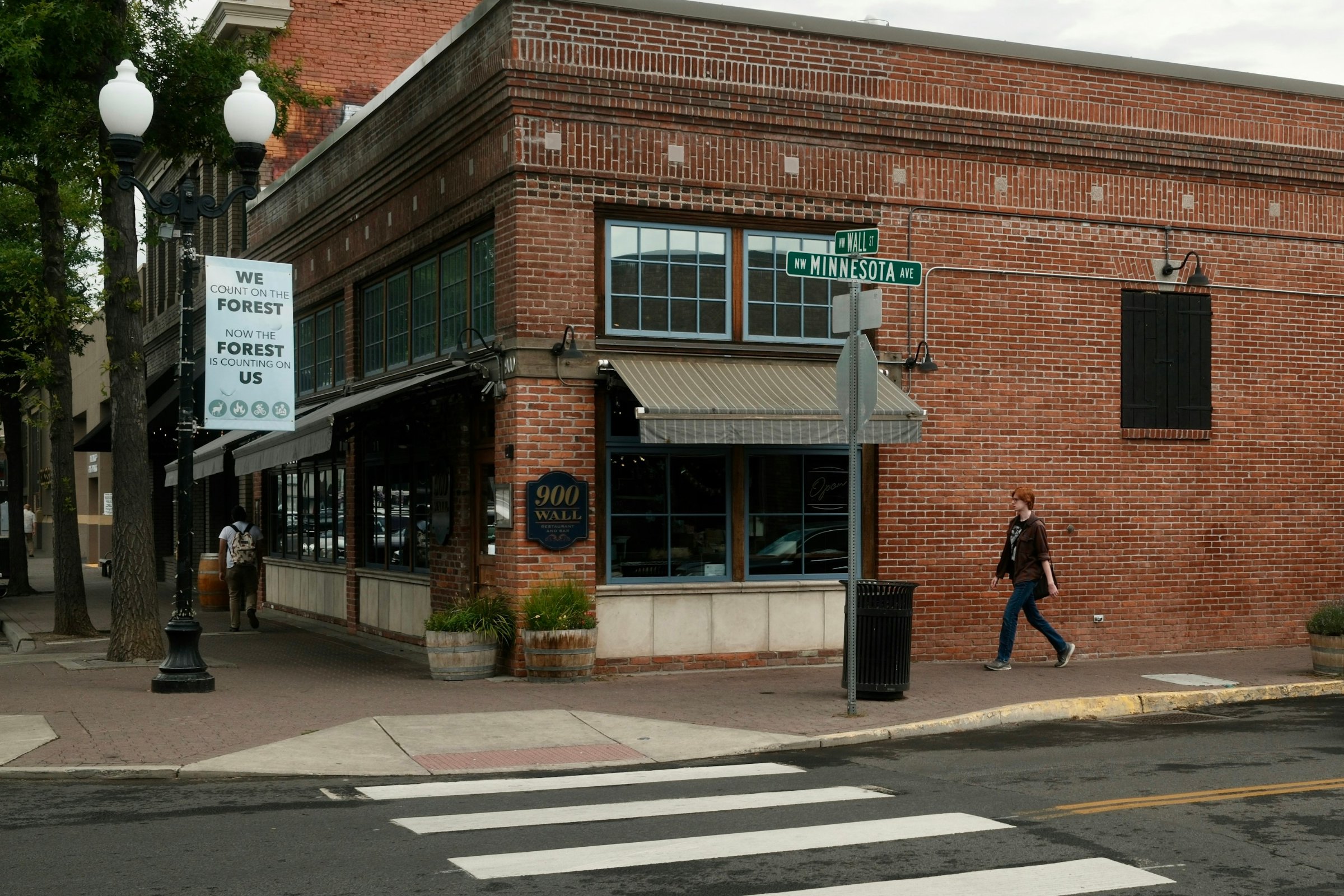
Bend is the high-desert hub of Central Oregon, with an outdoor-recreation economy, a steady stream of remote workers and the most valuable short-term rental market in the article. However, it also has some of the strictest STR rules in the state and the highest prices on this list, so the opportunity here generally belongs to investors who can buy well and navigate the permit map.
BiggerPockets points to tourism, healthcare and technology, along with a growing number of remote workers, and Redfin search data shows Portland buyers looking at Bend more than any other metro (a net 862), ahead of Seattle (411) and Los Angeles (148). However, 43.9% of listings saw price drops, which suggests sellers are still adjusting to a cooler market, and First Street data on Redfin rates the wildfire risk as “moderate” but nearly universal, with 94% of properties exposed over the next 30 years, so insurance quotes belong early in the underwriting. On the STR side, the City of Bend requires whole-home (Type II) rentals in its residential and riverfront mixed-use zones to sit at least 500 feet from any other Type II rental, charges a 10.4% room tax on top of the state tax, and since July 1, 2025 adds a transportation fee supplement of $204.80 a year to each whole-home license.
The Bend market posts an AirDNA score of 48/100, with Rental Demand (73) and Regulation (69) leading, Investability (65) and Revenue Growth (59) in the middle, and Seasonality (47) the “soft spot.” Annual revenue per listing averages $51,371 (up 1.6% year-over-year), the highest on the list, with an average daily rate of $326.46 (up 5.1%) and occupancy of 52% (down 3.5%). Total active listings sit at 4,809, down 2.1%, and the Bend (score 64, $46K a year at 61% occupancy) and Three Sisters Mountains (score 55, $50K at a $418 rate) submarkets lead the area. Note that this market also includes Redmond, Sisters and the surrounding resort areas, so the figures describe the wider region.
Financing note: Harpoon Capital offers industry leading DSCR Loans for properties in Bend and all throughout the market area. Check out our full DSCR Loans Program here, or if you want a quote on what terms look like today, fill out this two-minute form!
Sources: Redfin Housing Market↗ · BiggerPockets Market Finder↗ · City of Bend STR Program↗ · AirDNA Market Data↗
Investor Takeaway: Bend offers the highest STR revenue, rents and appreciation in Oregon, at the highest prices and under the strictest rules. Investors should generally confirm that a specific address clears the 500-foot spacing rule before making an offer, underwrite on trailing twelve-month actuals, and use the 43.9% price-drop rate as leverage at the negotiating table.
Rogue Valley value with a wildfire wrinkle
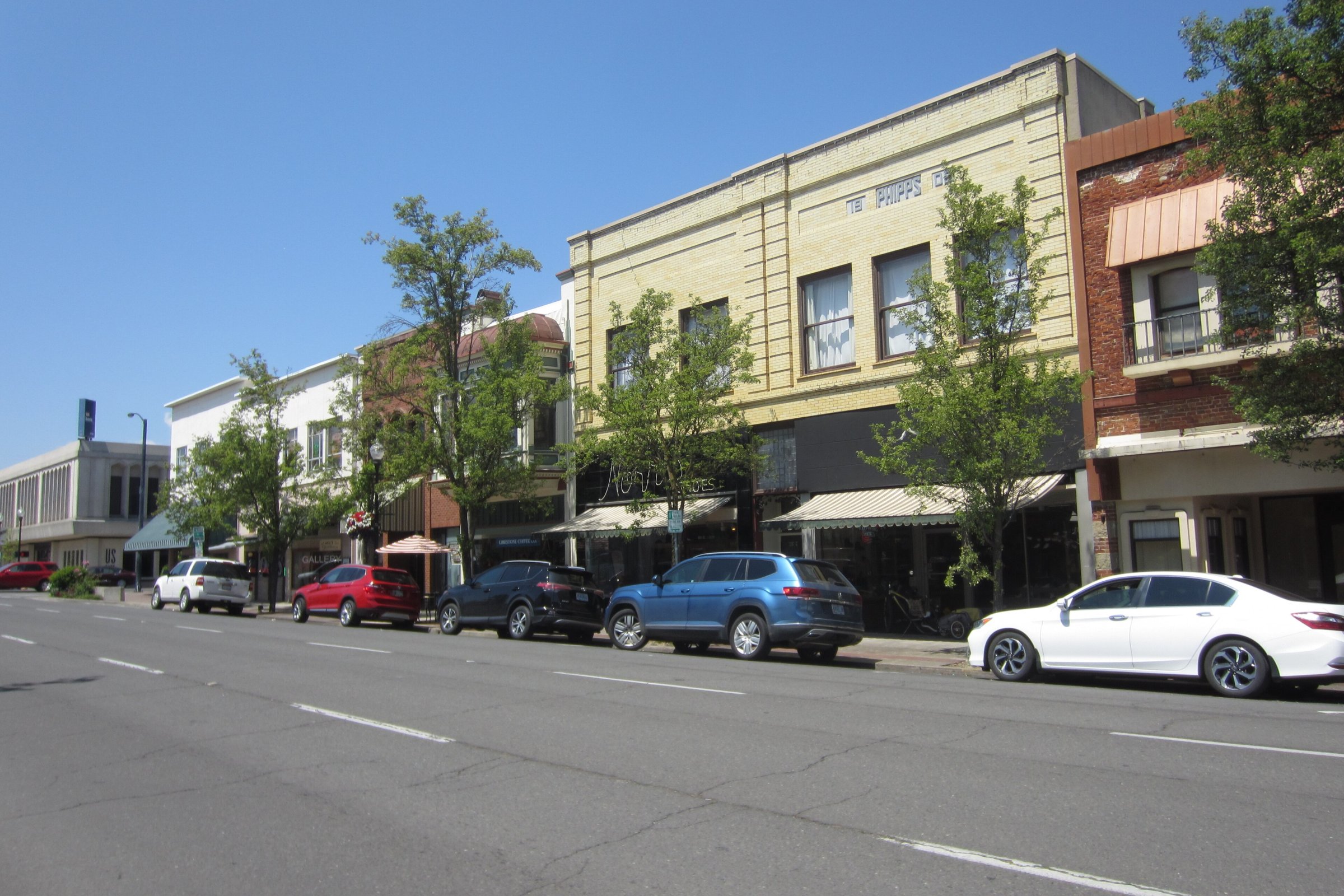
Photo: Another Believer, CC BY-SA 4.0 (cropped)
Medford anchors the Rogue Valley in Southern Oregon, with a healthcare, education and agriculture economy, the lowest prices in the article and an STR market where guests fill more nights than almost anywhere else on the list. It is a quieter market than Bend – and for an investor focused on cash flow, i.e. the monthly rent rather than the resale price, that can be an advantage.
BiggerPockets points to healthcare, education and agriculture, with Asante Rogue Regional Medical Center among the major employers, and Redfin search data shows Portland (a net 156) and San Francisco (148) buyers looking at Medford more than any other metros, ahead of Los Angeles (70). However, First Street data on Redfin rates the wildfire risk as “moderate” with 82% of properties exposed over the next 30 years, and the heat risk as “major,” so insurance availability and cost deserve a hard look. On the STR side, the City of Medford requires a vacation rental business license (with a fire affidavit and posted Good Neighbor Guidelines) and a separate lodging-tax registration, and the city tax is 11%, though voters approved an increase of up to 13% in November 2025 and the council has signaled 12%, so investors should model the higher rate.
The Medford submarket posts an AirDNA score of 68/100, with Rental Demand (84) and Seasonality (79) leading, Revenue Growth (66) and Regulation (60) in the middle, and Investability (53) the “soft spot.” Annual revenue per listing averages $28,405 (down 2.7% year-over-year), with an average daily rate of $142.44 (up 2.3%) and occupancy of 61% (down 4.0%), the highest occupancy on the list. Total active listings sit at 361, up 6.5%, which likely explains much of the revenue dip, and top listings such as a country home near Jacksonville ($102K a year at 62% occupancy) show what well-located properties can earn.
Financing note: Harpoon Capital offers industry leading DSCR Loans for properties in Medford and all throughout the market area. Check out our full DSCR Loans Program here, or if you want a quote on what terms look like today, fill out this two-minute form!
Sources: Redfin Housing Market↗ · BiggerPockets Market Finder↗ · City of Medford Vacation Rental License↗ · AirDNA Market Data↗
Investor Takeaway: Medford offers the lowest entry price in Oregon and the highest STR occupancy on the list, with supply growing faster than demand. Investors should generally underwrite the long-term rent first, price wildfire insurance before committing, and treat the STR numbers as a “bonus” while new listings settle in.
Fast sales, friendly STR rules
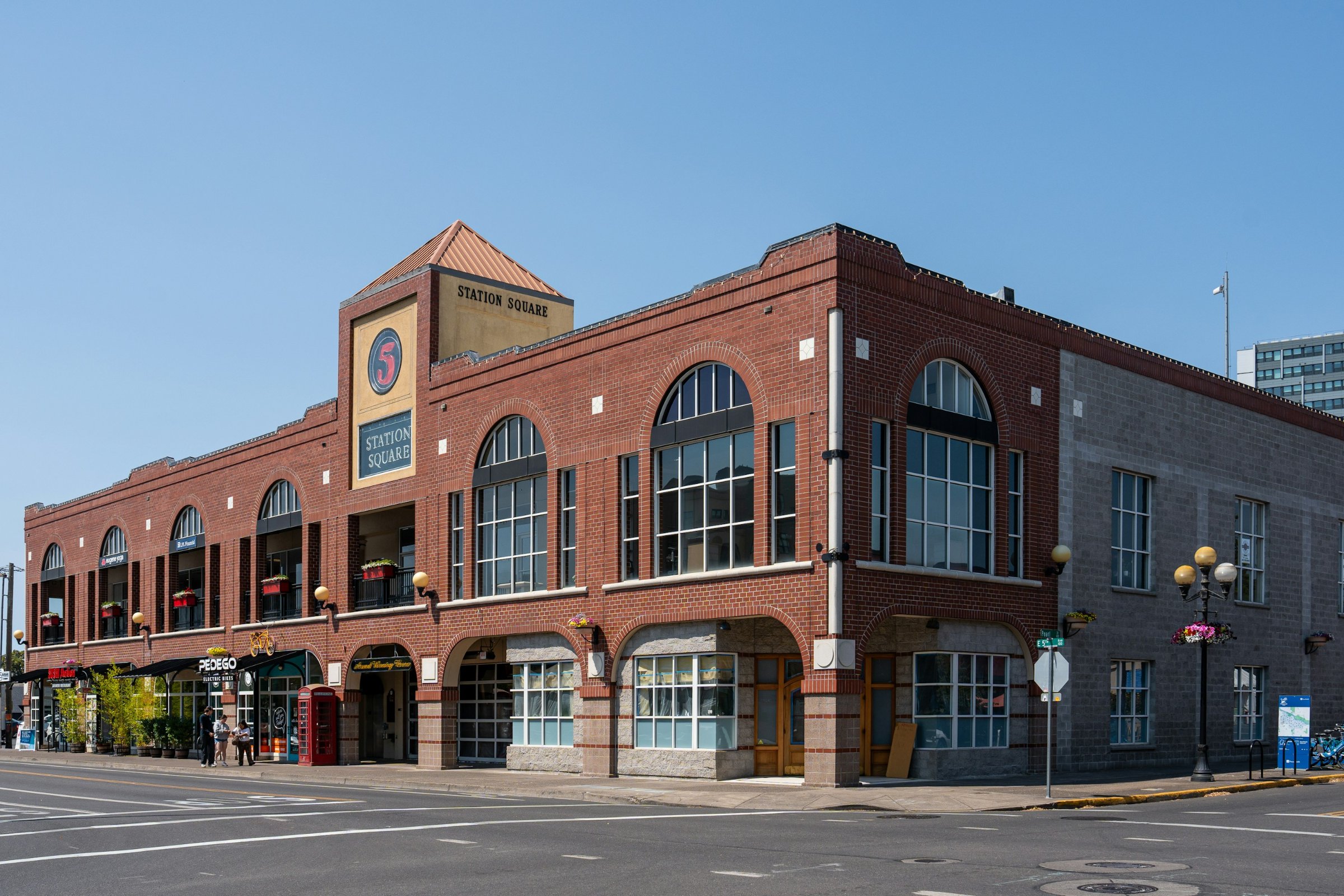
Eugene is home to the University of Oregon, with a healthcare and education economy, the most competitive sales market in the article and the lightest short-term rental rules on the list. Homes here draw four offers on average, so investors should generally expect to move quickly and bring their best number early.
BiggerPockets points to healthcare, education and technology, with the University of Oregon and PeaceHealth Medical Group among the major employers, and Redfin search data shows Portland buyers looking at Eugene more than any other metro (a net 379), ahead of San Francisco (99) and Seattle (98). However, First Street data on Redfin rates the flood risk as “moderate” with 17% of properties exposed over the next 30 years, the highest share in the article. On the STR side, the City of Eugene requires only a free annual registration under Eugene Code 3.350 and a 4.5% city room tax plus the state tax, and the city does not cap the number of short-term rentals, which is about as investor-friendly as Oregon gets.
The Eugene market posts an AirDNA score of 55/100, with Rental Demand (77) and Revenue Growth (73) leading, Regulation (66) and Investability (57) in the middle, and Seasonality (55) the “soft spot.” Annual revenue per listing averages $30,801 (up 3.4% year-over-year), with an average daily rate of $191.62 (up 5.8%) and occupancy of 51% (down 4.2%), so the gain is “rate-led.” Total active listings sit at 1,837, up 4.2%, and the Junction City (score 65, $24K a year) and Blue River (score 61, $35K at a $247 rate) submarkets lead the area.
Financing note: Harpoon Capital offers industry leading DSCR Loans for properties in Eugene and all throughout the market area. Check out our full DSCR Loans Program here, or if you want a quote on what terms look like today, fill out this two-minute form!
Sources: Redfin Housing Market↗ · BiggerPockets Market Finder↗ · City of Eugene STR Page↗ · AirDNA Market Data↗
Investor Takeaway: Eugene offers fast sales, steady university demand and the simplest STR rules in Oregon. Investors should generally expect to compete for well-priced homes, check the flood map for each address, and lean on the long-term rent since STR occupancy slipped while supply grew.
Thinking About One of These Markets?
Get a same-day DSCR Loan quote for a specific deal, or browse the full Harpoon Capital DSCR Loan Program to see rates, LTV, and qualification details before you keep reading.
Capital-city calm and patient sellers

Salem is the state capital, with a government, healthcare and education economy, the best rent-to-price ratio on BiggerPockets, the highest STR rental demand score in the article and one of the most buyer-friendly sales markets here. Homes take nearly two months to sell, which gives a patient investor more negotiating room than most of the list.
BiggerPockets points to government, healthcare and education, with the State of Oregon and Salem Health among the major employers, which typically gives the tenant base a stability that tourism-driven markets lack. Redfin's migration table for Salem matches the Portland region's number for number and is left out. However, rising price drops and longer days on market suggest a market that is still finding its footing, and First Street data on Redfin rates the flood risk as “moderate” (8% of properties). On the STR side, the City of Salem requires a short-term rental license renewed every year: a standard license (single-family homes and condos only) or an accessory license for owners who live in the home at least 270 days a year, with whole-home stays capped at 95 days. In the RA, RS and NH residential zones, a non-resident operator also needs a Conditional Use Permit, and every stay carries the city's 9% transient occupancy tax.
The Salem market posts an AirDNA score of 63/100, with Rental Demand (89) far in front, the highest demand score in the article, Seasonality (79) next, Regulation (61) and Investability (59) in the middle, and Revenue Growth (55) the “soft spot.” Annual revenue per listing averages $30,928 (up 1.2% year-over-year), with an average daily rate of $162.03 (up 3.4%) and occupancy of 59% (down 2.3%). Total active listings sit at 1,228, down 1.0%, and the Aurora (score 83, 60% occupancy), Silverton (score 83, $28K a year) and Monmouth (score 82, $31K a year) submarkets lead the area. Note that AirDNA's Salem market spans much of the mid-Willamette Valley, Corvallis included, so these figures describe the region rather than the city alone.
Financing note: Harpoon Capital offers industry leading DSCR Loans for properties in Salem and all throughout the market area. Check out our full DSCR Loans Program here, or if you want a quote on what terms look like today, fill out this two-minute form!
Sources: Redfin Housing Market↗ · BiggerPockets Market Finder↗ · City of Salem STR License↗ · AirDNA Market Data↗
Investor Takeaway: Salem offers the best rent ratio in Oregon, the deepest STR demand score in the article and plenty of negotiating room, with a government-anchored tenant base. Investors should generally buy for the long-term rent, use the long days on market to negotiate, and check the zone before planning a non-resident STR, since much of the city's residential land requires a Conditional Use Permit for one.
Campus demand and an 81 STR score
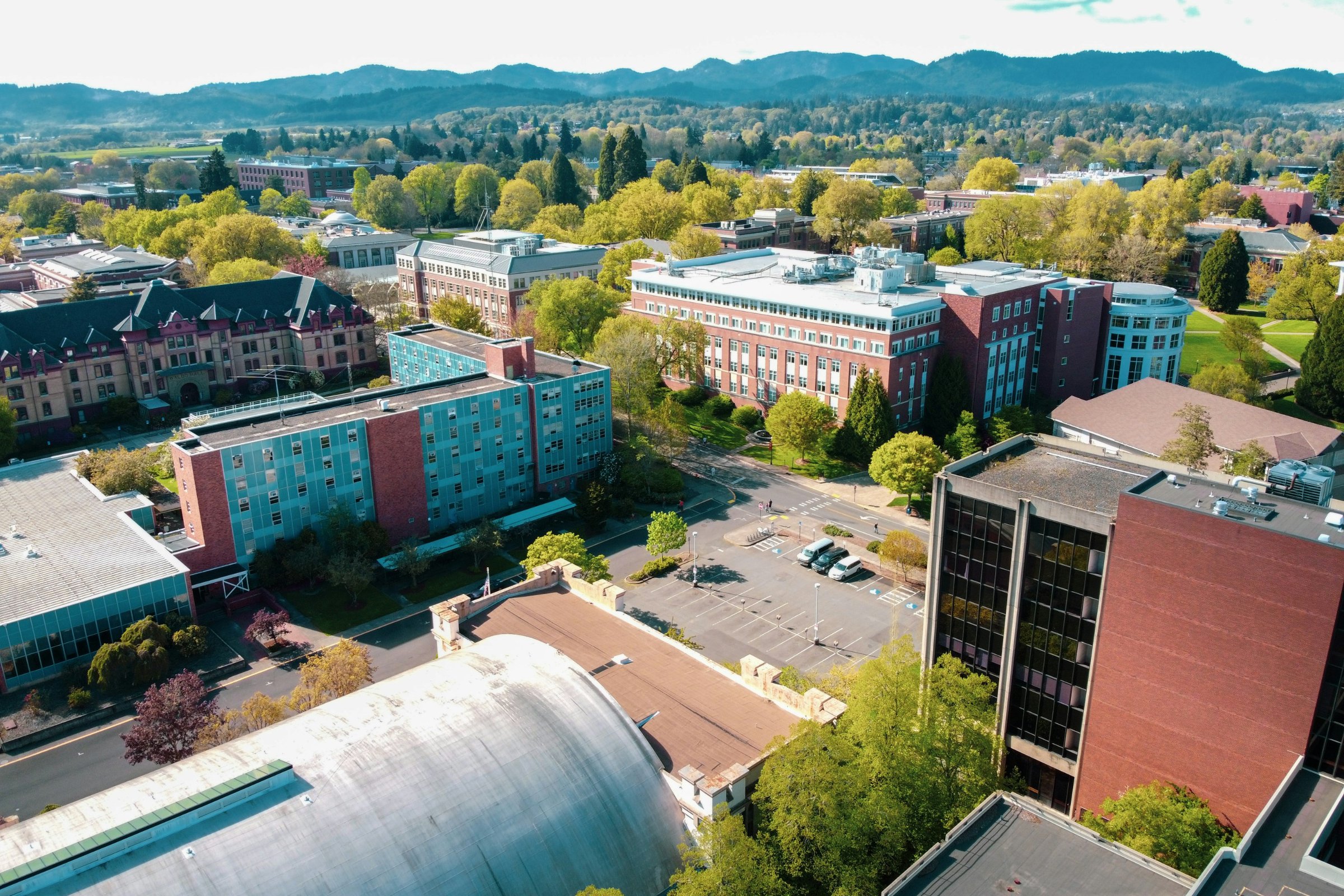
Corvallis is home to Oregon State University, and it pairs some of the highest prices on this list with a rental demand score second only to Salem's, i.e. guests and tenants who show up year after year for the university calendar. It is a small market, so individual deals typically matter more than headline averages.
BiggerPockets points to Oregon State University as the major economic driver, with technology, healthcare and research adding to a steady demand for student housing and rental properties. Redfin's migration table for Corvallis matches the Portland region's number for number and is left out. However, the 0.27% rent-to-price ratio is the thinnest on this list, so a long-term rental will usually need a sizable down payment or a buy-down to reach a 1.00x DSCR. On the STR side, no city permit program was found, but the City of Corvallis charges a 9% lodging tax that applies to vacation rental houses and requires a lodging tax registration form, and Benton County adds a 3% lodging tax. The county has proposed STR zoning amendments that have not been adopted, so investors should watch for changes.
The Corvallis submarket of AirDNA's Salem market posts a score of 81/100, with Rental Demand (88) and Revenue Growth (81) leading, Seasonality (77) and Regulation (65) behind them, and Investability (52) the “soft spot,” which is what high purchase prices typically do to a score. Annual revenue per listing averages $33,315 (up 6.1% year-over-year), with an average daily rate of $167.85 (up 9.4%) and occupancy of 60% (down 3.6%). Total active listings sit at 241, down 0.8%, and large group properties such as The Crest and Bella Estates ($296K a year at 76% occupancy) carry the top end.
Financing note: Harpoon Capital offers industry leading DSCR Loans for properties in Corvallis and all throughout the market area. Check out our full DSCR Loans Program here, or if you want a quote on what terms look like today, fill out this two-minute form!
Sources: Redfin Housing Market↗ · BiggerPockets Market Finder↗ · City of Corvallis Lodging Tax↗ · Benton County Lodging Tax↗ · AirDNA Market Data↗
Investor Takeaway: Corvallis offers deep university-driven rental demand and the fastest price growth in Oregon, on the thinnest rent ratio in the article. Investors should generally underwrite carefully for DSCR, model the university calendar, and budget for the 12% combined city and county lodging tax on top of the state tax when running STR numbers.
Lakefront lodging on the Southern Coast

Lakeside sits on Tenmile Lakes just inland from the Southern Oregon Coast, and it is the smallest market in this article by a wide margin – a field of 63 short-term rentals where a handful of lakefront properties drive the averages. Its STR revenue grew faster than anywhere else on the list over the past year, and the sales market leaves room for patient buyers.
Lakeside's draw is the lake itself, with lakefront compounds and cabins carrying the top of the STR market, and the small number of sales means individual properties can trade well below list. However, First Street data on Redfin rates the flood risk as “moderate,” with 9% of properties exposed over the next 30 years, so lakefront addresses deserve extra scrutiny. On the STR side, no Lakeside short-term rental permit program was found, and the city levies a 7.5% transient occupancy tax on motels and RV parks, so investors should confirm with City Hall whether it applies to short-term rentals.
The Lakeside submarket of AirDNA's Oregon Southern Coast market posts a score of 81/100, with Revenue Growth (100) and Investability (84) leading, Regulation (62), Rental Demand (60) and Seasonality (58) behind them. Annual revenue per listing averages $44,736 (up 20.6% year-over-year), with an average daily rate of $281.66 (up 29.4%), both the fastest growth on the list, and occupancy of 53% (down 4.2%). Total active listings sit at 63, up 3.3%, and lakefront properties such as Lakefront Compound ($146K a year at 81% occupancy) and Lakefront Octagon ($136K at 71%) show how much the best-located homes can earn. Note that in a field this small, a few listings can swing the averages, so the 20.6% gain is a signal rather than a forecast!
Financing note: Lakeside deals often qualify on TTM actuals or STR revenue projections given the seasonal revenue base, and Harpoon Capital offers industry leading DSCR Loans for properties throughout the market area. Check out our full DSCR Loans Program here, or if you want a quote on what terms look like today, fill out this two-minute form!
Sources: Zillow Home Value Index↗ · Redfin Housing Market↗ · AirDNA Market Data↗
Investor Takeaway: Lakeside offers fast-rising STR revenue at coastal-area prices well below Bend's, in a market where sellers are typically giving ground. Investors should generally underwrite on trailing twelve-month actuals, focus on lakefront or lake-access properties, and remember that a 63-listing market can move fast in either direction.
| MARKET | AIRDNA SCORE |
ANNUAL REVENUE |
AVG. DAILY RATE |
OCCUPANCY | YOY LISTING GROWTH |
|---|---|---|---|---|---|
| Lakeside | 81 | $44,736 (+20.6%) |
$281.66 (+29.4%) |
53% (-4.2%) | +3.3% (63 listings) |
| Corvallis | 81 | $33,315 (+6.1%) |
$167.85 (+9.4%) |
60% (-3.6%) | -0.8% (241 listings) |
| Medford | 68 | $28,405 (-2.7%) |
$142.44 (+2.3%) |
61% (-4.0%) | +6.5% (361 listings) |
| Salem | 63 | $30,928 (+1.2%) |
$162.03 (+3.4%) |
59% (-2.3%) | -1.0% (1,228 listings) |
| Eugene | 55 | $30,801 (+3.4%) |
$191.62 (+5.8%) |
51% (-4.2%) | +4.2% (1,837 listings) |
| Bend | 48 | $51,371 (+1.6%) |
$326.46 (+5.1%) |
52% (-3.5%) | -2.1% (4,809 listings) |
Source: AirDNA, current as of 2026. Scores and figures reflect each market or submarket as defined by AirDNA and may not correspond 1:1 with city or county boundaries. As of October 2026
A few patterns stand out. Occupancy fell in all six markets, by 2.3% to 4.2%, and every market where revenue rose did it on a higher nightly rate, so the 2026 story in Oregon is hosts holding price rather than filling more nights. Medford is the one market where revenue fell, with listings up 6.5%, which is what happens when new supply arrives faster than new guests. Additionally, the two smallest fields (Lakeside and Corvallis) post the highest scores, while Bend earns the most per listing with the lowest score, i.e. the AirDNA score rewards growth and demand more than the size of the paycheck.
Oregon's real estate landscape offers a strategy for nearly every type of investor:
Market-level data is a starting point, not a substitute for underwriting the specific property, neighborhood and rental strategy in front of you. Oregon leaves short-term rental rules to its cities and counties, which range from Eugene's free registration to Bend's 500-foot spacing rule, so investors should confirm what is allowed at a specific address before they close, price wildfire insurance in Bend and Medford, and check flood maps in Eugene and Lakeside.
If you are ready to invest in one of these markets, start with our Oregon DSCR loans page.
Sources: Redfin housing market data, BiggerPockets Market Finder, Zillow Home Value Index, AirDNA market and submarket data (airdna.co), Oregon Department of Revenue lodging tax, City of Bend, City of Medford, City of Eugene, City of Salem, City of Corvallis and Benton County STR and lodging tax pages, and BNBCalc Oregon STR guide. Data collected as of October 2026, ahead of the 2027 investing season.
No. Oregon has no statewide short-term rental license, so rules are set by cities and counties, though every stay under 30 days carries the state lodging tax, which is 1.5% today and rises to 2.75% on January 1, 2027. The local rules vary widely: Eugene requires a free annual registration, Salem and Medford require annual city licenses, and Bend requires a land use permit with a 500-foot spacing rule for whole-home rentals in residential areas.
No. Out-of-state and first-time investors can buy investment property in Oregon without any license. A DSCR loan qualifies you primarily based on the property itself rather than your personal income or professional credentials, which is part of why it's such a common financing tool for out-of-state buyers.
A DSCR (Debt Service Coverage Ratio) loan qualifies a property primarily based on the property (its rent, value and location) relative to its mortgage payment, rather than the borrower's personal income or tax returns. If the property's projected or actual rent covers the mortgage payment (a DSCR of 1.00x or higher), it's generally easier to qualify, and Harpoon Capital also offers options for deals below 1.00x.
The City of Bend requires whole-home (Type II) short-term rentals in its residential and riverfront mixed-use zones to sit at least 500 feet from any other Type II rental, while owner-occupied (Type I) rentals are not subject to the spacing rule. In practice, the existing rentals on a street can rule out a new one, so investors should check the city's permit map for a specific address before they make an offer.
Harpoon Capital's DSCR loan program allows as little as 15% down on qualifying purchases, up to 85% LTV, with cash-out refinances available up to 80% LTV. Exact terms depend on the property, credit profile, and DSCR ratio. Fill out our DSCR Loan Application to see specific numbers for your deal.
Ready to Run the Numbers on an Oregon Deal?
Whether you're eyeing Bend's STR revenue or lake stays in Lakeside, get a same-day rate and terms with our two-minute DSCR quote form, or explore the full Oregon DSCR Loans Program to see how we qualify the property, not just the borrower.
This article is for informational purposes only and does not constitute investment, legal, or financial advice. Harpoon Capital encourages investors to conduct independent due diligence before making any real estate investment decision.