.png)


By Robin Simon, President, Harpoon Capital · About · LinkedIn · Author, The Book on DSCR Loans (Available on Amazon)

Tennessee pairs three of the Southeast's most recognizable metros with a Fort Campbell-anchored city and the country's most visited national park, and the six markets below post some of the strongest AirDNA scores we've covered in this entire series. There's Music City itself in Nashville, a military-anchored market in Clarksville, a Tennessee River city in Chattanooga, a university and tech hub in Knoxville, a logistics powerhouse in Memphis, and the Great Smoky Mountains corridor around Sevierville and Gatlinburg. Home prices range from the mid-$140,000s in Memphis to over $500,000 in Gatlinburg, among the widest spreads in this series.
This breakdown uses market data collected as of September 2026, the most current snapshot available heading into next year's buying season. If you're evaluating a purchase in the final months of 2026, keep in mind that your first full year of rental income, appreciation, or short-term rental revenue lands in 2027 regardless of when you close. A deal you underwrite today is already a 2027 investing decision, just one made with the freshest data available right now.
Tennessee's 2018 Short-Term Rental Unit Act prevents cities from banning STRs outright based on how a property is used, but it leaves health, safety, and zoning regulation entirely to local governments, and the range across this article's six markets is genuinely wide. Nashville restricts non-owner-occupied STRs to commercial and mixed-use zones with active platform monitoring and fines up to $500 per day for repeat violations. Memphis, by contrast, places almost no restrictions on investor-owned rentals. Sevier County, home to Sevierville and Gatlinburg, is the most tourism-friendly STR environment in the state, with over 10,000 permitted units already operating.
Below, we break down six Tennessee markets worth watching, using current data from Zillow, Redfin, BiggerPockets, and AirDNA.
Note: Home price appreciation and rent-growth figures below come from Zillow's Home Value Index (ZHVI), Redfin's median sale price data, and BiggerPockets' Market Finder, which use different methodologies and can vary from one another. We've cited both where available so you can compare. BiggerPockets doesn't have a standalone Smoky Mountains page, so that section relies on Zillow, AirDNA, and direct research on Sevierville and Gatlinburg specifically.
Quick Answer: Tennessee's Top 6 Markets
If you only read one section, read this one.
Music City tourism revenue, gated behind strict STR enforcement
.jpg)
Nashville generates the second-highest short-term rental revenue of any market in this article, and it also runs one of the most actively enforced STR regimes we've covered anywhere in this series.
Vanderbilt University and its hospital system anchor a healthcare and education economy layered on top of Nashville's entertainment and tourism industry, together supporting one of the highest-revenue STR markets in this entire series. The zoning picture is the real catch: non-owner-occupied STR permits are restricted to commercial and mixed-use zones, owner-occupied rentals are allowed in most residential zones outside designated No-STR areas, and the city actively monitors Airbnb and VRBO listings for compliance. Fines run up to $500 per day for repeat violations, and hosts have reported losing permits entirely after restructuring ownership into an LLC, a real detail to plan around if you're holding title through an entity.
Nashville posts a strong AirDNA score of 86/100, with an excellent Rental Demand score of 86 and Seasonality score of 79, though Revenue Growth (68) is more middling. Annual revenue per listing averages $57,159 (up 2.3% year-over-year), the second-highest dollar figure in this article, with an average daily rate of $295.56 (down 0.2%) and occupancy of 58% (up 2.5%). Total active listings sit at 11,311, down 2.0% over the past year, consistent with the city's active enforcement limiting new supply.
Financing note: Harpoon Capital offers industry leading DSCR Loans for properties in Nashville and all throughout the market area. Check out our full DSCR Loans Program here, or if you want a quote on what terms look like today, fill out this two-minute form!
Sources: Zillow Home Value Index · BiggerPockets Market Finder · AirDNA Market Data
Investor Takeaway: The $57,159 average annual revenue is real, and so is the compliance risk sitting on top of it. Confirm zoning and ownership structure before assuming a Nashville property can operate as a non-owner-occupied rental, and budget for genuine enforcement rather than assuming light-touch oversight.
Fort Campbell-anchored demand at an affordable entry price
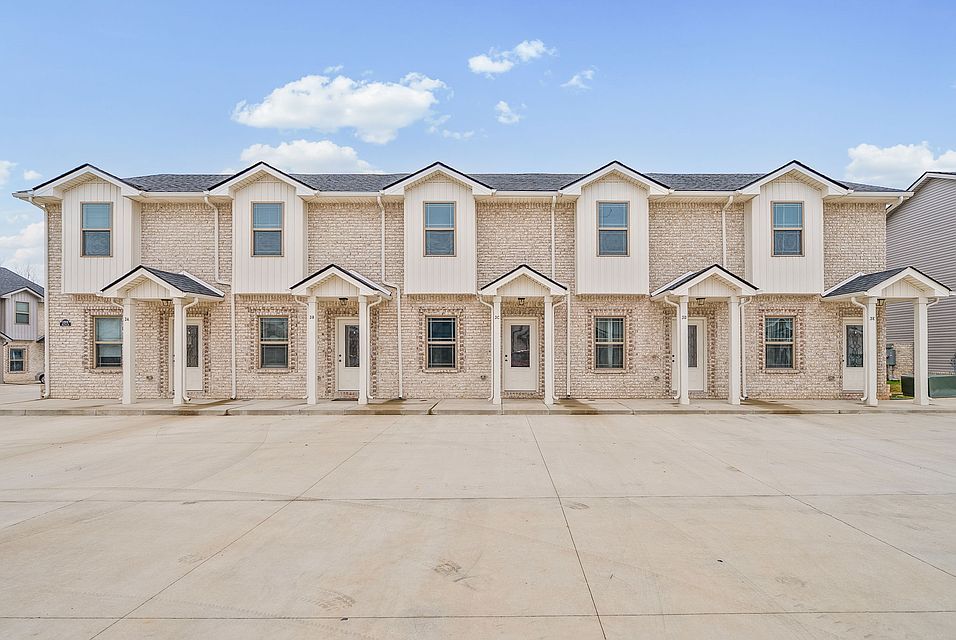
Clarksville sits just outside Fort Campbell, home to the 101st Airborne Division, and the base gives this market a rental demand base that doesn't depend on Nashville's tourism cycle.
Fort Campbell and Austin Peay State University anchor an economy that's proven resilient regardless of broader tourism trends, and the city's proximity to Nashville along a well-developed transportation corridor adds a second layer of demand from commuters priced out of the capital. Clarksville's affordability, well below Nashville's entry price, makes this a natural fit for investors who like Nashville's regional growth story but not its price point or enforcement risk.
Clarksville posts a submarket score of 84/100, with a strong Rental Demand score of 92 and an excellent Seasonality score of 97, though Revenue Growth (45) is comparatively weak. Annual revenue per listing averages $29,689, down 7.0% year-over-year, the steepest revenue decline of any market in this article. Average daily rate is $137.80 (down 1.5%), and occupancy sits at 64% (down 4.0%). Total active listings sit at 589, up 6.3% over the past year, new supply arriving even as revenue and occupancy both soften.
Financing note: Harpoon Capital offers industry leading DSCR Loans for properties in Clarksville and all throughout the market area. Check out our full DSCR Loans Program here, or if you want a quote on what terms look like today, fill out this two-minute form!
Sources: Zillow Home Value Index · BiggerPockets Market Finder · AirDNA Market Data
Investor Takeaway: Clarksville's long-term rental case, built on Fort Campbell and Austin Peay, doesn't depend on the STR numbers at all. The 7% revenue decline alongside rising listings suggests the STR side of this market may be absorbing more new supply than current demand supports.
Thinking About One of These Markets?
Get a same-day DSCR Loan quote for a specific deal, or browse the full Harpoon Capital DSCR Loan Program to see rates, LTV, and qualification details before you keep reading.
One of the strongest AirDNA scores in this entire series
.jpg)
Chattanooga posts a 96 AirDNA score, among the strongest of any market we've covered across every state in this series, built on a genuinely diversified riverside economy.
Volkswagen and BlueCross BlueShield of Tennessee anchor a manufacturing and healthcare economy set along the Tennessee River, and ongoing downtown revitalization has kept Chattanooga on relocation shortlists for several years running. The appreciation and rent growth figures here are the strongest of any market in this article, evidence that Chattanooga's growth story extends well beyond its STR fundamentals.
Chattanooga posts an outstanding AirDNA score of 96/100, with excellent Investability (89) and Rental Demand (90) scores and a strong Seasonality score of 85. Annual revenue per listing averages $38,837 (up 1.3% year-over-year), with an average daily rate of $196.32 (up 3.0%) and occupancy of 58% (down 2.0%). Total active listings sit at 2,158, up a modest 2.2% over the past year.
Financing note: Harpoon Capital offers industry leading DSCR Loans for properties in Chattanooga and all throughout the market area. Check out our full DSCR Loans Program here, or if you want a quote on what terms look like today, fill out this two-minute form!
Sources: Zillow Home Value Index · BiggerPockets Market Finder · AirDNA Market Data
Investor Takeaway: Chattanooga combines the strongest appreciation and rent growth in this article with a near-elite AirDNA score, a rare combination of long-term and short-term fundamentals both pointing the same direction at once.
University-driven growth right at the foothills of the Smokies
.jpg)
Knoxville sits at the foothills of the Great Smoky Mountains, and its population is projected to hit one million residents by 2028, a growth trajectory that shows up clearly across both its long-term and short-term rental numbers.
The University of Tennessee's roughly 28,000 undergraduates drive steady off-campus housing demand, while Oak Ridge National Laboratory and the University of Tennessee Research Park have earned Knoxville a reputation as a genuine technology hub rather than just a college town. Knoxville's cost of living runs about 16 points below the national average, a meaningful draw for both residents and the tech professionals the metro has been attracting.
Knoxville posts an excellent AirDNA score of 93/100, with a near-perfect Rental Demand score of 96 and a strong Investability score of 86, though Revenue Growth (63) is more middling. Annual revenue per listing averages $36,839 (up 2.2% year-over-year), with an average daily rate of $189.96 (up 4.0%) and occupancy of 58% (down 2.0%). Total active listings sit at 2,673, up 9.4% over the past year, meaningful new STR supply in a market that's still growing overall.
Financing note: Harpoon Capital offers industry leading DSCR Loans for properties in Knoxville and all throughout the market area. Check out our full DSCR Loans Program here, or if you want a quote on what terms look like today, fill out this two-minute form!
Sources: Zillow Home Value Index · BiggerPockets Market Finder · AirDNA Market Data
Investor Takeaway: Knoxville's population trajectory, cost of living, and university base give it a genuinely diversified long-term case, and the 93 AirDNA score suggests the short-term side is keeping pace. Keep an eye on the rising listing counts, but occupancy has only softened modestly so far.
A near-perfect AirDNA score with almost no local STR restrictions
.jpg)
Memphis posts one of the strongest AirDNA scores in this entire series, and unlike Nashville, the city places almost no restrictions on investor-owned short-term rentals.
FedEx and St. Jude Children's Research Hospital anchor a healthcare and logistics economy that's kept Memphis relevant nationally well beyond its musical heritage. Regulation here is genuinely light: Memphis requires an STR permit, a property inspection, and proof of insurance, but places almost no restrictions on non-owner-occupied rentals, a sharp contrast to Nashville's zoning-based approach. Combined with the lowest entry price of any market in this article, the total tax burden here runs to roughly 13%, also among the lowest we've seen in this series.
Memphis posts a near-perfect AirDNA score of 98/100, with excellent Investability (96) and Seasonality (96) scores and a near-perfect Revenue Growth score of 99. Annual revenue per listing averages $30,083 (up 7.3% year-over-year), with an average daily rate of $149.84 (down 0.7%) and occupancy of 60%, up a strong 9.1% year-over-year, the largest occupancy gain of any market in this article. Total active listings sit at 2,180, down 2.3% over the past year, occupancy climbing on a shrinking supply base.
Financing note: Harpoon Capital offers industry leading DSCR Loans for properties in Memphis and all throughout the market area. Check out our full DSCR Loans Program here, or if you want a quote on what terms look like today, fill out this two-minute form!
Sources: Zillow Home Value Index · BiggerPockets Market Finder · AirDNA Market Data
Investor Takeaway: Memphis combines the lowest entry price in this article, one of the lightest STR regulatory regimes in the state, and a near-perfect AirDNA score with occupancy climbing on shrinking supply. This is arguably the cleanest risk-adjusted setup in this entire series.
The highest STR revenue on this list, in the most tourism-friendly regulatory environment in the state
.jpg)
Sevierville and Gatlinburg anchor the Great Smoky Mountains corridor, the gateway to the most visited national park in the country, and this market generates the highest short-term rental revenue of any market in this entire article.
Sevier County, home to Sevierville, Gatlinburg, and Pigeon Forge, is the most tourism-friendly STR environment in Tennessee, with over 10,000 permitted units already operating and minimal barriers to entry relative to the rest of the state. Gatlinburg requires a Tourist Residency Permit ($200 for two bedrooms plus $75 per additional bedroom), sprinkler systems for properties over three bedrooms or 5,000 square feet, and a designated 24/7 local rental agent, but there's no citywide occupancy cap and no owner-occupancy requirement. The one real zoning constraint: STRs are banned outright in Gatlinburg's R-1A and R-2A residential districts, so confirm zoning before assuming a specific address qualifies. Gatlinburg's sharper price decline compared to Sevierville could be a real buying opportunity in a market where underlying STR demand remains strong.
The broader Gatlinburg/Pigeon Forge market posts a strong AirDNA score of 82/100, with a near-perfect Investability score of 97 and an excellent Rental Demand score of 94, held back by a weak Revenue Growth score of 46. Annual revenue per listing averages $67,318, the highest dollar figure of any market in this article, down slightly (-0.8% year-over-year). Average daily rate is $350.83 (up 0.6%), also the highest here, and occupancy sits at 57% (down 1.4%). Within the region, Sevierville posts a strong 86 submarket score with $67,000 in average revenue, while Gatlinburg itself posts an 83 score with $65,000 in revenue, both broadly consistent with the wider corridor. Total active listings across the region sit at 18,636, up 3.0% over the past year.
Financing note: Smoky Mountains deals often qualify on TTM actuals or STR Narrative revenue projections given the strong seasonal tourism base, with rural property provisions available for cabin and mountain addresses that don't fit a standard suburban file.
Sources: Zillow Home Value Index · AirDNA Market Data
Investor Takeaway: This is the highest-revenue market in the entire article, operating in the state's most STR-friendly regulatory environment. Gatlinburg's steeper price decline relative to Sevierville, alongside continued strong AirDNA fundamentals, is a gap best investigated property by property rather than assumed to apply evenly across the corridor.
Source: AirDNA, current as of 2026. Scores and figures reflect each market or submarket as defined by AirDNA and may not correspond 1:1 with city or county boundaries.
A few patterns stand out. Memphis, Chattanooga, and Knoxville post the three highest composite scores in this article, all built on genuine economic diversification rather than tourism alone. The Smoky Mountains generate by far the highest dollar revenue in the state, consistent with the vacation-market pattern seen throughout this series. Clarksville is the only market here showing a meaningful revenue decline alongside rising listings, a possible early sign of oversupply relative to Fort Campbell-driven demand.
Tennessee's real estate landscape offers a strategy for nearly every type of investor:
Market-level data is a starting point, not a substitute for underwriting the specific property, neighborhood, and rental strategy in front of you. Tennessee leaves STR zoning and enforcement entirely to individual cities, and Nashville's active platform monitoring is meaningfully different from Memphis's light-touch approach or Gatlinburg's zoning-based restrictions. Confirm what's legal at your specific address before you close.
Yes, broadly. Tennessee has no rent control and no statewide cap on security deposits. The 2018 Short-Term Rental Unit Act prevents cities from banning STRs outright, but leaves zoning, permitting, and enforcement to local governments, and the range is wide, from Nashville's active enforcement to Memphis's much lighter touch, so confirm local rules before you buy with a short-term rental strategy in mind.
No. Out-of-state and first-time investors can buy investment property in Tennessee without any license. A DSCR loan qualifies you primarily based on the property itself rather than your personal income or professional credentials, which is part of why it's such a common financing tool for out-of-state buyers.
A DSCR (Debt Service Coverage Ratio) loan qualifies a property primarily based on the property (its value, value and location) relative to its mortgage payment, rather than the borrower's personal income or tax returns. If the property's projected or actual rent covers the mortgage payment (a DSCR of 1.00x or higher), it's generally easier to qualify, and Harpoon Capital also offers options for deals below 1.00x.
It depends entirely on zoning and whether you'll live there. Owner-occupied short-term rentals are allowed in most Nashville residential zones outside designated No-STR areas, but non-owner-occupied rentals are restricted to commercial and mixed-use zones. The city actively monitors listing platforms for compliance, so confirm your specific zoning before buying with a non-owner-occupied STR strategy in mind.
Harpoon Capital's DSCR loan program allows as little as 15% down on qualifying purchases, up to 85% LTV, with cash-out refinances available up to 80% LTV. Exact terms depend on the property, credit profile, and DSCR ratio. Fill out our two-minute quote form to see specific numbers for your deal.
Ready to Run the Numbers on a Tennessee Deal?
Whether you're eyeing Memphis's clean fundamentals or a cabin deal in the Smoky Mountains, get a same-day rate and terms with our two-minute DSCR quote form, or explore the full Tennessee DSCR Loans Program to see how we qualify the property, not just the borrower.
Sources: Zillow Home Value Index & Rental data, Redfin housing market data, BiggerPockets Market Finder, AirDNA market and submarket data (airdna.co). Data collected as of September 2026, ahead of the 2027 investing season.
This article is for informational purposes only and does not constitute investment, legal, or financial advice. Harpoon Capital encourages investors to conduct independent due diligence before making any real estate investment decision.