.png)

By Robin Simon, President, Harpoon Capital · About · LinkedIn · Author, The Book on DSCR Loans (Available on Amazon)

The best Wisconsin markets for real estate investors in 2027 offer entry points from about $245,000 in Milwaukee and Racine and strong short-term rental potential, led by an AirDNA score of 95 in Janesville and $42,150 in average annual STR revenue in Green Bay. Wisconsin gives investors a lot of Midwestern value in one state, running from the Lake Michigan shoreline of Milwaukee and Racine up the Fox Valley to Appleton and Green Bay, and inland to the state capital in Madison and the Rock River city of Janesville. Median sale prices run up to about $448,000 in Madison (Redfin, 2026), and the “rent-to-price ratios” on BiggerPockets sit between roughly 0.36% and 0.45% a month, which is about as good as it gets for markets this size in the upper Midwest. Investors buying here typically finance with Wisconsin DSCR loans, which are qualified primarily based on the property rather than the borrower's personal income, and the “DSCR Ratio” on a duplex in these cities often pencils out better than investors expect.
This breakdown uses market data collected as of October 2026, the most current snapshot available heading into next year's buying season. If you're evaluating a purchase in the final months of 2026, keep in mind that your first full year of rental income, appreciation, or short-term rental revenue lands in 2027 regardless of when you close. A deal you underwrite today is already a 2027 investing decision, just one made with the freshest data available right now.
Wisconsin is unusual in that a state law limits how far cities can go on short-term rentals: a city cannot ban rentals of seven consecutive days or longer, although it can require a local license, ban stays shorter than seven days and limit rentals of 7 to 29 days to no fewer than 180 days in any 365-day period. Every host renting more than 10 nights a year also needs a state “tourist rooming house” license, usually issued and inspected by the local health department, and booking platforms such as Airbnb must collect the state sales tax and the local room tax, which runs 8% in Racine and Janesville and 10% in Milwaukee, Appleton and Madison. However, a few cities still go further than investors might expect, e.g. Madison and Racine both limit STRs to the host's primary residence, so the rules at a specific address typically matter more than the market averages below.
One pattern shows up in Redfin's search data, which tracks home searches rather than actual moves: Chicago buyers are the top inbound source for Milwaukee (a net 1,544), Madison (305), Janesville (272) and Appleton (57), so the state's southern half in particular is being fed by buyers crossing the Illinois line. Redfin's “Compete Scores” run from 69 to 77 in every market on this list, i.e. “very competitive” across the board, and between 42% and 60% of homes sold above list price, so investors should generally plan to pay full price or better.
Below, we break down six Wisconsin markets worth watching, using current data from Zillow, Redfin, BiggerPockets, and AirDNA.
Note: Home price appreciation and rent-growth figures below come from Redfin's median sale price data and BiggerPockets' Market Finder, which use different methodologies and can vary from one another; BiggerPockets' appreciation figures (5.01% to 9.31%) and Redfin's recent price changes (+2.7% to +14.0%) do not always agree, so treat them as directional. BiggerPockets figures cover the metro named on each page, including Milwaukee–Waukesha and Janesville–Beloit. Redfin's migration figures cover different quarters in different cities (January to March 2026 for Green Bay and Janesville, April to June 2026 for Milwaukee, Appleton and Madison), and Racine's table repeats Milwaukee's metro table, so it is left out. AirDNA's Racine figures cover a combined Racine/Kenosha submarket, and its Milwaukee, Madison and Green Bay markets cover the surrounding counties as well as the cities.
Kringle country with a competitive climb
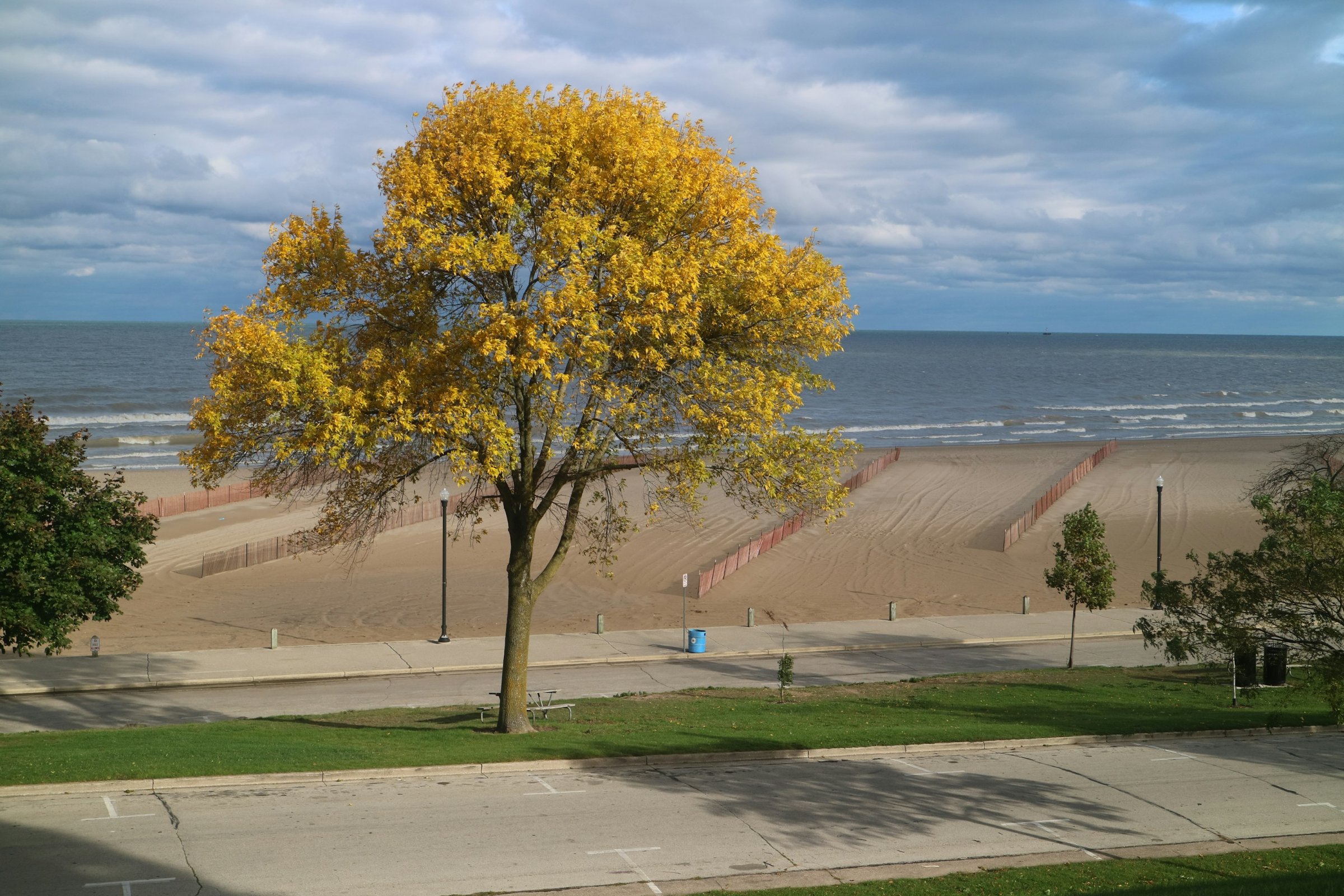
Racine sits on Lake Michigan between Milwaukee and Chicago, and it pairs the fastest price growth in the article with one of the highest Compete Scores and an easy drive to both cities. It is the home of SC Johnson and, more importantly to some visitors, the Danish kringle! It is also the market on this list where prices have moved the most over the past year.
BiggerPockets points to manufacturing and healthcare, with SC Johnson and Ascension All Saints Hospital among the major employers. However, First Street data on Redfin rates the flood risk as “major,” with 9% of properties exposed over the next 30 years, the highest share in the article. On the STR side, Racine's zoning code (§114-273) states that “all short term rental units shall be primary residence of the proprietor(s),” in the R1 district and several others, which effectively rules out investor-owned whole-home STRs. Hosts also need a city permit through the Public Health Department with an annual inspection, for a first-year cost of about $773 (a $490 pre-inspection, a $210 permit, a $50 fire inspection, a $3 room tax registration and a $20 state seller's permit) and $210 a year after that, and stays carry the city's 8% room tax (Municipal Code §90-53).
The Racine/Kenosha submarket posts an AirDNA score of 67/100, with Rental Demand (78) and Investability (77) leading, Revenue Growth (70) and Regulation (60) in the middle, and Seasonality (57) the “soft spot,” which is what a Lake Michigan summer looks like on a scorecard. Annual revenue per listing averages $39,552 (up 4.8% year-over-year), with an average daily rate of $229.87 (up 10.1%) and occupancy of 58% (down 5.3%). Total active listings sit at 323, up 3.5%, and larger homes marketed to Chicago guests, such as a barn with an arcade ($198K a year at 38% occupancy), carry the top end.
Financing note: Harpoon Capital offers industry leading DSCR Loans for properties in Racine and all throughout the market area. Check out our full DSCR Loans Program here, or if you want a quote on what terms look like today, fill out this two-minute form!
Sources: Redfin Housing Market↗ · BiggerPockets Market Finder↗ · City of Racine Tourist Rooming House↗ · AirDNA Market Data↗
Investor Takeaway: Racine offers the fastest price growth and rent growth in Wisconsin, between two large job markets. Investors should generally buy for the long-term rent, keep an eye on the rising share of price drops (a sign the run-up may be cooling), and check the flood map for each address, since the city's primary-residence rule keeps nightly rentals with owner-occupants.
Big-city breadth at a bargain basis
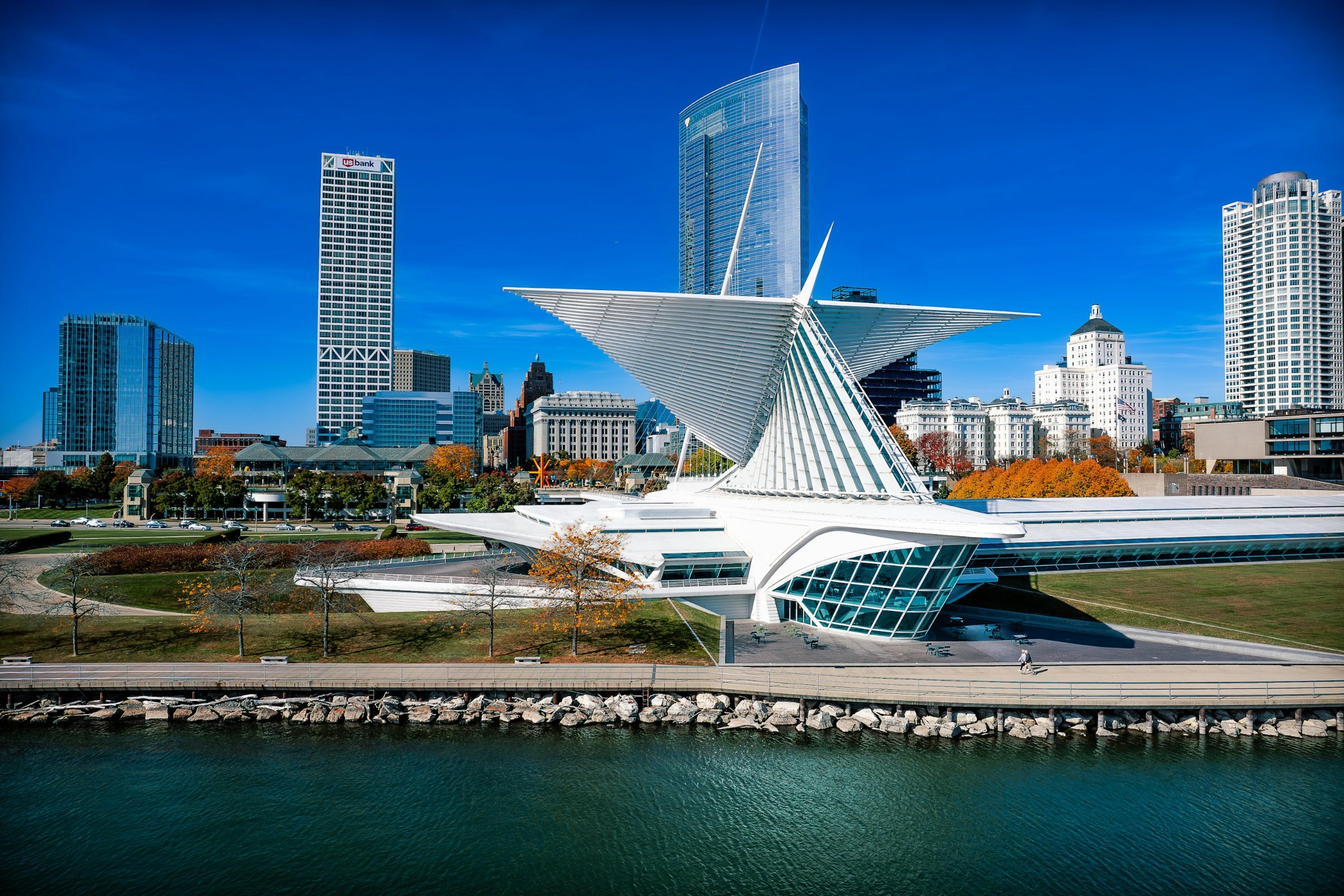
Milwaukee is the state's largest city and its main job center, with a tenant base anchored by Aurora Health Care and Marquette University, the most sales activity in the article and the same median price as Racine. It is the market on this list with the most inventory to choose from, which matters when every other market is “very competitive.”
BiggerPockets points to healthcare, education and manufacturing, with Aurora Health Care and Marquette University among the major employers, and Redfin search data (April to June 2026) shows Chicago buyers looking at Milwaukee more than any other metro (a net 1,544), while local buyers searching to leave are mostly looking at Madison (73) and Green Bay (47), i.e. they are staying in Wisconsin. However, First Street data on Redfin rates the flood risk as “moderate” (6% of properties). On the STR side, the city's Department of Neighborhood Services issues the state tourist rooming house license and inspects each property, and stays carry the Wisconsin Center District's 10% room tax (a 3% basic rate plus a 7% rate that applies only in the city), administered by the Wisconsin Department of Revenue. Milwaukee has no primary-residence rule or day cap, but a new short-term rental ordinance (MCO 105-80), effective August 20, 2026, adds a public list of licensed STRs, mailed notice to the alderperson and to neighbors within 250 feet of each new application, and incident reporting to the booking platforms.
The Milwaukee market posts an AirDNA score of 64/100, with Investability (85) leading and Regulation (65), Rental Demand (65), Revenue Growth (64) and Seasonality (63) bunched closely behind it. Annual revenue per listing averages $35,549 (up 5.0% year-over-year), with an average daily rate of $191.33 (up 5.2%) and occupancy of 58% (down 0.6%). Total active listings sit at 2,025, down 10.9%, the biggest supply drop in the article, and the West Allis (score 88, $23K a year at 64% occupancy), Wauwatosa (88, $28K at 64%) and Menomonee Falls (86, $29K at 66%) submarkets lead the area. Note that this market covers the wider metro, so the figures describe the region rather than the city alone.
Financing note: Harpoon Capital offers industry leading DSCR Loans for properties in Milwaukee and all throughout the market area. Check out our full DSCR Loans Program here, or if you want a quote on what terms look like today, fill out this two-minute form!
Sources: Redfin Housing Market↗ · BiggerPockets Market Finder↗ · Milwaukee DNS Tourist Rooming House↗ · AirDNA Market Data↗
Investor Takeaway: Milwaukee offers the deepest inventory and one of the lowest entry prices in Wisconsin, with Chicago buyers looking hard at it and STR supply shrinking. Investors should generally underwrite duplexes and small multifamily on the long-term rent, compare the city's prices with the pricier metro figures, and look at the inner-ring suburbs, where AirDNA's submarket scores run highest.
Paper-town prices with plenty of bidders
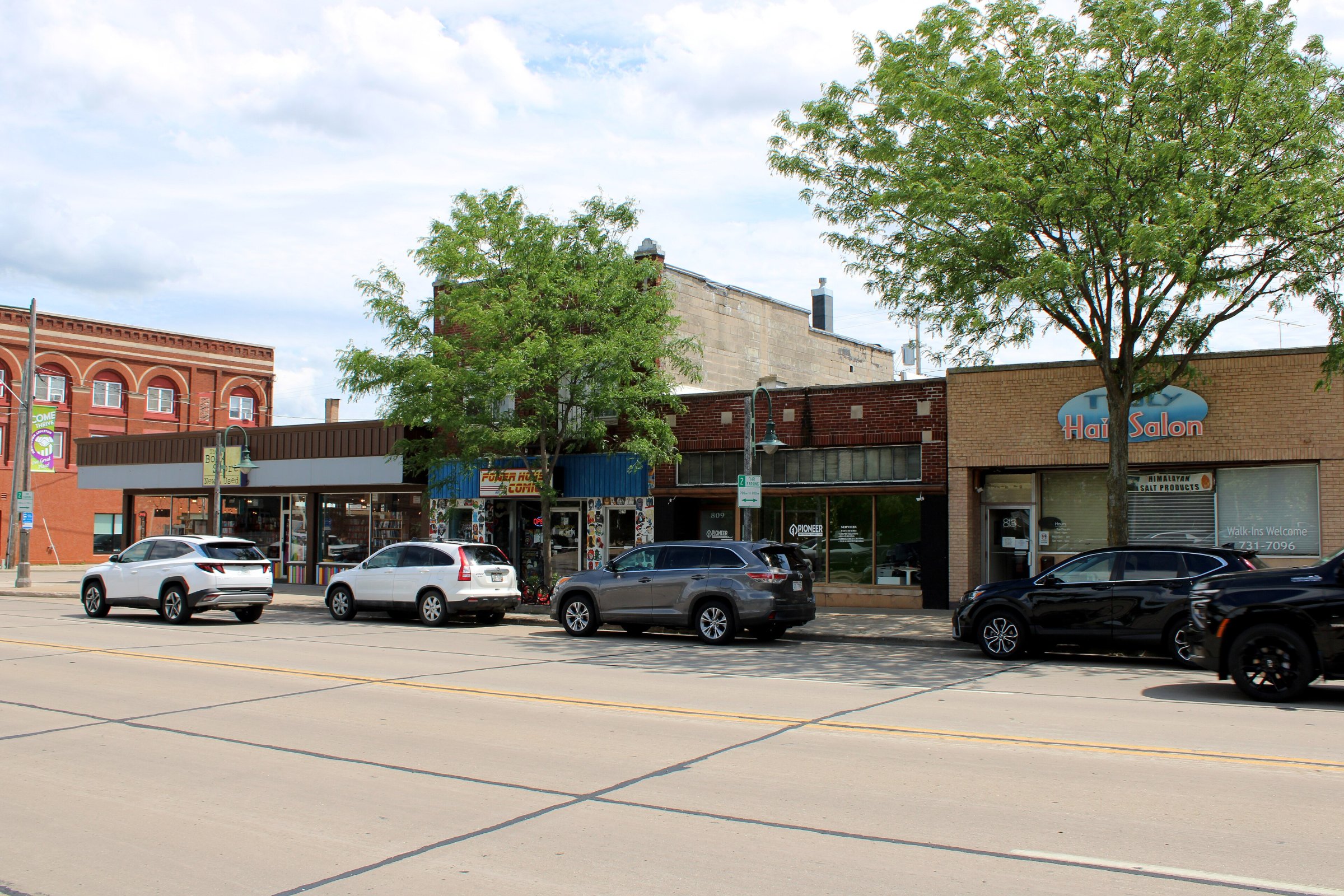
Photo: Michael Barera, CC BY-SA 4.0 (cropped)
Appleton sits in the Fox River Valley between Oshkosh and Green Bay, with a tenant base built on paper and healthcare employers and the fastest appreciation in the article. It is a smaller city with a sales market that behaves like a much bigger one, and its STR rules are about as light as Wisconsin allows.
BiggerPockets points to manufacturing, healthcare and education, with Kimberly-Clark, ThedaCare Regional Medical Center and Lawrence University among the major employers, and Redfin search data (April to June 2026) shows Chicago (a net 57) and Milwaukee (37) buyers looking at Appleton more than any other metros. Additionally, First Street data on Redfin rates the flood risk as “minor” (2% of properties), the lowest in the article. On the STR side, the City of Appleton issues the tourist rooming house license through its Health Department after a pre-inspection, for $425 up front plus $355 a year for a single unit, and the license does not require owner occupancy (that rule applies only to bed and breakfasts), while stays carry Appleton's 10% room tax and BNBCalc found no separate STR zoning rules.
The Appleton submarket posts an AirDNA score of 68/100, with Investability (80) and Seasonality (79) leading, Revenue Growth (69) and Regulation (64) in the middle, and Rental Demand (51) the “soft spot.” Annual revenue per listing averages $31,039 (down 1.6% year-over-year), with an average daily rate of $171.64 (down 1.4%) and occupancy of 57% (up 0.3%). Total active listings sit at 386, down 7.2%, and the top performers are larger homes with water or pool amenities, such as a beach-escape listing ($178K a year at 73% occupancy) and a 20-guest home with an indoor pool ($139K at 31%).
Financing note: Harpoon Capital offers industry leading DSCR Loans for properties in Appleton and all throughout the market area. Check out our full DSCR Loans Program here, or if you want a quote on what terms look like today, fill out this two-minute form!
Sources: Redfin Housing Market↗ · BiggerPockets Market Finder↗ · City of Appleton Short-Term Rentals↗ · BNBCalc Appleton STR Guide↗ · AirDNA Market Data↗
Investor Takeaway: Appleton offers the fastest appreciation in Wisconsin, the fewest price cuts and some of the lightest STR rules in the state. Investors should generally expect to pay over list, buy for the long-term rent, and treat short-term rentals as an option for larger homes with amenities, where the revenue is concentrated.
Thinking About One of These Markets?
Get a same-day DSCR Loan quote for a specific deal, or browse the full Harpoon Capital DSCR Loan Program to see rates, LTV, and qualification details before you keep reading.
Capital-city credentials, owner-only stays
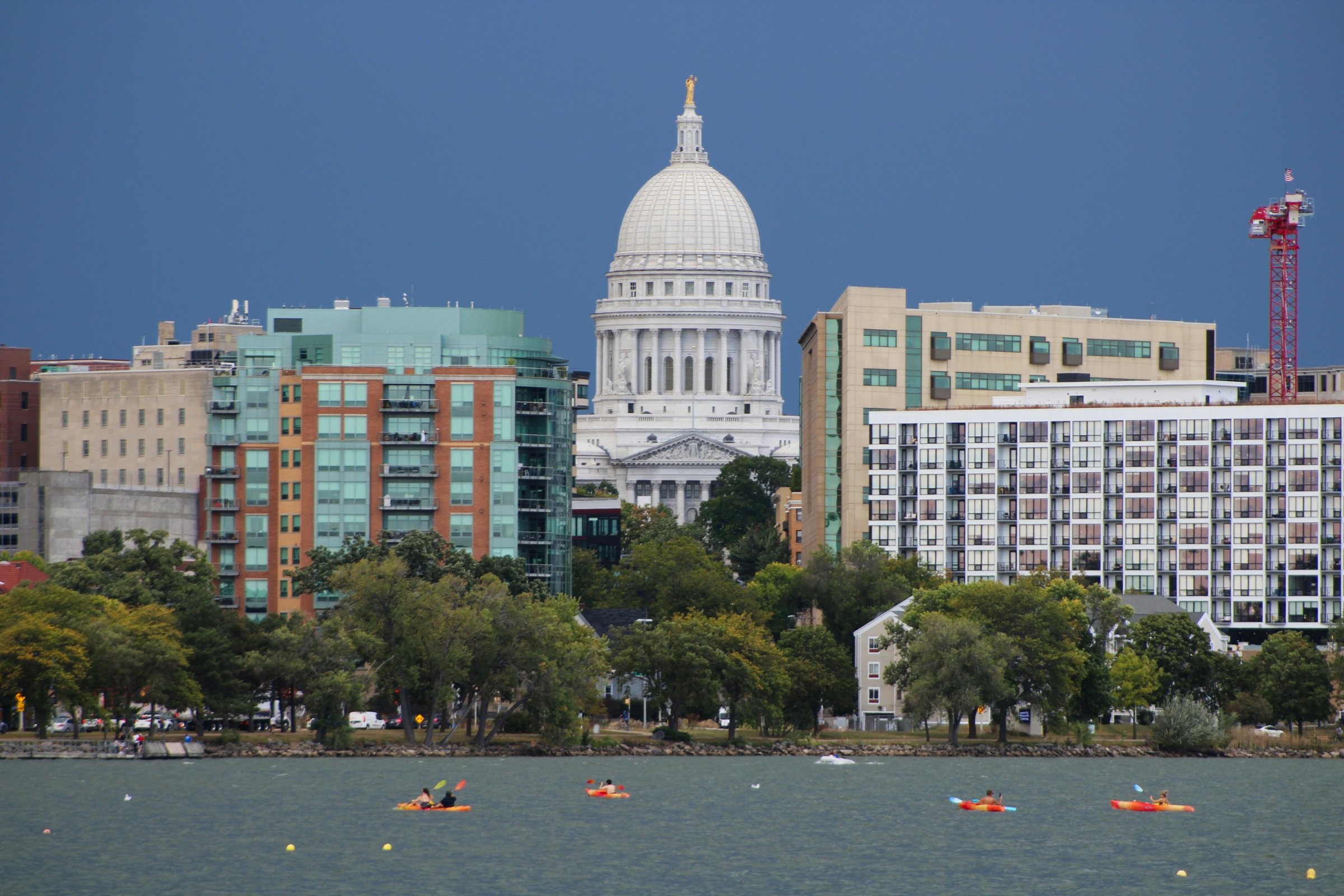
Madison is the state capital and the home of the University of Wisconsin and Epic Systems, with the highest prices and rents on this list, the fastest population growth and an STR market where demand is clearly not the problem. The rules are the problem, at least for an investor who does not plan to live there.
BiggerPockets points to government, education and technology, with UW-Madison and Epic Systems among the major employers, and Redfin search data (April to June 2026) shows Chicago (a net 305) and Milwaukee (73) buyers looking at Madison more than any other metros. However, First Street data on Redfin rates the wildfire risk as “moderate” (6% of properties), the highest share in the article. On the STR side, the City of Madison states that a tourist rooming house “must be the host's primary residence” (generally a home lived in at least 183 days a year), caps rentals at 30 nights a year when the host is not present, and requires a $300 zoning permit plus a $100 annual fee on top of the health license and a room tax permit, and stays carry a 10% city room tax plus the 5.5% state and Dane County sales tax (BNBCalc). Guests are capped at twice the number of legal bedrooms, up to 12. In practice, i.e. for an investor who will not live in the property, Madison is a long-term rental market.
The Madison market posts an AirDNA score of 63/100, with Rental Demand (95) leading by a wide margin, Regulation (71), Seasonality (66) and Investability (64) in the middle, and Revenue Growth (47) the “soft spot.” Annual revenue per listing averages $37,835 (up 2.7% year-over-year), with an average daily rate of $187.35 (up 4.0%) and occupancy of 64% (down 0.5%), the highest on the list. Total active listings sit at 676, up 2.9%, and the Stoughton (score 78, $45K a year at 59% occupancy), Madison (68, $33K at 69%) and Sun Prairie (66, $36K at 59%) submarkets lead the area. Note that the surrounding towns in this market set their own rules, so the city's primary-residence requirement does not necessarily apply outside Madison.
Financing note: Harpoon Capital offers industry leading DSCR Loans for properties in Madison and all throughout the market area. Check out our full DSCR Loans Program here, or if you want a quote on what terms look like today, fill out this two-minute form!
Sources: Redfin Housing Market↗ · BiggerPockets Market Finder↗ · City of Madison STR FAQ↗ · BNBCalc Madison STR Guide↗ · AirDNA Market Data↗
Investor Takeaway: Madison offers the highest rents and the fastest population growth in Wisconsin, on the thinnest rent ratio in the article. Investors who will not live in the property should generally treat Madison as a long-term rental and appreciation play, expect the DSCR Ratio to be tight, and look at nearby towns such as Stoughton or Sun Prairie for STR exposure after checking their local rules.
Packers, paper and pricey game days

Photo: Michael Barera, CC BY-SA 4.0 (cropped)
Green Bay is the home of the Packers and a long-time paper and food-processing town, with the hottest bidding in the article, prices that are still rising and an STR market that lives and dies by the football schedule. It is also the only market on this list where AirDNA's revenue fell sharply over the past year, which takes some explaining.
BiggerPockets points to the paper and cheese industries, along with healthcare, and Redfin search data (January to March 2026) shows Milwaukee (a net 26) and Chicago (19) buyers looking at Green Bay more than any other metros. Additionally, First Street data on Redfin rates the heat risk as “minimal,” the only such reading in the article, and the flood risk as “minor” (5% of properties). On the STR side, the City of Green Bay requires a short-term rental permit ($500 to start and $250 a year to renew) for stays under 28 days, plus a Brown County tourist rooming house license ($420 for a new license, including the pre-inspection, and $300 a year to renew), though owners who live in the home and share it with guests are exempt from the city permit. The city's STR ordinance, passed March 3, 2026, has no day cap, since a proposed 180-day cap and seven-night minimum were removed before the vote, and hosts register for the Brown County room tax with the City Treasurer.
The Green Bay market posts an AirDNA score of 45/100, the lowest in the article, with Investability (96) leading by a wide margin, Regulation (62) and Seasonality (60) in the middle, and Rental Demand (43) and Revenue Growth (40) the “soft spots.” Annual revenue per listing averages $42,150, the highest on the list, but that is down 23.1% year-over-year, with an average daily rate of $303.90 (down 25.9%) and occupancy of 45% (up 2.8%), the lowest on the list. Total active listings sit at 918, down 3.8%, and the Kewaunee (score 60, $22K a year at 45% occupancy), Green Bay (53, $37K at 44%) and Algoma (46, $31K at 47%) submarkets lead the area. Green Bay hosted the NFL Draft on April 24 to 26, 2025, and a prior-year window that includes an event of that size may explain part of the drop, though AirDNA does not break that out, so investors should underwrite on a full year that does not include it.
Financing note: Harpoon Capital offers industry leading DSCR Loans for properties in Green Bay and all throughout the market area. Check out our full DSCR Loans Program here, or if you want a quote on what terms look like today, fill out this two-minute form!
Sources: Redfin Housing Market↗ · BiggerPockets Market Finder↗ · City of Green Bay STR Permit FAQ↗ · AirDNA Market Data↗
Investor Takeaway: Green Bay offers the most competitive bidding and the highest STR nightly rates in Wisconsin, with a clear city permit and no owner-occupancy rule. Investors should generally buy for the long-term rent, treat game-day STR income as a “bonus” rather than the base case, and underwrite on trailing twelve-month actuals that reflect a normal season.
Rock River rentals with a runaway score
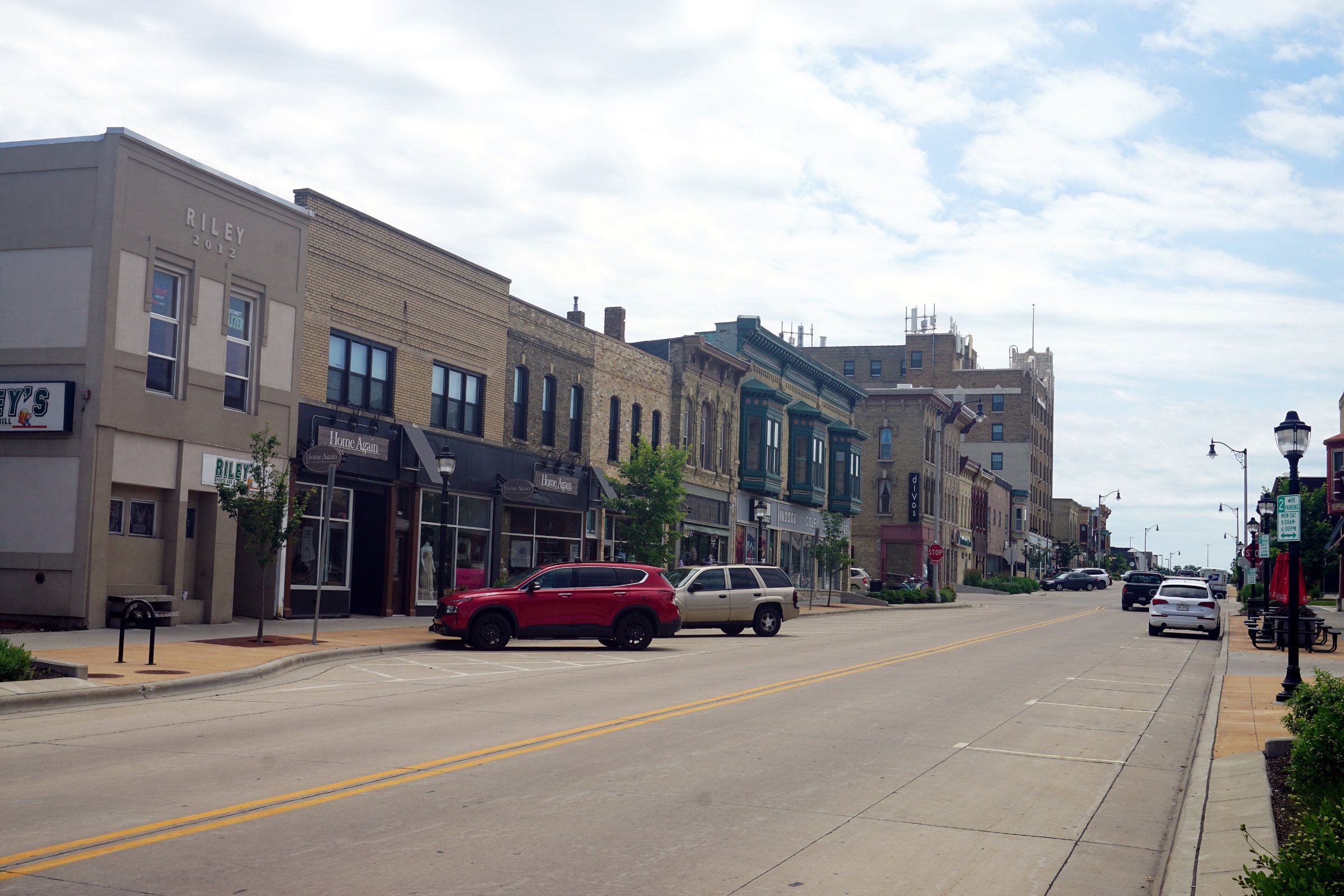
Photo: Michael Barera, CC BY-SA 4.0 (cropped)
Janesville sits on the Rock River about halfway between Madison and the Illinois line, with the best rent ratio on BiggerPockets, the highest AirDNA score in the article and a small STR market that is growing quickly. It is not a classic vacation town – the guests here are more likely visiting family or passing through between Madison and Chicago than staying for a week at the lake – but the numbers make a case for it.
BiggerPockets points to healthcare and education, with Mercyhealth Hospital and Blackhawk Technical College among the major employers, and Redfin search data (January to March 2026) shows Chicago (a net 272) and Milwaukee (60) buyers looking at Janesville more than any other metros. However, First Street data on Redfin rates the flood risk as “minor” (7% of properties), which still deserves a look along the river. On the STR side, Janesville has no STR-specific ordinance, permit or zoning rule, so hosts need only the state tourist rooming house license, issued and inspected by Rock County Public Health, and stays carry the city's 8% room tax (Janesville Code §14-84(b)).
The Janesville submarket posts an AirDNA score of 95/100, the highest in the article, with Rental Demand (92) and Revenue Growth (91) leading, Investability (75) and Seasonality (73) close behind, and Regulation (64) the “soft spot.” Annual revenue per listing averages $30,952 (up 8.9% year-over-year), the fastest revenue growth on the list, with an average daily rate of $154.05 (up 12.5%) and occupancy of 62% (down 1.3%). Total active listings sit at only 51, up 13.3%, and family-sized homes carry the top end, such as a retreat with an indoor pool and arcade ($115K a year at 50% occupancy) and a home with a dock on the Rock River ($96K at 55%). Note that in a field this small, a few large homes can move the averages, so the growth is a signal rather than a forecast.
Financing note: Janesville deals often qualify on TTM actuals or STR revenue projections given the seasonal revenue base, and Harpoon Capital offers industry leading DSCR Loans for properties throughout the market area. Check out our full DSCR Loans Program here, or if you want a quote on what terms look like today, fill out this two-minute form!
Sources: Redfin Housing Market↗ · BiggerPockets Market Finder↗ · AirDNA Market Data↗
Investor Takeaway: Janesville offers the highest STR score, the best rent ratio and the lowest BiggerPockets price in Wisconsin, in a small field where supply is growing. Investors should generally underwrite on trailing twelve-month actuals, focus on larger family-sized homes (where the revenue is concentrated), and budget for the 8% city room tax, since a 51-listing market can turn quickly in either direction.
| MARKET | AIRDNA SCORE |
ANNUAL REVENUE |
AVG. DAILY RATE |
OCCUPANCY | YOY LISTING GROWTH |
|---|---|---|---|---|---|
| Janesville | 95 | $30,952 (+8.9%) |
$154.05 (+12.5%) |
62% (-1.3%) | +13.3% (51 listings) |
| Appleton | 68 | $31,039 (-1.6%) |
$171.64 (-1.4%) |
57% (+0.3%) | -7.2% (386 listings) |
| Racine/Kenosha | 67 | $39,552 (+4.8%) |
$229.87 (+10.1%) |
58% (-5.3%) | +3.5% (323 listings) |
| Milwaukee | 64 | $35,549 (+5.0%) |
$191.33 (+5.2%) |
58% (-0.6%) | -10.9% (2,025 listings) |
| Madison | 63 | $37,835 (+2.7%) |
$187.35 (+4.0%) |
64% (-0.5%) | +2.9% (676 listings) |
| Green Bay | 45 | $42,150 (-23.1%) |
$303.90 (-25.9%) |
45% (+2.8%) | -3.8% (918 listings) |
Source: AirDNA, current as of 2026. Scores and figures reflect each market or submarket as defined by AirDNA and may not correspond 1:1 with city or county boundaries. As of October 2026
A few patterns stand out. The two ends of the table are mirror images: Green Bay has the highest revenue and nightly rate but the lowest score and occupancy, after a 23% revenue drop, while Janesville has the lowest nightly rate on the list but the highest score, on the back of revenue and rate growth. Madison has the highest occupancy (64%) but rules that keep most investors out, and Milwaukee lost about one listing in nine over the past year, which typically leaves more bookings for the hosts who remain. Additionally, Racine/Kenosha's nightly rate rose 10.1% while its occupancy fell 5.3%, i.e. hosts there are earning more per stay on fewer stays.
Wisconsin's real estate landscape offers a strategy for nearly every type of investor:
Market-level data is a starting point, not a substitute for underwriting the specific property, neighborhood and rental strategy in front of you. Wisconsin's state law keeps cities from banning rentals of a week or longer, but every host still needs a state license and the local rules range from Appleton's and Janesville's light touch to the primary-residence requirements in Madison and Racine, so investors should confirm what is allowed at a specific address before they close and check flood maps in Racine and Milwaukee.
If you are ready to invest in one of these markets, start with our Wisconsin DSCR loans page.
Sources: Redfin housing market data, BiggerPockets Market Finder, AirDNA market and submarket data (airdna.co), Wis. Stat. § 66.1014, city STR pages for Racine, Milwaukee, Appleton, Madison and Green Bay, city codes for Racine, Milwaukee and Janesville, and BNBCalc STR guides for Appleton and Madison. Data collected as of October 2026, ahead of the 2027 investing season.
Yes. Wisconsin requires anyone renting more than 10 nights a year to hold a state “tourist rooming house” license, which is usually issued and inspected by the local health department, and hosts who book directly also need a seller's permit to collect sales tax (booking platforms collect it on the stays they handle). Many cities add their own license and room tax on top: Green Bay requires a $500 city permit, while Madison and Racine both require a city permit and limit STRs to the host's primary residence.
No. Out-of-state and first-time investors can buy investment property in Wisconsin without any license. A DSCR loan qualifies you primarily based on the property itself rather than your personal income or professional credentials, which is part of why it's such a common financing tool for out-of-state buyers.
A DSCR (Debt Service Coverage Ratio) loan qualifies a property primarily based on the property (its rent, value and location) relative to its mortgage payment, rather than the borrower's personal income or tax returns. If the property's projected or actual rent covers the mortgage payment (a DSCR of 1.00x or higher), it's generally easier to qualify, and Harpoon Capital also offers options for deals below 1.00x.
Not entirely. Under Wis. Stat. § 66.1014, a city cannot ban rentals of seven consecutive days or longer, although it can ban shorter stays, require a local license and limit rentals of 7 to 29 days to no fewer than 180 days in any 365-day period. Some cities, such as Madison and Racine, have still adopted primary-residence rules, so investors should read the local ordinance and not rely on the state law alone.
Harpoon Capital's DSCR loan program allows as little as 15% down on qualifying purchases, up to 85% LTV, with cash-out refinances available up to 80% LTV. Exact terms depend on the property, credit profile, and DSCR ratio. Fill out our DSCR Loan Application to see specific numbers for your deal.
Ready to Run the Numbers on a Wisconsin Deal?
Whether you're eyeing Appleton's appreciation or STR growth in Janesville, get a same-day rate and terms with our two-minute DSCR quote form, or explore the full Wisconsin DSCR Loans Program to see how we qualify the property, not just the borrower.
This article is for informational purposes only and does not constitute investment, legal, or financial advice. Harpoon Capital encourages investors to conduct independent due diligence before making any real estate investment decision.