.png)


By Robin Simon, President, Harpoon Capital · About · LinkedIn · Author, The Book on DSCR Loans (Available on Amazon)

Alabama offers some of the lowest entry prices of any state in this series, paired with AirDNA scores that rank among the strongest we've covered. There's an aerospace and defense hub in Huntsville, a college-football-driven market in Tuscaloosa, the state's largest metro in Birmingham, the state capital in Montgomery, an agricultural hub in Dothan, and a Gulf Coast beach market in Gulf Shores. Home prices range from the mid-$130,000s in Birmingham to over $450,000 on the coast, among the widest spreads of any state we've covered.
This breakdown uses market data collected as of September 2026, the most current snapshot available heading into next year's buying season. If you're evaluating a purchase in the final months of 2026, keep in mind that your first full year of rental income, appreciation, or short-term rental revenue lands in 2027 regardless of when you close. A deal you underwrite today is already a 2027 investing decision, just one made with the freshest data available right now.
Alabama is deliberately hands-off at the state level: there's no state STR license, and the only statewide requirement is a 4% lodging tax on stays under 180 days. Everything else, zoning, local permits, additional taxes, is set city by city, and the range is wide. Huntsville and Dothan run comparatively light combined tax burdens around 9 to 14.5%, while Tuscaloosa and Gulf Shores both stack city, county, and tourism taxes up toward 15%, on top of real zoning restrictions in Tuscaloosa's case.
Below, we break down six Alabama markets worth watching, using current data from Zillow, Redfin, BiggerPockets, and AirDNA.
Note: Home price appreciation and rent-growth figures below come from Zillow's Home Value Index (ZHVI), Redfin's median sale price data, and BiggerPockets' Market Finder, which use different methodologies and can vary from one another. We've cited both where available so you can compare.
Quick Answer: Alabama's Top 6 Markets
If you only read one section, read this one.
Aerospace and defense growth with Alabama's lightest STR tax burden

Huntsville passed Birmingham in the 2020 census to become Alabama's most populous city, and its aerospace and defense economy is the reason why.
NASA's Marshall Space Flight Center and Redstone Arsenal anchor a job base that's pulled Huntsville past Birmingham in total population, backed by a growing private aerospace and technology sector. On the regulatory side, Huntsville runs one of the lighter STR tax structures among the markets in this article: a roughly 9% combined lodging tax, a $200 application fee, and a $150 annual renewal, all comparatively modest next to Tuscaloosa or Gulf Shores.
Huntsville posts a strong AirDNA score of 84/100, with an excellent Seasonality score of 97 and a solid Revenue Growth score of 87, though Rental Demand (60) is more middling. Annual revenue per listing averages $26,447 (up 0.7% year-over-year), with an average daily rate of $128.29 (down 0.7%) and occupancy of 60% (down 0.8%). Total active listings sit at 911, down a sharp 18.1% over the past year, the steepest listing decline of any market in this article.
Financing note: Harpoon Capital offers industry leading DSCR Loans for properties in Huntsville and all throughout the market area. Check out our full DSCR Loans Program here, or if you want a quote on what terms look like today, fill out this two-minute form!
Sources: Zillow Home Value Index · BiggerPockets Market Finder · AirDNA Market Data
Investor Takeaway: Huntsville pairs genuine population and job growth with the lightest regulatory lift of any market in this article. The 18% drop in active STR listings deserves a second look next year: it could reflect operators exiting a market that's gotten harder to compete in, or simply less new supply arriving to compete for the same demand.
Game-day-driven STR revenue, gated behind real zoning restrictions
.jpg)
Tuscaloosa's short-term rental market runs on a schedule set by the University of Alabama football calendar, and the AirDNA numbers below reflect that almost perfectly.
The University of Alabama enrolls nearly 40,000 students and drives roughly 37% of the area's homes into rental status, a genuinely large off-campus housing market on top of the football-driven STR demand. The zoning picture is the real catch here: Tuscaloosa limits non-owner-occupied short-term rentals to two Tourist Overlay Districts, and operating outside those districts requires a Conditional Use Permit that involves a public hearing and isn't guaranteed to be approved. Owner-occupied rentals face fewer restrictions. Combined city, state, and tourism-season taxes run to roughly 15%, among the highest in this article.
Tuscaloosa posts an excellent AirDNA score of 91/100, with a perfect Revenue Growth score of 97 and a strong Investability score of 97, though Rental Demand (52) is comparatively weak, a direct reflection of the market's game-day concentration. Annual revenue per listing averages $37,919 (up 3.4% year-over-year), with an exceptionally high average daily rate of $360.79 (up 4.3%), the second-highest ADR in this article, against a low occupancy rate of just 34% (down 1.8%). Total active listings sit at 693, up 12.7% over the past year.
Financing note: Harpoon Capital offers industry leading DSCR Loans for properties in Tuscaloosa and all throughout the market area. Check out our full DSCR Loans Program here, or if you want a quote on what terms look like today, fill out this two-minute form!
Sources: Zillow Home Value Index · BiggerPockets Market Finder · AirDNA Market Data
Investor Takeaway: Tuscaloosa's $360.79 average daily rate alongside 34% occupancy tells the whole story: a handful of home football weekends generate most of the year's revenue. The zoning restriction on non-owner-occupied STRs outside the Tourist Overlay Districts is the detail most likely to trip up an out-of-state buyer, confirm your specific address clears zoning before assuming the AirDNA numbers apply to it.
Thinking About One of These Markets?
Get a same-day DSCR Loan quote for a specific deal, or browse the full Harpoon Capital DSCR Loan Program to see rates, LTV, and qualification details before you keep reading.
The state's largest metro at one of the lowest entry prices on this list
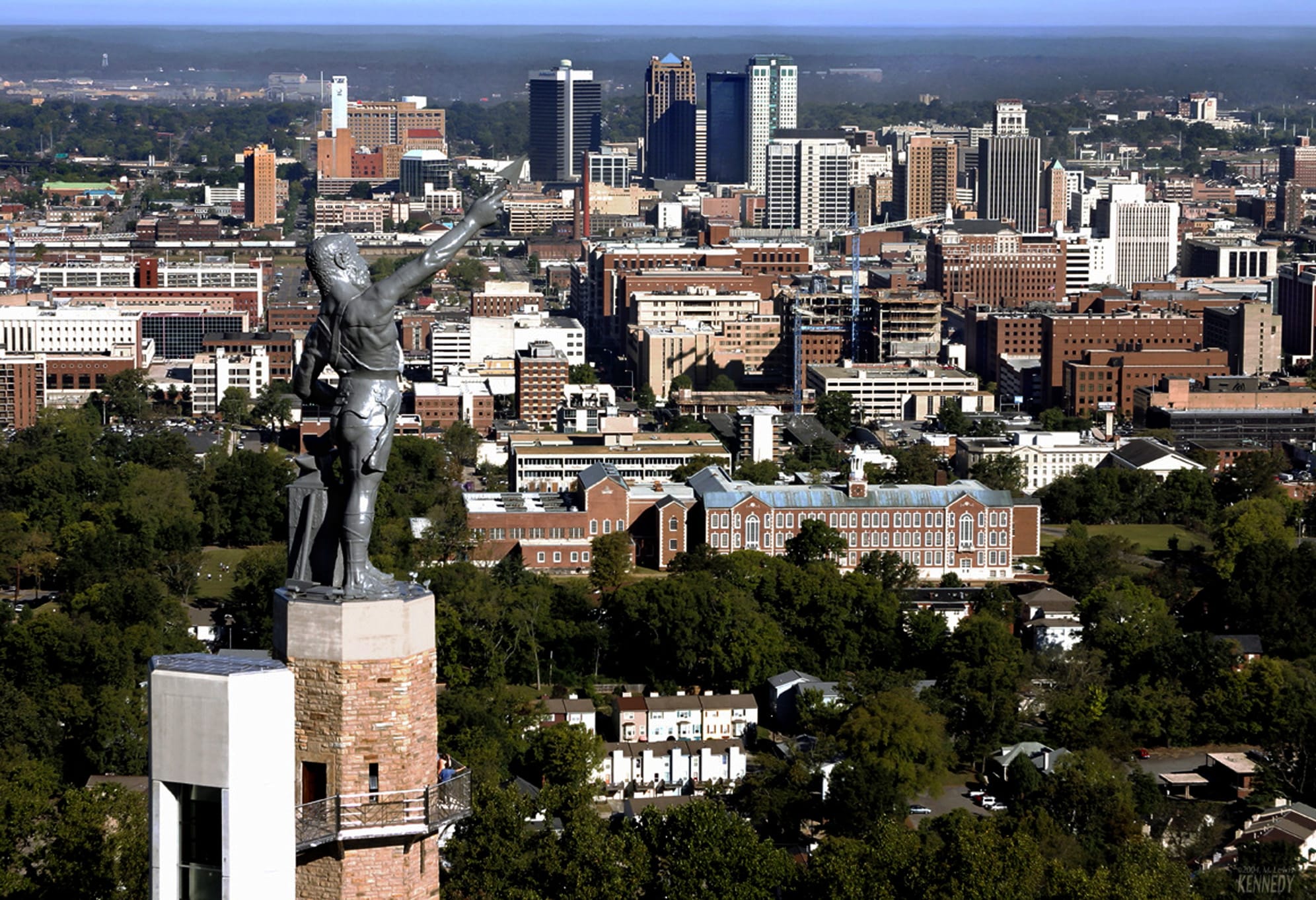
Birmingham is Alabama's largest metro, and it posts one of the strongest AirDNA scores in this entire series at a price point most of the other markets we've covered can't touch.
The University of Alabama at Birmingham and Regions Financial Corporation anchor a healthcare-and-finance economy that's meaningfully more diversified than Birmingham's industrial-era reputation suggests. The gap between Zillow's city-proper figure ($137,168) and BiggerPockets' broader metro median ($240,200) is significant, reflecting Birmingham's mix of very affordable urban neighborhoods alongside pricier suburbs like Hoover and Vestavia Hills, so compare listings within the metro carefully rather than assuming one price point applies everywhere.
Birmingham posts a near-perfect AirDNA score of 98/100, with an excellent Investability score of 94 and Revenue Growth score of 97. Annual revenue per listing averages $32,507 (up 3.9% year-over-year), with an average daily rate of $165.30 (up 0.9%) and occupancy of 59% (up 2.5%). Total active listings sit at 1,729, essentially flat (-0.3%) over the past year.
Financing note: Harpoon Capital offers industry leading DSCR Loans for properties in Birmingham and all throughout the market area. Check out our full DSCR Loans Program here, or if you want a quote on what terms look like today, fill out this two-minute form!
Sources: Zillow Home Value Index · BiggerPockets Market Finder · AirDNA Market Data
Investor Takeaway: A 98 AirDNA score at a city-proper median value under $140,000 is a combination that's hard to find anywhere else in this series. The wide gap between city and metro pricing means neighborhood selection matters more here than in almost any other market we've covered.
A perfect AirDNA score backed by military and manufacturing jobs
Montgomery is the only market in this entire series to post a perfect 100 AirDNA score, and it's backed by a genuinely diversified economic base rather than tourism alone.
Maxwell Air Force Base and Hyundai Motor Manufacturing Alabama anchor an economy that spans government, military, and heavy manufacturing, on top of Montgomery's role as the state capital. Durable military demand paired with a major auto plant gives Montgomery a diversification most state capitals of its size don't have, likely explaining both its strong rent-to-price ratio and its standout AirDNA performance below.
Montgomery posts a perfect submarket score of 100/100, with a perfect Investability score of 100 and an excellent Seasonality score of 99. Annual revenue per listing averages $29,649 (up 3.6% year-over-year), with an average daily rate of $141.28 (up 5.9%) and occupancy of 64% (up 1.1%), among the strongest occupancy rates in this article. Total active listings sit at 604, up 9.0% over the past year, new supply arriving in a market that's still absorbing it well.
Financing note: Harpoon Capital offers industry leading DSCR Loans for properties in Montgomery and all throughout the market area. Check out our full DSCR Loans Program here, or if you want a quote on what terms look like today, fill out this two-minute form!
Sources: Zillow Home Value Index · BiggerPockets Market Finder · AirDNA Market Data
Investor Takeaway: A perfect AirDNA score, the best rent-to-price ratio in this article, and entry prices under $200,000 make Montgomery arguably the strongest all-around case in this entire series. Rising listing counts alongside rising occupancy is exactly the kind of demand signal that should give investors confidence rather than pause.
The lowest entry price in the state, with a real tax quirk to watch for
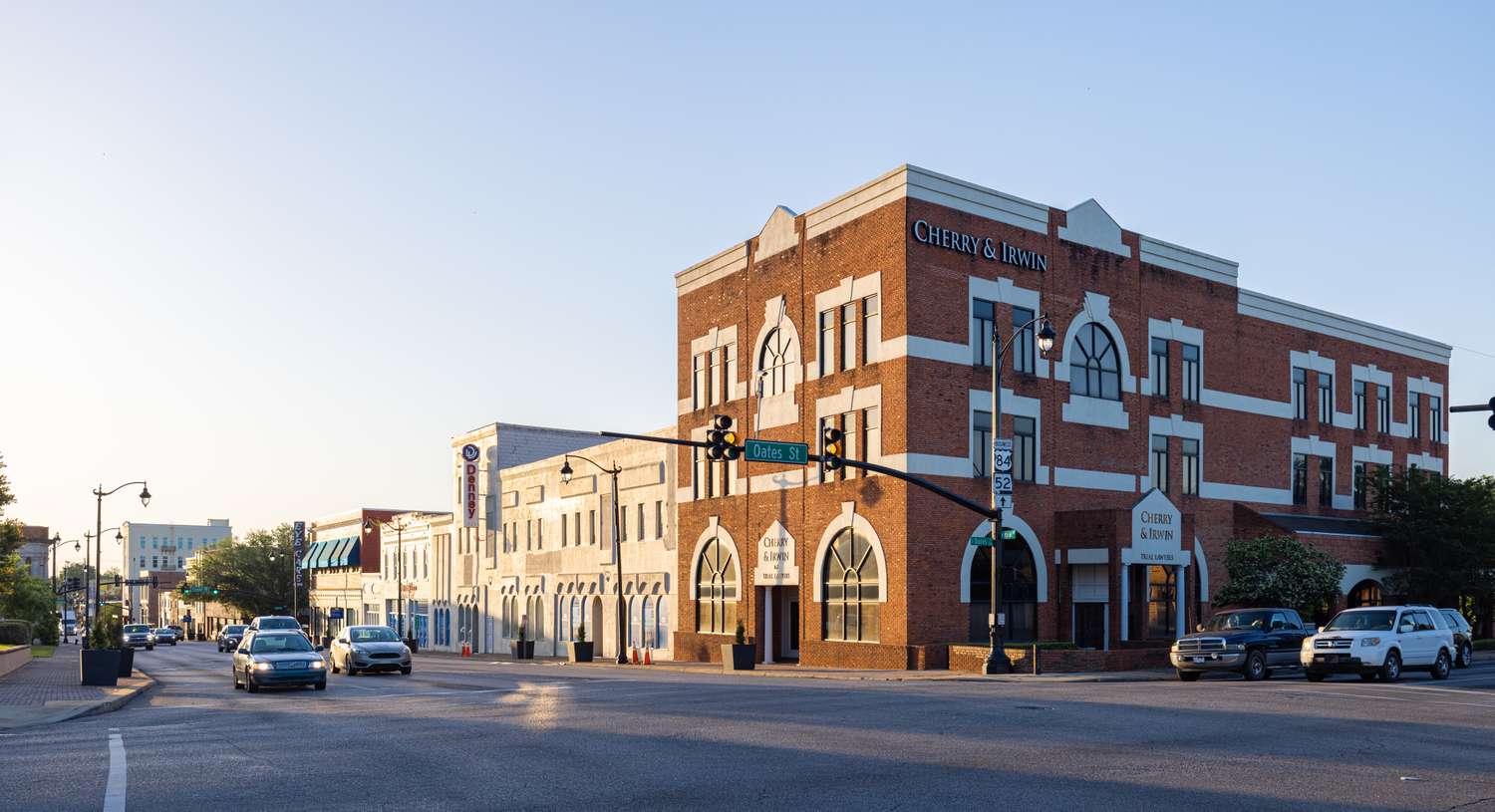
Dothan, known locally as the Peanut Capital of the World, offers the lowest entry price of any market in this article, backed by a genuinely diversified agricultural and healthcare economy.
Southeast Health and Wayne Farms anchor an economy built on agriculture, healthcare, and retail, giving Dothan a stable if unspectacular demand base well outside Alabama's usual investor radar. STR operators should note a genuine administrative quirk here directly: Dothan's lodging taxes are handled by a third-party administrator called Avenu rather than the state, and the city doesn't appear on Airbnb's standard Alabama occupancy tax remittance list the way Birmingham, Montgomery, or Tuscaloosa do. Combined city taxes and business license fees on gross receipts run to roughly 14.5%, but don't assume a booking platform is automatically remitting Dothan's local tax the way it might elsewhere in the state.
Dothan posts a strong submarket score of 95/100, with a strong Investability score of 91 and an excellent Seasonality score of 98, though Regulation (57) is comparatively soft. Annual revenue per listing averages $22,838, the lowest dollar figure of any market in this article and down 2.0% year-over-year. Average daily rate is $119.93 (up 1.3%), and occupancy sits at 56% (down 3.7%). Total active listings sit at just 208, up 10.1% over the past year, a genuinely thin market with limited comparable data.
Financing note: Harpoon Capital offers industry leading DSCR Loans for properties in Dothan and all throughout the market area. Check out our full DSCR Loans Program here, or if you want a quote on what terms look like today, fill out this two-minute form!
Sources: Zillow Home Value Index · BiggerPockets Market Finder · AirDNA Market Data
Investor Takeaway: Dothan won't produce headline revenue numbers, but the entry price is the lowest in the state and the AirDNA score is still excellent. Double-check your own tax remittance setup here specifically; this is one market where assuming a platform has it handled could leave you exposed.
Gulf Coast STR revenue in a market that's cooled from its recent peak
.jpg)
Gulf Shores is Alabama's premier beach destination, and the current pricing data suggests it's come down meaningfully from where it stood a year or two ago.
Tourism is the primary economic driver, and Gulf Shores requires a business license for STR operators within city limits or the police jurisdiction, along with periodic safety inspections and a minimum $1 million liability policy. Combined lodging taxes run to roughly 15% once city, county, and state layers are added together. The slow days-on-market figures here, more than double what most other markets in this article show, point to a coastal market still working through a post-pandemic pricing correction, similar to patterns we've seen in beach markets across several other states in this series.
Gulf Shores posts a strong AirDNA score of 80/100, with excellent Investability (94) and Rental Demand (88) scores offsetting a weak Seasonality score of 44. Annual revenue per listing averages $65,072, the highest dollar figure of any market in this article, up 2.8% year-over-year. Average daily rate is $373.90 (up 0.5%), also the highest here. Occupancy sits at 60% (up 2.1%). Total active listings sit at 17,176, up 2.1% over the past year.
Financing note: Coastal deals bought below a recent peak often work well as cash-out refinance or BRRRR plays once stabilized, qualified on TTM actuals or projected STR revenue.
Sources: Zillow Home Value Index · BiggerPockets Market Finder · AirDNA Market Data
Investor Takeaway: Gulf Shores generates the highest STR revenue of any market in this article despite a genuinely low Seasonality score, and the extended days-on-market figures suggest sellers here may be more negotiable than the headline price data implies. Verify licensing and insurance requirements directly with the city before you close.
Source: AirDNA, current as of 2026. Scores and figures reflect each market or submarket as defined by AirDNA and may not correspond 1:1 with city or county boundaries.
A few patterns stand out. Alabama's inland markets, Montgomery, Birmingham, and Dothan, post the three highest composite scores in this article, all built on genuine job diversification rather than tourism. Tuscaloosa's 34% occupancy alongside its $360.79 ADR is the most extreme seasonality split in this series. Gulf Shores generates by far the highest dollar revenue in the state, a familiar pattern for the vacation market that rounds out most of these state breakdowns.
Alabama's real estate landscape offers a strategy for nearly every type of investor:
Market-level data is a starting point, not a substitute for underwriting the specific property, neighborhood, and rental strategy in front of you. Alabama leaves nearly all short-term rental regulation to individual cities, and Tuscaloosa in particular restricts non-owner-occupied STRs to specific overlay districts. Confirm zoning and local tax remittance requirements directly before you close.
Yes. Alabama has no rent control and no statewide cap on security deposits. There's no state short-term rental license either, only a 4% state lodging tax. Cities set their own STR zoning, permitting, and additional tax rules, and they vary widely, so confirm local rules before you buy with a short-term rental strategy in mind.
No. Out-of-state and first-time investors can buy investment property in Alabama without any license. A DSCR loan qualifies you primarily based on the property itself rather than your personal income or professional credentials, which is part of why it's such a common financing tool for out-of-state buyers.
A DSCR (Debt Service Coverage Ratio) loan qualifies a property primarily based on the property (its value, value and location) relative to its mortgage payment, rather than the borrower's personal income or tax returns. If the property's projected or actual rent covers the mortgage payment (a DSCR of 1.00x or higher), it's generally easier to qualify, and Harpoon Capital also offers options for deals below 1.00x.
Tuscaloosa's short-term rental demand is heavily concentrated around University of Alabama home football games, when nightly rates spike dramatically. Outside of football season, demand drops off, which pulls occupancy down to 34% even as the average daily rate of $360.79 stays among the highest in the state.
Harpoon Capital's DSCR loan program allows as little as 15% down on qualifying purchases, up to 85% LTV, with cash-out refinances available up to 80% LTV. Exact terms depend on the property, credit profile, and DSCR ratio. Fill out our two-minute quote form to see specific numbers for your deal.
Ready to Run the Numbers on an Alabama Deal?
Whether you're eyeing Montgomery's near-perfect numbers or a beach deal in Gulf Shores, get a same-day rate and terms with our two-minute DSCR quote form, or explore the full Alabama DSCR Loans Program to see how we qualify the property, not just the borrower.
Sources: Zillow Home Value Index & Rental data, Redfin housing market data, BiggerPockets Market Finder, AirDNA market and submarket data (airdna.co). Data collected as of September 2026, ahead of the 2027 investing season.
This article is for informational purposes only and does not constitute investment, legal, or financial advice. Harpoon Capital encourages investors to conduct independent due diligence before making any real estate investment decision.