.png)


By Robin Simon, President, Harpoon Capital · About · LinkedIn · Author, The Book on DSCR Loans (Available on Amazon)

The best Georgia markets for real estate investors in 2026 range from affordable Macon to coastal Savannah, pairing low entry prices with strong short-term rental potential, led by a 98 AirDNA score in Macon and $60,485 in average annual STR revenue in Savannah. Georgia has held its place as one of the most consistently attractive states for real estate investors, and 2026 is no exception. The state combines landlord-friendly laws — no rent control, no statutory caps on security deposits — with steady population growth, a diversified economy, and home prices that, in half of the markets below, still sit below the national median of roughly $368,697 (Zillow, August 2026). Investors buying here typically finance with Georgia DSCR loans, which are qualified primarily based on the property rather than the borrower's personal income.
But “Georgia” isn't one market. From the historic tourist economy of Savannah to the college-town stability of Athens to the tech and logistics hub of Atlanta, each market rewards a different investment strategy. Below, we break down six Georgia markets worth watching in 2026, using current data from Zillow, Redfin, BiggerPockets, and AirDNA.
Note: Home price appreciation and rent-growth figures below come from Zillow's Home Value Index (ZHVI), BiggerPockets' Market Finder, and Redfin data, which use different methodologies and may vary — we've cited all available sources so you can compare.
Scale, liquidity, and a diversified tenant base

Atlanta remains the anchor of Georgia real estate investing, and the numbers back it up. Metro Atlanta is home to 6,256,377 residents, making it the sixth-most-populated metro in the country and the third-fastest-growing metro in the U.S., with population up 1.29% year-over-year, according to BiggerPockets.
Atlanta's economic base is genuinely diversified: supply chain and advanced manufacturing, technology, life sciences, and healthcare all contribute, and the metro hosts 31 Fortune 500/1000 headquarters along with 200+ Inc. 5000 companies. Unemployment sits at a low 3.3%, and median household income is $89,724.
With more than 50 universities in the metro and a median resident age of 37.3, there's durable demand for both off-campus student housing and young-professional rentals. Short-term rentals are permitted but require an annually renewed license - worth building into your underwriting if you're targeting the STR side of the Atlanta market.
Atlanta's STR rules, which BNBCalc says took effect March 1, 2022, formalized this licensing requirement: the license costs $150 a year, and an owner can license up to two properties, one of which has to be their primary residence. That gives operators a clearer regulatory framework than many peer metros, but it also means Atlanta isn't open to investors building a portfolio of non-owner-occupied STRs.
Atlanta posts a market-wide AirDNA score of 62/100 - the lowest of the six markets on this list, driven mainly by modest Rental Demand (58), Revenue Growth (62) and Investability (63) scores, even though its Seasonality score is excellent (97). Annual revenue per listing averages $32,105 (up 5.5% year-over-year), average daily rate is $173.67 (up 10.1%), and occupancy sits at 55% (down 3.5% YoY). Active listings are up 4.8% over the past year to 16,211, by far the deepest STR market on this list, and that supply growth is a sign that competition for guests is intensifying, which helps explain the softer occupancy despite rising rates.
Harpoon Capital offers industry leading DSCR Loans for properties in Atlanta and all throughout the market area; check out our full DSCR Loans Program here or if you want a quote on what terms look like today, fill out this two-minute form!
Sources: Zillow Home Value Index↗ · BiggerPockets Market Finder↗ · BNBCalc Atlanta STR Guide↗ · AirDNA Market Data↗
Investor Takeaway: Atlanta suits investors who want scale, liquidity, and a diversified tenant base, and who are comfortable paying a premium for that stability relative to Georgia's smaller markets. On the short-term rental side, growing supply and slipping occupancy mean new entrants should underwrite conservatively, and the city's primary-residence rule limits how many STRs one owner can run.
Higher-end housing stock inside the Atlanta metro
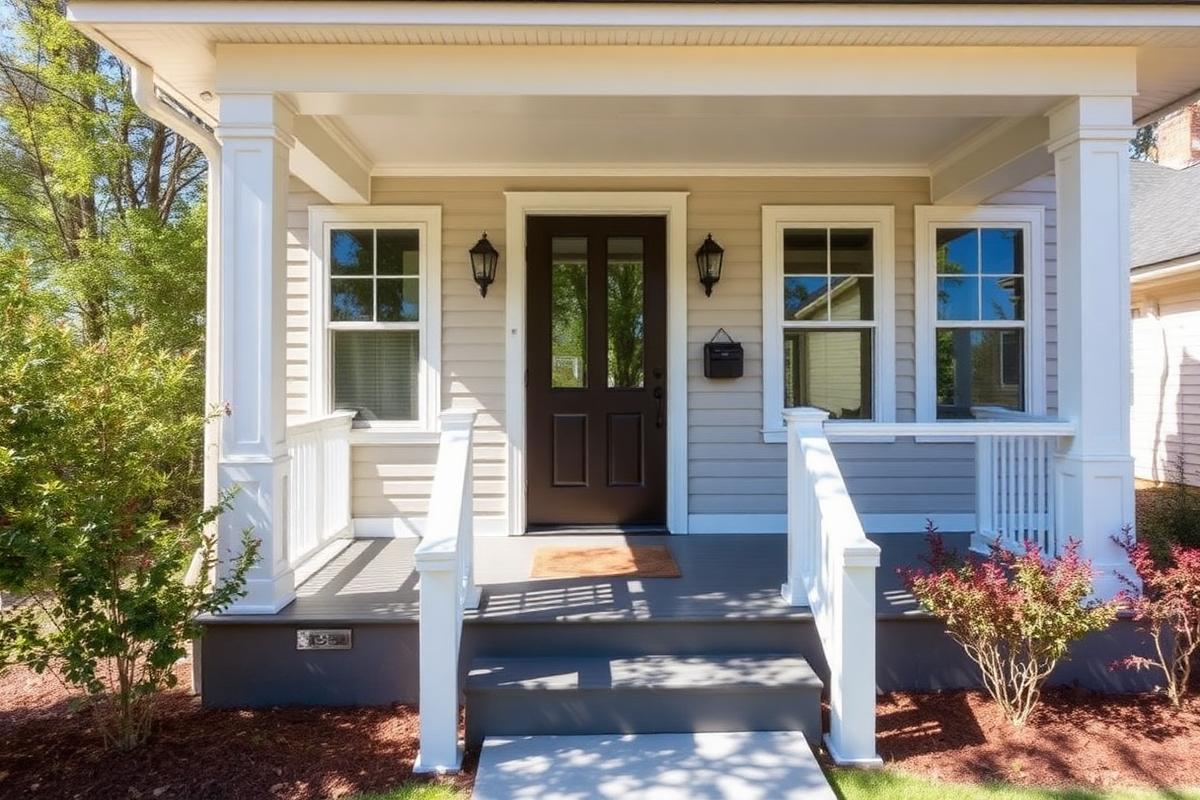
Just northwest of Atlanta, Marietta gives investors metro-Atlanta job and population fundamentals with its own distinct, higher-end housing stock.
Marietta sits inside the Atlanta-Sandy Springs-Alpharetta metro, so it benefits directly from the metro's population growth (1.29% YoY), low unemployment (3.3%), and deep employer base without carrying the same density or competition as intown Atlanta submarkets. Its price point sits meaningfully above Atlanta's city-wide average, reflecting stronger school districts and established, walkable neighborhoods (Marietta Square chief among them) that appeal to long-term renters and families rather than a purely transient tenant base.
Note that Marietta sits within Cobb County, which enacted its own short-term rental ordinance effective January 2023, but per BNBCalc's regulatory guide, the county ordinance covers unincorporated Cobb County only; inside Marietta's city limits, the city's own rules apply instead. In unincorporated Cobb, operators need a county STR certificate per unit, a designated local agent, and must meet occupancy and parking minimums, so confirm whether a property is inside city limits and factor licensing costs and compliance overhead into your Marietta underwriting.
Marietta shows a mixed but interesting STR picture. Its submarket score of 67/100 is respectable, led by strong Seasonality (83) and Rental Demand (77) scores. Annual revenue per listing averages $34,017 (up 3.3% year-over-year), and average daily rate has climbed to $168.81 (up 7.4% YoY) even as occupancy fell to 61% (down 3.9% YoY). Active listings are up 4.7% to 605. That combination - rising rates, slipping occupancy, and steadily growing supply - suggests new entrants should expect some softness until supply and demand rebalance.
Financing note: DSCR Loans for investment properties in Marietta allow for entity vesting available for LLC buyers and full range of prepayment penalty structures available to be tailored to individual investor strategy.
Sources: Zillow Home Value Index↗ · Redfin Market Data↗ · BNBCalc Cobb County STR Guide↗ · AirDNA Market Data↗
Investor Takeaway: Marietta is a fit for investors targeting higher-quality, more stable long-term tenants and willing to pay up for lower turnover and stronger school-district demand within the Atlanta metro. Investors specifically eyeing the STR angle should watch the listing growth and slipping occupancy closely and underwrite occupancy conservatively.
Coastal tourism plus port-driven jobs

Savannah offers a compelling value proposition: a growing coastal tourism economy layered on top of one of the busiest ports in the country.
Savannah's population has climbed to 418,285, growing 1.50% year-over-year and consistently outpacing the national average, according to BiggerPockets. The Port of Savannah is a major economic engine, and manufacturing alone accounts for roughly 10% of the workforce across 297 companies - including Mitsubishi Power, Gulfstream Aerospace, and JCB - employing about 19,000 people. Unemployment is a very low 2.7%, and median household income is $77,180.
Redfin's migration data adds useful color: 53% of Savannah homebuyers search to stay within the metro, and among out-of-market interest, Atlanta buyers show the strongest pull toward Savannah, followed by Jacksonville and New York. On the outbound side, Tampa, Nashville, and Orlando are the top destinations for Savannah residents relocating.
Savannah's tourism draw also makes it a candidate for short-term rental strategies, though the market carries a somewhat elevated vacancy rate (11% vs. the roughly 10% national average) that's worth factoring into occupancy assumptions. That said, the rules are tight where demand is strongest. BNBCalc reports that Savannah caps non-owner-occupied STRs at 20% of residential parcels per ward in the Downtown Historic and Victorian districts, and every ward has reached that cap, so new non-owner-occupied certificates there are effectively unavailable. Unincorporated Chatham County also paused new STR applications on July 10, 2026, through November 7 - worth confirming exactly which jurisdiction a property sits in before you buy with a short-term strategy in mind.
Savannah's tourism economy shows up clearly in its AirDNA numbers. The market carries a strong overall score of 80/100, driven by excellent Rental Demand (87) and Investability (86) scores. Average annual revenue per listing is $60,485 (up 1.4% year-over-year) - the highest of any market on this list - with an average daily rate of $309.50 and a healthy 59% occupancy rate (down 0.5% YoY). Active STR listings total 5,089, up a modest 2.3% over the past year, suggesting supply growth has stayed relatively disciplined relative to demand - a favorable dynamic for existing and new operators alike.
Financing note: Savannah short-term rentals can qualify on TTM actuals rather than long-term market rent and Harpoon Capital is one of the most "STR-Friendly" DSCR Lenders around, offering qualification on STR purchases utilizing 100% of AirDNA or STR Narrative projections for revenue calculation in the DSCR Ratio!
Sources: Zillow Home Value Index↗ · BiggerPockets Market Finder↗ · Redfin Market Data↗ · BNBCalc Savannah and Chatham County STR Guides↗ · AirDNA Market Data↗
Investor Takeaway: Savannah pairs below-median entry prices with above-average appreciation and a genuine tourism/STR angle - the market posts the strongest short-term rental revenue numbers on this list, making it a strong fit for investors chasing cash flow plus upside who can work within the city's STR caps.
College-town demand anchored by UGA
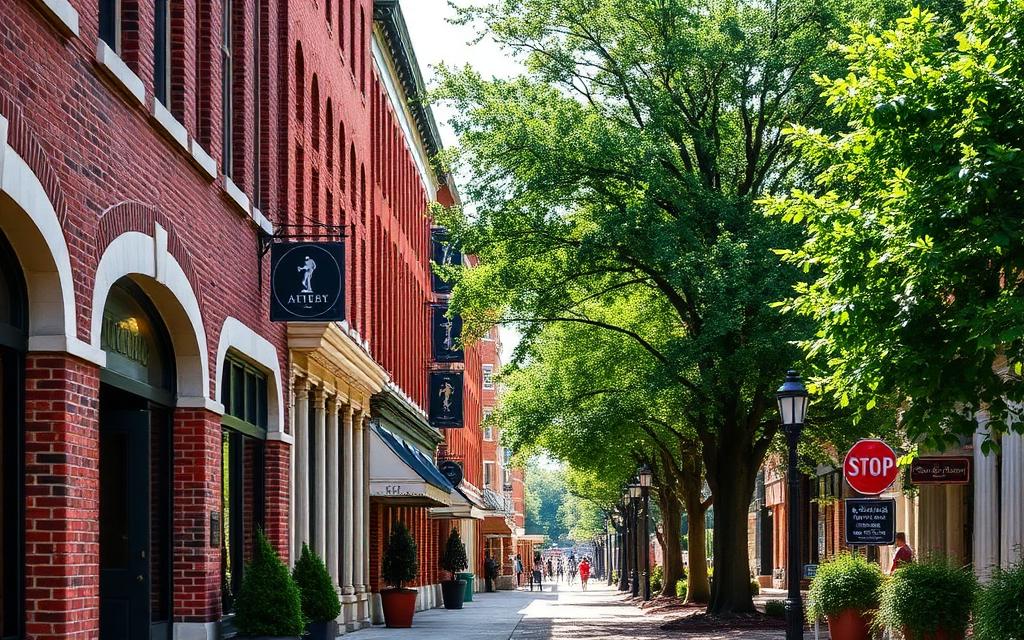
Athens is Georgia's classic college-town play, anchored by the University of Georgia (UGA), and it continues to show some of the strongest appreciation of any market on this list.
Athens isn't the cheapest college market, but its median sale price of about $353,000 still runs roughly 11% below the U.S. median sale price of $398,771 cited in Redfin's 2026 college-town report. UGA's enrollment keeps consistent demand for off-campus rentals, and the city's ongoing downtown revitalization is adding value to historic neighborhood inventory.
Athens is the standout STR market on this list by growth metrics. It carries a 88/100 market score, powered by a Revenue Growth score of 92 and Seasonality score of 84. Annual revenue per listing averages $39,438, up 8.7% year-over-year, with an average daily rate of $274.10, up 14.8% YoY, the fastest rate growth of any market covered here.
Occupancy sits at a comparatively low 45%, down 5.5% over the past year, while total active listings fell 5.2% to 1,146 - likely tied to game-day and event-driven UGA demand rather than steady year-round occupancy.
Financing note: Harpoon Capital offers industry leading DSCR Loans for properties in Athens and all throughout the market area; check out our full DSCR Loans Program here or if you want a quote on what terms look like today, fill out this two-minute form!
Sources: Zillow Home Value Index↗ · BiggerPockets Market Finder↗ · Redfin Market Data↗ · AirDNA Market Data↗
Investor Takeaway: Athens works well for buy-and-hold investors targeting student and young-professional rentals, with steadier, more predictable appreciation than Georgia's hotter, more cyclical markets. For STR-focused investors, Athens offers the fastest daily-rate growth on this list and revenue growth tied for the fastest, though occupancy is more event-driven than year-round - expect strong game-day and graduation-weekend spikes around a thinner base.
Lowest entry price on the list and sneaky non-seasonal STR market

Macon offers the most affordable entry point on this list by a wide margin, with a healthcare- and education-anchored economy.
Macon-Bibb County's economy leans on healthcare, education, and manufacturing, anchored by employers like Navicent Health and Mercer University. The market is characterized by affordable, often historic housing stock and ongoing revitalization efforts around downtown Macon. For investors, the combination of a sub-$200,000 median price with high-single-digit appreciation and steady rent growth translates into some of the most favorable cash-flow math in the state.
Macon posts the single highest submarket score on this entire list: 98/100, anchored by a perfect Investability score of 100 and strong Revenue Growth (90) and Seasonality (98) scores. Annual revenue per listing averages $25,107, up 5.0% year-over-year, the lowest dollar figure on this list and in line with Macon's price point. Average daily rate is $126.52 (up 1.2% YoY) and occupancy sits at 58% (up 5.0% YoY). Total active listings sit at 302, down 1.6% over the past year — a small, stable market rather than a crowded one.
Financing note: Macon deals often pencil no matter the strategy, with the combination of low entry values and high rents (and STR potential) make Macon great for Short Term Rentals, BRRRR Method projects and Multifamily investments
Sources: BiggerPockets Market Finder↗ · AirDNA Market Data↗
Investor Takeaway: Macon is built for cash-flow-first investors and those working with smaller acquisition budgets who want exposure to Georgia's growth story without Atlanta- or Savannah-level entry prices. On the STR side, Macon's near-perfect AirDNA score and rising occupancy make it arguably the most compelling under-the-radar opportunity on this list — though revenue per listing is the lowest here, so the case rests on the low purchase price.
A purpose-built vacation-rental cabin-style market

The outlier on this list - and intentionally so. Morganton, a small community on Lake Blue Ridge in the North Georgia mountains, represents a completely different investment thesis: short-term, vacation-rental cabin properties rather than traditional long-term rentals.
The Blue Ridge Mountains, Georgia's slice of the southern Appalachians, are a drive-to vacation corridor roughly two hours north of Atlanta — known for lakefront cabins, whitewater rivers, and small mountain towns like Blue Ridge and Ellijay, with an economy and infrastructure built around vacation rentals and tourism for decades, not just a recent Airbnb trend.
This is a lifestyle-and-tourism market, not a jobs-and-population-growth market. Morganton sits five to thirty minutes from downtown Blue Ridge, a well-established tourist destination for wineries, galleries, and dining, and is positioned directly on Lake Blue Ridge - one of the region's most popular recreation lakes - with easy access to the Toccoa River and Lake Nottely as well. Short-term rentals are allowed in the area, though Fannin County, which includes Morganton and Blue Ridge, requires a short-term rental application and an annual lodging certificate, and local listings frequently market properties as turnkey, furnished vacation-rental investments. The housing stock itself - lakefront cabins, gated mountain communities, and newer builds alongside properties dating to the 1950s - caters directly to the drive-to-vacation buyer from Atlanta, roughly two hours south.
Morganton sits within AirDNA's North Georgia Mountains market, the same submarket family that covers Blue Ridge, Mineral Bluff, and Ellijay. These towns share a single guest pool — weekend and holiday travelers driving up from metro Atlanta and Chattanooga for cabin stays — and they trade on the same amenities: lake and river access, the national forest, and the walkable downtown scene in Blue Ridge. Blue Ridge itself is the commercial anchor and carries the most rental inventory. Ellijay, about 25 minutes south in Gilmer County, has historically been the lower-cost entry point. Mineral Bluff, north toward the Toccoa River, is the quietest and least developed of the group. Morganton, on Lake Blue Ridge, draws the water-oriented end of that demand.
The AirDNA data confirms Morganton is a purpose-built vacation-rental market. The submarket scores 87/100, with Revenue Growth (84) and Investability (82) leading the way. Average annual revenue per listing is $49,615, up 8.7% year-over-year, on an average daily rate of $324.66 (up 4.4%), the highest nightly rate on this list. Hosts are both filling more nights and raising rates, which shows directly in occupancy at 46%, up 3.0% year-over-year.
Total active listings have grown modestly to 681 (+2.6% YoY), meaning supply has expanded more slowly here than in Atlanta (+4.8%) and Marietta (+4.7%). Demand rising while inventory stays nearly flat is the healthiest version of this pattern, and it's worth noting that 46% occupancy reads differently in a mountain cabin market than an urban one — these are weekend- and season-weighted markets, so that rate paired with a $325 nightly average is a strong result, not a soft one.
Financing note: Cabin purchases here are frequently rural properties, qualified on TTM actuals or projected revenue against PITIA, with the DSCR ratio and LTV set by the appraisal and rental analysis.
Sources: Zillow Home Value Index↗ · Fannin County Lodging Tax Page↗ · AirDNA Market Data↗
Investor Takeaway: The Blue Ridge Mountains region, including Morganton, Mineral Bluff, Ellijay and the other neighboring towns is a niche play for investors specifically targeting the North Georgia short-term/vacation-rental cabin market, not a substitute for a traditional long-term-rental market analysis.
| MARKET | AIRDNA SCORE |
ANNUAL REVENUE |
AVG. DAILY RATE |
OCCUPANCY | YOY LISTING GROWTH |
|---|---|---|---|---|---|
| Macon | 98 | $25,107 (+5.0%) |
$126.52 (+1.2%) |
58% (+5.0%) | -1.6% (302 listings) |
| Athens | 88 | $39,438 (+8.7%) |
$274.10 (+14.8%) |
45% (-5.5%) | -5.2% (1,146 listings) |
| Morganton | 87 | $49,615 (+8.7%) |
$324.66 (+4.4%) |
46% (+3.0%) | +2.6% (681 listings) |
| Savannah | 80 | $60,485 (+1.4%) |
$309.50 (+2.2%) |
59% (-0.5%) | +2.3% (5,089 listings) |
| Marietta | 67 | $34,017 (+3.3%) |
$168.81 (+7.4%) |
61% (-3.9%) | +4.7% (605 listings) |
| Atlanta | 62 | $32,105 (+5.5%) |
$173.67 (+10.1%) |
55% (-3.5%) | +4.8% (16,211 listings) |
Source: AirDNA, current as of 2026. Scores and figures reflect each market or submarket as defined by AirDNA and may not correspond 1:1 with city or county boundaries. As of October 2026
A few patterns stand out. Athens and Morganton are the fastest-growing STR markets by revenue, both up 8.7%, with Athens' event-driven demand also pushing daily rates up faster than anywhere else on this list. Savannah remains the highest-revenue market in absolute terms, while Atlanta has by far the deepest listing base. Atlanta and Marietta are both seeing listings grow while occupancy slips - worth factoring into occupancy assumptions if you're underwriting a new STR acquisition in either submarket right now.
Georgia's 2026 real estate landscape offers something for nearly every investment strategy:

As always, market-level data is a starting point, not a substitute for underwriting the specific property, neighborhood, and rental strategy in front of you. Rules on short-term rentals, in particular, vary by city and county across Georgia and are worth confirming directly with local zoning offices before you close.
If you are ready to invest in one of these markets, start with our Georgia DSCR loans page.
Sources: Zillow Home Value Index & Rental data, Redfin housing market data, BiggerPockets Market Finder, AirDNA market and submarket data (airdna.co), BNBCalc regulatory and market guides, Fannin County. Data current as of August-October 2026.
This article is for informational purposes only and does not constitute investment, legal, or financial advice. Harpoon Capital encourages investors to conduct independent due diligence before making any real estate investment decision.
Last updated October 2026