.png)


By Robin Simon, President, Harpoon Capital · About · LinkedIn · Author, The Book on DSCR Loans (Available on Amazon)

Virginia gives real estate investors an unusually wide range of strategies in one state. There's a diversified state capital in Richmond, a Naval-anchored Hampton Roads economy in Norfolk and Virginia Beach, a premium DC-suburb market in Alexandria, a UVA-driven college town in Charlottesville, an affordable Blue Ridge metro in Roanoke, and a four-season vacation corridor in the Shenandoah Valley. Home prices across most of these markets sit at or below the national median of roughly $371,774 (Zillow, July 2026), with Alexandria as the clear exception.
This breakdown uses market data collected as of September 2026, the most current snapshot available heading into next year's buying season. If you're evaluating a purchase in the final months of 2026, keep in mind that your first full year of rental income, appreciation, or short-term rental revenue lands in 2027 regardless of when you close. A deal you underwrite today is already a 2027 investing decision, just one made with the freshest data available right now.
Virginia is also a broadly landlord-friendly state at the statewide level. There's no statewide ban on short-term rentals and no state STR license required, since Virginia leaves zoning and permitting authority to individual localities under state code. STR rules still vary quite a bit city by city, from straightforward permitting in some jurisdictions to stricter, criminal-penalty-backed enforcement in others, so confirm local rules before you buy.
Below, we break down six Virginia markets worth watching, using current data from Zillow, Redfin, BiggerPockets, and AirDNA.
Note: Home price appreciation and rent-growth figures below come from Zillow's Home Value Index (ZHVI), Redfin's median sale price data, and BiggerPockets' Market Finder, which use different methodologies and can vary from one another. We've cited both where available so you can compare.
Quick Answer: Virginia's Top 6 Markets
If you only read one section, read this one.
A diversified capital economy with submarket flexibility
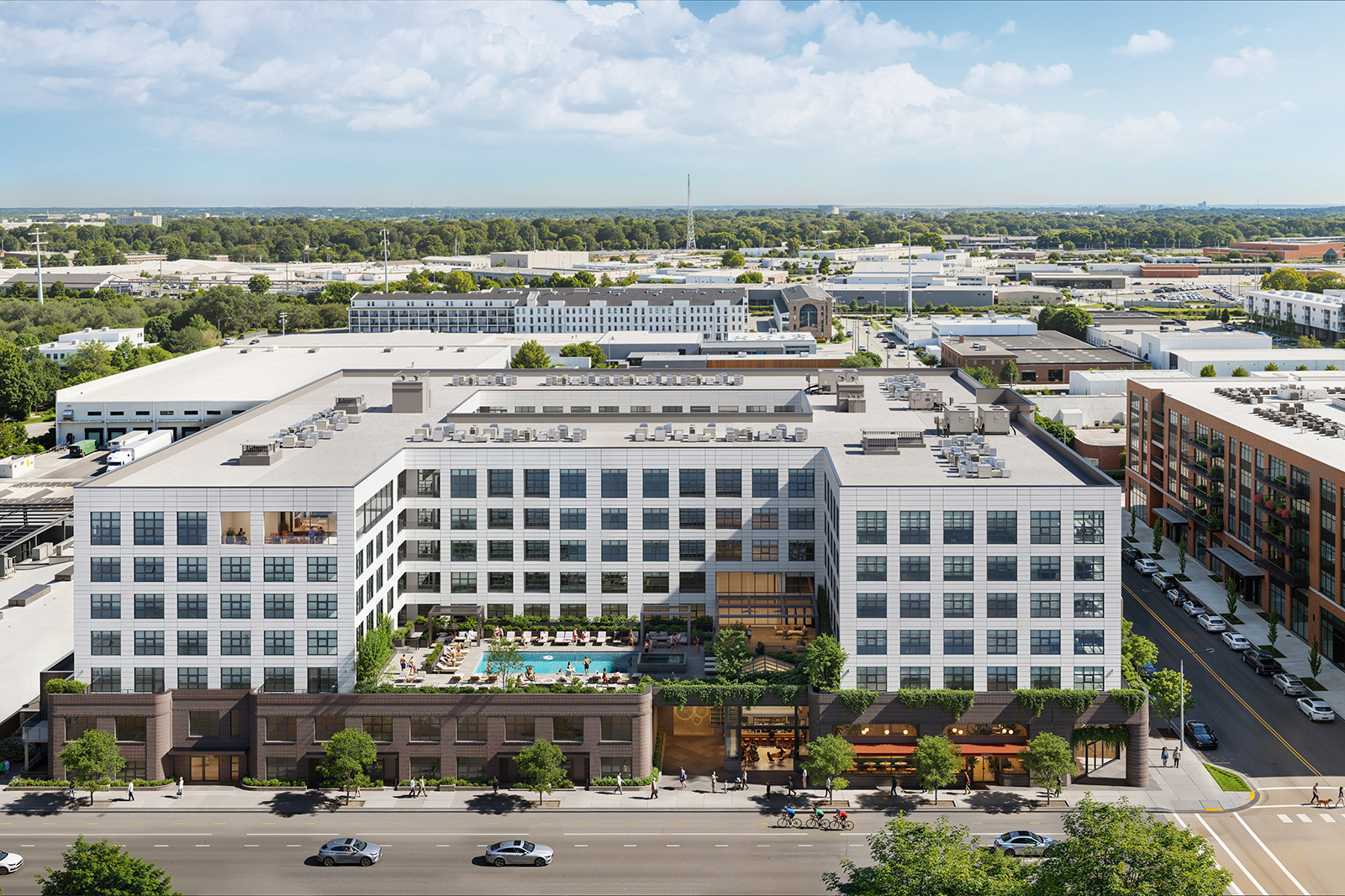
As Virginia's capital and largest metro by economic diversity, Richmond offers investors scale without Northern Virginia's price premium.
Richmond's economy spans state government, healthcare, finance, and higher education, anchored by employers like VCU Health and a deep base of corporate headquarters, a diversification that insulates the market from single-industry downturns better than smaller Virginia metros see. The city's historic housing stock (The Fan, Museum District, Church Hill) sits alongside more affordable, higher-cash-flow neighborhoods like South Richmond and Midlothian, giving investors a genuine choice between appreciation-focused and cash-flow-focused submarkets within the same metro. Redfin's neighborhood data shows this split clearly: The Fan scores a 90/100 Compete Score with homes selling in 11 days, while South Richmond offers entry prices under $300K with a still-competitive 66/100 score.
Richmond also runs one of the more fully-built-out STR permitting regimes in the state. Operators need a Short-Term Rental Permit ($300 for 2 years) through the city's Citizen Portal, required safety equipment, proof of residency documentation, and a signed STR affidavit. Richmond charges an 8% transient lodging tax on top of Virginia's 5.3% state sales tax on stays under 90 days. The city projects the local tax alone to generate over $3.2 million annually, dedicated to the Greater Richmond Convention Center.
Richmond posts a strong AirDNA market score of 92/100, led by an excellent Seasonality score (98) and Rental Demand score (92), though Revenue Growth (69) and Regulation (60) trail behind. Annual revenue per listing averages $33,216 (up 2.1% year-over-year), with an average daily rate of $152.55 (up 3.9%) and a strong 65% occupancy rate (down slightly, -0.8% YoY). Total active listings sit at 2,043, up 3.8% over the past year, a deep, established market rather than an emerging one.
Financing note: Harpoon Capital offers industry leading DSCR Loans for properties in Richmond and all throughout the market area. Check out our full DSCR Loans Program here, or if you want a quote on what terms look like today, fill out this two-minute form!
Sources: Zillow Home Value Index · BiggerPockets Market Finder · Redfin Market Data · AirDNA Market Data
Investor Takeaway: Richmond offers Virginia's best combination of economic diversification and submarket flexibility, letting investors choose between higher-cost, faster-appreciating close-in neighborhoods and more affordable, cash-flow-friendly ones without leaving the metro. Its STR framework is also one of the most clearly codified in the state: real clarity, but also real permit and tax overhead to underwrite.
Affordable, military-anchored stability in Hampton Roads
.jpg)
Norfolk and Virginia Beach anchor the Hampton Roads metro and offer some of the more affordable entry points among East Coast port cities, underpinned by the largest naval base in the world.
The regional economy runs on Naval Station Norfolk, the world's largest naval base, and the Norfolk Naval Shipyard just across the water in Portsmouth. Defense contractors fill in the rest of the employment base, alongside civilian anchors like Sentara Healthcare. The result is a rental market with unusually durable demand from military and shipyard personnel, where turnover tracks duty-station rotations rather than the broader economic cycle. Norfolk also stands out for landlord-friendly local infrastructure: the city runs its own "Rent Ready Norfolk" landlord education initiative, and each neighborhood is assigned a community relations police officer as a resource for property owners.
Virginia Beach adds a genuine tourism layer on top of the military and shipping economy. Its oceanfront draw makes it Hampton Roads' clearest short-term rental market, though performance varies a lot by submarket: oceanfront-adjacent neighborhoods have seen price declines even as inland, family-oriented neighborhoods post double-digit gains.
On the regulatory side, Norfolk is generally considered one of the more accommodating Hampton Roads jurisdictions for STR operators, allowing short-term rentals in most residential areas provided the owner obtains a permit and meets basic requirements. It's a more permissive stance than neighboring Chesapeake, where STRs are illegal throughout most of the city. Norfolk and Virginia Beach also sit in one of Virginia's 7% state sales tax localities for accommodations, rather than the 5.3% baseline that applies elsewhere in the state.
AirDNA tracks Norfolk jointly with Virginia Beach as a single "Norfolk/VA Beach" market, which posts a score of 46/100, the lowest of the six markets on this list, weighed down by a low Seasonality score (45) and modest Rental Demand (51), despite a strong Revenue Growth score (80). Annual revenue per listing averages $47,528 (up 3.7% year-over-year), with an average daily rate of $288.37 (up 3.1%) and occupancy of 58% (up 1.0% YoY). Total active listings are notably high at 6,848, but down 6.9% over the past year, a sign of some STR supply consolidation across the combined metro.
Financing note: DSCR Loans for investment properties in Norfolk and Virginia Beach allow for entity vesting available for LLC buyers, with a full range of prepayment penalty structures available to be tailored to individual investor strategy.
Sources: Zillow Home Value Index · Redfin Market Data · BiggerPockets Market Finder · AirDNA Market Data
Investor Takeaway: If you want a tenant base that barely notices a recession, Hampton Roads is hard to beat: Navy postings create rental demand that runs on its own schedule, not the economic cycle. Norfolk and Virginia Beach also happen to be the cheapest way into that stability on this list. One practical note: since AirDNA and BiggerPockets both report at the combined metro level, lean on the city-specific Zillow and Redfin numbers when underwriting a deal in either city specifically.
Thinking About One of These Markets?
Get a same-day DSCR Loan quote for a specific deal, or browse the full Harpoon Capital DSCR Loan Program to see rates, LTV, and qualification details before you keep reading.
Premium, low-volatility exposure to the DC metro
.jpg)
Alexandria sits just across the Potomac from Washington, D.C., giving investors direct exposure to the DC metro's federal-employment base at a price point that, while still high, runs below Arlington or the District itself.
Alexandria's rental demand is driven by proximity to federal employment, the Pentagon, and a dense concentration of government contractors and professional services firms. It's a tenant base that skews toward higher, more stable incomes than most Virginia markets on this list. Old Town Alexandria's historic core and Metro accessibility via the Yellow and Blue lines support strong long-term rental demand from young professionals commuting into DC, while neighborhoods like Del Ray post some of the tightest Compete Scores in the state (96/100, with homes selling in a median of 5 days). The trade-off is real: Alexandria's entry price runs roughly double Richmond's or Roanoke's, so returns lean toward appreciation and rent stability rather than raw cash-flow multiples.
Alexandria's STR framework is genuinely operator-friendly relative to some of its DC-metro neighbors. Operators must complete a short-term residential registration, apply for classification as an STR business, and pay a retail merchant's license tax within 30 days of starting, but the city does not require separate zoning or permitting approval solely for operating an STR. It's a notably lighter regulatory lift than neighboring Fairfax County, whose 60-night annual cap has drawn frequent host complaints.
Financing note: Harpoon Capital offers industry leading DSCR Loans for properties in Alexandria and all throughout the market area. Check out our full DSCR Loans Program here, or if you want a quote on what terms look like today, fill out this two-minute form!
Sources: Zillow Home Value Index · Redfin Market Data · BiggerPockets Market Finder
Investor Takeaway: Don't buy in Alexandria expecting cash flow. Buy here for tenant quality and rent stability tied to federal employment, the kind of low-drama return that comes with a real foothold in the DC metro. Its STR permitting is also lighter than you'd expect this close to the District.
College-town demand anchored by UVA

Charlottesville is Virginia's classic college-town play, anchored by the University of Virginia, with home values running meaningfully above the state's other secondary markets.
UVA is the dominant economic driver, generating steady demand for both off-campus student housing and the broader rental market that serves university staff, healthcare workers at UVA Health, and technology employers drawn to the area. The city's scenic setting in the foothills of the Blue Ridge Mountains adds a secondary quality-of-life draw that supports both long-term rental demand and, in outlying areas, short-term rental interest tied to wine-country and mountain tourism. Redfin's data shows Louisa County, just outside Charlottesville proper, posted a 14.7% surge in home sales recently while sales within the city limits declined, a signal that value-conscious buyers and renters alike are increasingly looking to the surrounding county rather than the city core.
Charlottesville posts a strong AirDNA market score of 90/100, powered by an excellent Seasonality score (93) and solid Revenue Growth (80) and Rental Demand (75) scores. Annual revenue per listing averages $42,151 (up 4.2% year-over-year), with an average daily rate of $266.04 (up 6.0%, the strongest ADR growth on this list) and occupancy of 47% (down 2.2% YoY). Total active listings sit at 2,317, essentially flat (down 0.5%) over the past year, a mature, stable STR market rather than one in rapid flux.
Financing note: Charlottesville short-term rentals can qualify on TTM actuals rather than long-term market rent, and Harpoon Capital is one of the most "STR-Friendly" DSCR Lenders around, offering qualification on STR purchases utilizing 100% of AirDNA or STR Narrative projections for revenue calculation in the DSCR Ratio!
Sources: Zillow Home Value Index · BiggerPockets Market Finder · Redfin Market Data · AirDNA Market Data
Investor Takeaway: Worth the premium? For UVA-driven rental demand and the strongest ADR growth on this list, yes. Investors priced out of the city core should look to surrounding Albemarle and Louisa County submarkets for similar rental demand at a better price.
The most affordable entry point on the list
.jpg)
Roanoke offers investors the lowest cost of entry among Virginia's mid-size metros, set in the Blue Ridge Mountains with a diversified, healthcare-anchored economy.
Roanoke's economy leans on healthcare, education, and manufacturing, with Carilion Clinic standing out as a major regional employer. Manufacturing and logistics firms round out the base, drawn by the city's transportation infrastructure. The market is characterized by affordable, often historic housing stock, and its setting in the Blue Ridge Mountains adds a quality-of-life and light-tourism dimension on top of its primarily residential rental base. Combined with the lowest median home price and highest rent growth on this list, Roanoke offers some of the strongest cash-flow math in Virginia.
On the regulatory side, operators need a special exception permit for STR use in certain zones, along with a Short-Term Rental Zoning Permit Application detailing parcel and tax map information. Roanoke businesses with a rental classification must also file an annual gross-receipts certification. STR hosts are subject to a 7% transient occupancy tax, effective since July 2021, plus applicable meals and consumer utility taxes depending on the property.
Roanoke posts one of the strongest submarket scores on this list at 91/100, driven by excellent Investability (85), Rental Demand (89), and Seasonality (89) scores, with Revenue Growth (52) as the relative laggard. Annual revenue per listing averages $27,167, the lowest dollar figure on this list and consistent with Roanoke's lower price point, though that figure is down 2.9% year-over-year. Average daily rate sits at $126.16 (down 1.4%), while occupancy holds at a solid 64% (down slightly, -0.9% YoY). Total active listings sit at 494, up a modest 1.0% over the past year.
Financing note: Roanoke deals often pencil no matter the strategy. The combination of low entry values and high rents, plus real STR potential, makes Roanoke or neighboring Salem a strong fit for Short Term Rentals, BRRRR Method projects, and Multifamily investments.
Sources: Zillow Home Value Index · Redfin Market Data · BiggerPockets Market Finder · AirDNA Market Data
Investor Takeaway: Cash flow is the whole pitch here. Roanoke pairs the lowest entry price on this list with the strongest rent growth and one of the highest AirDNA submarket scores we found anywhere in Virginia.
A four-season vacation-rental corridor
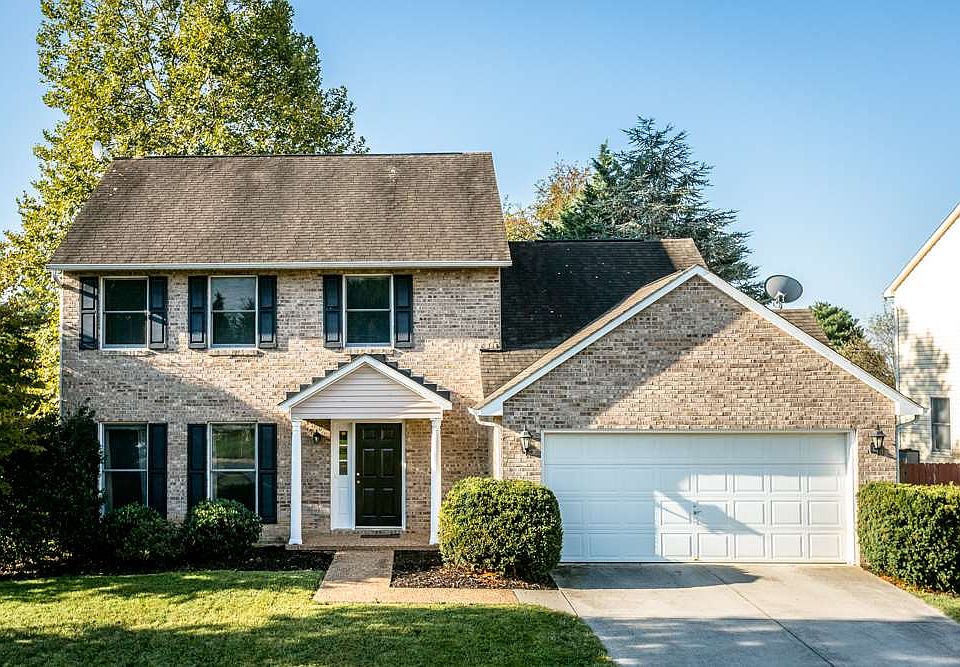
The outlier on this list, and intentionally so. The Shenandoah Valley, anchored by small mountain communities like McGaheysville near Massanutten Resort, represents a distinct investment thesis built around short-term, vacation-rental cabin and mountain-view properties rather than traditional long-term rentals.
This is a lifestyle-and-recreation market first, and a jobs-and-population-growth market a distant second. The Valley stretches roughly 200 miles between the Blue Ridge Mountains and the Alleghenies, taking in Harrisonburg (home to James Madison University), Staunton, Winchester, and smaller resort towns along the way, including McGaheysville. Its biggest draw for vacation-rental investors is Massanutten Resort, a four-season destination near McGaheysville: skiing in winter, an indoor waterpark year-round, and golf once the snow melts, which keeps tourism demand flowing across all four seasons instead of tied to one. Add in Shenandoah National Park, the Blue Ridge Parkway, and a growing wine and cider scene around Harrisonburg, and the region supports a wide mix of cabins and mountain homes, many explicitly marketed as furnished, turnkey short-term rental investments. Proximity to the DC metro (about two hours) and Richmond (about ninety minutes) makes the whole corridor an easy drive-to destination for the same renter base driving demand in Alexandria and Richmond.
AirDNA does not track McGaheysville as its own submarket, since it's too small to register independently. For sizing purposes, we're using two proxies below: the broader Shenandoah Valley market, and Staunton, the nearest individually tracked submarket.
The Shenandoah Valley market overall posts an outstanding score of 97/100, driven by strong Investability (90) and Seasonality (94) scores. Annual revenue per listing averages $42,715 (up 3.0% year-over-year), with an average daily rate of $259.09 (up 4.3%) and occupancy of 49% (down 1.5% YoY). Total active listings sit at 3,486, up 3.8% over the past year.
Staunton, the nearest individually-tracked submarket, posts a score of 91/100 with a notably strong Revenue Growth score of 91, the highest Revenue Growth score of any submarket referenced in this article. Annual revenue per listing averages $32,536, up a striking 8.3% year-over-year, with an average daily rate of $196.36 (up 5.0%) and occupancy of 50% (up 2.4% YoY). Total active listings sit at just 230, up 3.1% over the past year, a much smaller, tighter market than the Valley-wide average, and likely a closer directional proxy for a small resort-adjacent community like McGaheysville than the broader regional figure.
Financing note: Cabin purchases here are frequently rural properties, qualified on TTM actuals or projected revenue against PITIA, with the DSCR ratio and LTV set by the appraisal and rental analysis.
Sources: Zillow Home Value Index · AirDNA Market Data (Shenandoah Valley and Staunton submarket)
Investor Takeaway: This one isn't for everyone, and that's kind of the point. If you specifically want a four-season vacation-rental play, both Staunton and the Valley-wide figures point to strong fundamentals for small resort towns like McGaheysville, even though AirDNA doesn't track them individually.
Source: AirDNA, current as of 2026. Scores and figures reflect each market or submarket as defined by AirDNA and may not correspond 1:1 with city or county boundaries. McGaheysville itself is not individually tracked by AirDNA; Shenandoah Valley and Staunton are shown as the closest available proxies.
A few patterns stand out. Staunton posts the fastest STR revenue growth on this list at +8.3%, ahead of even the broader Shenandoah Valley region, reinforcing the case for the wider Shenandoah corridor as a genuine growth story. Richmond and Roanoke both combine high AirDNA scores with deep, mature listing bases, suggesting stable rather than speculative STR demand. The combined Norfolk/VA Beach market shows the most meaningful listing contraction, down 6.9% over the past year, so check current listings before assuming continued STR supply growth there.
Virginia's real estate landscape offers a strategy for nearly every type of investor:
Market-level data is a starting point, not a substitute for underwriting the specific property, neighborhood, and rental strategy in front of you. Virginia leaves short-term rental regulation almost entirely to individual cities and counties, so rules can vary sharply even between neighboring jurisdictions. Norfolk's relatively permissive approach versus Chesapeake's near-total ban is a good example. Confirm local zoning and registration requirements directly before you close.
Yes. Virginia has no rent control and no statewide cap on security deposits, and short-term rental regulation is left to individual cities and counties rather than set at the state level. Local rules still vary widely, so confirm the specific ordinance for the city or county you're buying in before you close.
No. Out-of-state and first-time investors can buy investment property in Virginia without any license. A DSCR loan utilizes the property's rental income for qualification rather than your personal income or professional credentials, which is part of why it's such a common financing tool for out-of-state buyers.
A DSCR (Debt Service Coverage Ratio) loan qualifies a property primarily based on the property (its value, value and location) relative to its mortgage payment, rather than the borrower's personal income or tax returns. If the property's projected or actual rent covers the mortgage payment (a DSCR of 1.00x or higher), it's generally easier to qualify, and Harpoon Capital also offers options for deals below 1.00x.
Based on AirDNA data, the Shenandoah Valley and Richmond post the highest overall STR market scores on this list (97/100 and 92/100, respectively), while Staunton, in the Shenandoah Valley, shows the fastest short-term rental revenue growth at 8.3% year-over-year.
Harpoon Capital's DSCR loan program allows as little as 15% down on qualifying purchases, up to 85% LTV, with cash-out refinances available up to 80% LTV. Exact terms depend on the property, credit profile, and DSCR ratio. Fill out our two-minute quote form to see specific numbers for your deal.
Ready to Run the Numbers on a Virginia Deal?
Whether you're eyeing Richmond, Roanoke, or a cabin near McGaheysville, get a same-day rate and terms with our two-minute DSCR quote form, or explore the full Virginia DSCR Loans Program to see how we qualify the property, not just the borrower.
Sources: Zillow Home Value Index & Rental data, Redfin housing market data, BiggerPockets Market Finder, AirDNA market and submarket data (airdna.co). Data collected as of September 2026, ahead of the 2027 investing season.
This article is for informational purposes only and does not constitute investment, legal, or financial advice. Harpoon Capital encourages investors to conduct independent due diligence before making any real estate investment decision.