


By Robin Simon, President, Harpoon Capital · About · LinkedIn · Author, The Book on DSCR Loans (Available on Amazon)

The best North Carolina markets for real estate investors in 2027 offer entry points from about $390,000 in Durham and Charlotte and strong short-term rental potential, led by $68,488 in average annual STR revenue in Oak Island. North Carolina pairs a fast-growing tech and finance corridor with some of the most varied vacation real estate on the East Coast. There's the Research Triangle's tech and biotech economy in Raleigh/Durham, the banking hub of Charlotte, a mountain arts town in Asheville still working through hurricane recovery, a barrier-island vacation market in the Outer Banks, a golf-tourism economy in Pinehurst, and a beach town in Oak Island. Home prices run up to about $600,000 in Dare County and Oak Island (Zillow, August 2026). Investors buying here typically finance with North Carolina DSCR loans, which are qualified primarily based on the property rather than the borrower's personal income.
This breakdown uses market data collected as of October 2026, the most current snapshot available heading into next year's buying season. If you're evaluating a purchase in the final months of 2026, keep in mind that your first full year of rental income, appreciation, or short-term rental revenue lands in 2027 regardless of when you close. A deal you underwrite today is already a 2027 investing decision, just one made with the freshest data available right now.
North Carolina is a landlord-friendly state without rent control, though state law does cap security deposits at up to two months' rent. Short-term rentals are governed statewide by the Vacation Rental Act, which sets the landlord-tenant mechanics for stays under 90 days, but licensing and zoning are set city by city. That local patchwork matters here more than in most states: BNBCalc reports that Charlotte requires no STR permit at all and Raleigh charges an annual zoning permit, while Asheville's zoning code effectively blocks whole-unit rentals outside one small district.
Below, we break down six North Carolina markets worth watching, using current data from Zillow, Redfin, BiggerPockets, and AirDNA.
Note: Home price appreciation and rent-growth figures below come from Zillow's Home Value Index (ZHVI), Redfin's median sale price data, and BiggerPockets' Market Finder, which use different methodologies and can vary from one another. We've cited both where available so you can compare.
Research Triangle jobs with one of the strongest STR scores on this list

Raleigh and Durham anchor North Carolina's Research Triangle, and both the long-term rental fundamentals and the short-term rental numbers here are strong.
North Carolina State University and WakeMed Health & Hospitals anchor Raleigh's side of the Triangle, while Duke University and Duke Health do the same for Durham, giving the metro a job base that spans technology, biotech, healthcare, and higher education. BNBCalc reports that Raleigh permits short-term rentals in most residential and mixed-use zoning districts but requires an annual zoning permit, currently $278, along with occupancy, advertising and record-keeping rules, and that the rules get enforced through the permit and fee schedule. Wake County adds a 6% room occupancy tax on top of North Carolina's 7.25% combined sales tax.
Raleigh/Durham posts a strong AirDNA score of 94/100, driven by an excellent Seasonality score of 96 and a strong Rental Demand score of 92. Annual revenue per listing averages $32,354 (up 4.7% year-over-year), with an average daily rate of $154.94 (up 4.1%) and occupancy of 62% (up slightly, +0.4%). Total active listings sit at 5,067, up 3.0% over the past year.
Financing note: Harpoon Capital offers industry leading DSCR Loans for properties in Raleigh/Durham and all throughout the market area. Check out our full DSCR Loans Program here, or if you want a quote on what terms look like today, fill out this two-minute form!
Sources: Zillow Home Value Index↗ · BiggerPockets Market Finder↗ · BNBCalc Raleigh STR Guide↗ · AirDNA↗
Investor Takeaway: Raleigh/Durham checks nearly every box: a diversified, education-and-healthcare-driven economy, the strongest rent growth on this list, and an AirDNA score in the 90s. Budget for the $278 annual permit and Wake County's occupancy tax from day one, since Raleigh enforces its rules through the permit itself.
The fastest appreciation on BiggerPockets, with no STR permit

Charlotte is North Carolina's largest city and its financial center, and it posted the strongest appreciation on BiggerPockets of any market on this list.
Bank of America and Wells Fargo both headquarter major operations in Charlotte, anchoring a finance-driven economy that draws steady in-migration and supports both long-term rental demand and continued urban development. BiggerPockets' 11.58% appreciation figure is the highest in this article, just ahead of Pinehurst's 11.45%, though Zillow's typical value is down 1.1% over the past year, so the recent trend is cooler than that headline. The STR rules are lighter than many investors expect: BNBCalc reports that Charlotte has no short-term rental permit, license or registry, because North Carolina law bars cities from requiring one, and its zoning ordinance contains no short-term rental use. What hosts owe instead is tax, 8.25% in state and local sales tax from July 2026 plus Mecklenburg County's 8% room occupancy tax, and the city's general nuisance and noise rules still apply.
Charlotte posts an AirDNA score of 83/100, with an excellent Seasonality score of 96 and a strong Rental Demand score of 86, though Revenue Growth (55) is more middling. Annual revenue per listing averages $33,793, down 0.8% year-over-year, with an average daily rate of $168.23 (up 1.9%) and occupancy of 60% (down 2.4%). Total active listings sit at 5,715, up 5.5% over the past year, meaningful new STR supply arriving while occupancy slips.
Financing note: Harpoon Capital offers industry leading DSCR Loans for properties in Charlotte and all throughout the market area. Check out our full DSCR Loans Program here, or if you want a quote on what terms look like today, fill out this two-minute form!
Sources: Zillow Home Value Index↗ · BiggerPockets Market Finder↗ · BNBCalc Charlotte STR Guide↗ · AirDNA↗
Investor Takeaway: Charlotte's BiggerPockets appreciation and rent growth make the long-term case, even with Zillow showing a small dip. For STR plays, the barrier isn't a permit, since the city doesn't require one, but taxes, HOA rules and a growing supply of competing listings, so underwrite occupancy conservatively.
A mountain market recovering from Hurricane Helene, with a real STR zoning catch

Asheville took the hardest hit of any market in this article over the past two years. Hurricane Helene devastated the region in September 2024, and the market is still working through that recovery, even as the underlying tourism and arts economy that made Asheville popular in the first place hasn't gone anywhere.
Asheville's economy runs on healthcare, tourism, and a genuinely distinctive arts and culture scene set in the Blue Ridge Mountains. Redfin data compiled by Stacker for January to June 2026 put the Asheville metro's median sale price at about $443,000, down 1.6% year-over-year, with home sales up 7.1%, a market recalibrating rather than collapsing. Federal recovery funding, including a $225 million HUD disaster-recovery grant to the city for infrastructure, housing, and economic revitalization, is still flowing into the region.
Here's the catch that matters most for STR investors specifically: BNBCalc reports that Asheville's zoning code confines new whole-unit short-term rentals to a small Resort district, much of which is already occupied by hotel-style properties rather than the single-family homes most investors picture. Buy an ordinary house or condo anywhere else in the city and run it as a full-time nightly rental, and that plan doesn't clear zoning, regardless of how well the numbers pencil. What's actually legal for most Asheville hosts is the homestay model: living in the home and renting one or two bedrooms, not the whole-unit STR the AirDNA figures below describe.
Asheville posts one of the strongest AirDNA scores in this entire article at 94/100, anchored by a perfect Revenue Growth score of 100 and a strong Seasonality score of 80. Annual revenue per listing averages $42,301, up 17.6% year-over-year, with an average daily rate of $234.31 (up 12.3%) and occupancy of 55% (up 3.9%). Total active listings sit at 5,416, up 1.3% over the past year. Given the zoning constraint above, treat these figures as describing the existing STR inventory rather than a market broadly open to new whole-unit purchases.
Financing note: Asheville short-term rentals can qualify on TTM actuals rather than long-term market rent and Harpoon Capital is one of the most "STR-Friendly" DSCR Lenders around, offering qualification on STR purchases utilizing 100% of AirDNA or STR Narrative projections for revenue calculation in the DSCR Ratio!
Sources: Zillow Home Value Index↗ · BiggerPockets Market Finder↗ · BNBCalc Asheville STR Guide↗ · Stacker Asheville Market Review↗ · AirDNA↗
Investor Takeaway: Asheville's AirDNA numbers look excellent, and the recovery story is real, but the zoning restriction on new whole-unit STRs is the detail that actually determines whether those numbers apply to a property you can buy. This is a market for long-term rental investors first, and a very selective STR play second.
Thinking About One of These Markets?
Get a same-day DSCR Loan quote for a specific deal, or browse the full Harpoon Capital DSCR Loan Program to see rates, LTV, and qualification details before you keep reading.
Big STR revenue, hidden behind a low score

The Outer Banks isn't one market so much as a string of them, each with its own character as you move down the strip: Corolla and Duck lean upscale with larger, amenity-heavy homes, Kill Devil Hills and Nags Head offer a more classic beach-town feel at a lower price point, and Hatteras and Ocracoke trade convenience for a quieter, more remote draw. That range gives investors real flexibility to match a property type and budget to a specific slice of the coastline rather than betting on a single homogeneous market. And despite the variety in price and personality town to town, the underlying constant holds up everywhere along the strip: some of the strongest short-term rental income of any vacation market in North Carolina.
This is a highly seasonal vacation market by design, and that's exactly what shows up in the AirDNA figures below. AirDNA scores the market's Seasonality at just 42 out of 100, meaning income is concentrated in the summer months, so any investor modeling a proforma here needs realistic off-season occupancy assumptions rather than simply annualizing summer rates. The Short Term Shop reports that anyone renting for fewer than 90 days must register with the Dare County Tax Department and pay a county occupancy tax of about 6%, that some Outer Banks towns add a business privilege license or rental registration, and that there's no county-wide rental cap or broad minimum-stay rule, though HOAs can limit rental weeks.
The Outer Banks posts an AirDNA score of just 48/100, weighed down by weak Seasonality and Revenue Growth scores (42 each), even as Investability (82) and Rental Demand (79) both score well. Annual revenue per listing averages $57,401, the second-highest in this article after Oak Island, though that's down 2.2% year-over-year. Average daily rate is $410.55, also second only to Oak Island, up 5.5%. Occupancy sits at 59%, down 6.9%. Total active listings sit at 6,937, essentially flat (+0.3%).
Financing note: Distressed or seasonal coastal deals like the Outer Banks often qualify on TTM actuals or STR Narrative revenue projections rather than a flat annualized number, with rural property provisions available for barrier-island addresses that don't fit a standard suburban file.
Sources: Zillow Home Value Index↗ · The Short Term Shop Outer Banks STR Guide↗ · AirDNA↗
Investor Takeaway: Read the low score as mostly a seasonality artifact, not a demand problem. The Outer Banks generates more STR revenue per listing than any market in this article except Oak Island; the trade-off is that much of it arrives in the summer season, and your underwriting needs to reflect that concentration honestly.
A golf-tourism economy with steady, if unremarkable, numbers

Golf is the anchor in Pinehurst, but the market around it is broader than a single famous course: the historic village, the surrounding golf communities, and nearby Southern Pines each offer a slightly different flavor of the same golf-and-leisure lifestyle. Major tournaments bring in concentrated waves of visitors throughout the year, while a genuine year-round retiree and second-home population keeps demand steadier than most vacation markets manage. Together, that mix produces one of the more consistent rental performers in this part of North Carolina.
FirstHealth of the Carolinas is a major employer in the area, according to BiggerPockets, and the local economy otherwise leans heavily on healthcare, education, and tourism tied to Pinehurst's championship golf courses. The gap between Zillow's citywide home value ($537,061) and BiggerPockets' broader metro median ($351,400) reflects Pinehurst proper's premium over the surrounding Moore County area, worth knowing if you're comparing listings across the metro rather than in Pinehurst itself.
Pinehurst posts a submarket score of 58/100, a middling result across the board: Investability (66), Rental Demand (61), Revenue Growth (65), Seasonality (67), and Regulation (68) are all clustered in a similar range without a standout strength or weakness. Annual revenue per listing averages $42,490, flat year-over-year, with an average daily rate of $244.99 (down 4.6%) and occupancy of 53% (up 3.9%). Total active listings sit at 780, up 5.7% over the past year.
Financing note: Harpoon Capital offers industry leading DSCR Loans for properties in Pinehurst and all throughout the market area. Check out our full DSCR Loans Program here, or if you want a quote on what terms look like today, fill out this two-minute form!
Sources: Zillow Home Value Index↗ · BiggerPockets Market Finder↗ · AirDNA↗
Investor Takeaway: Pinehurst isn't the standout market on this list in either direction, and that's the point: steady appreciation, steady rent growth, and an STR market that isn't surging or declining sharply. It's a fit for investors who want golf-tourism exposure without the volatility of a market like the Outer Banks.
A beach market cooling off a 2021-2022 peak
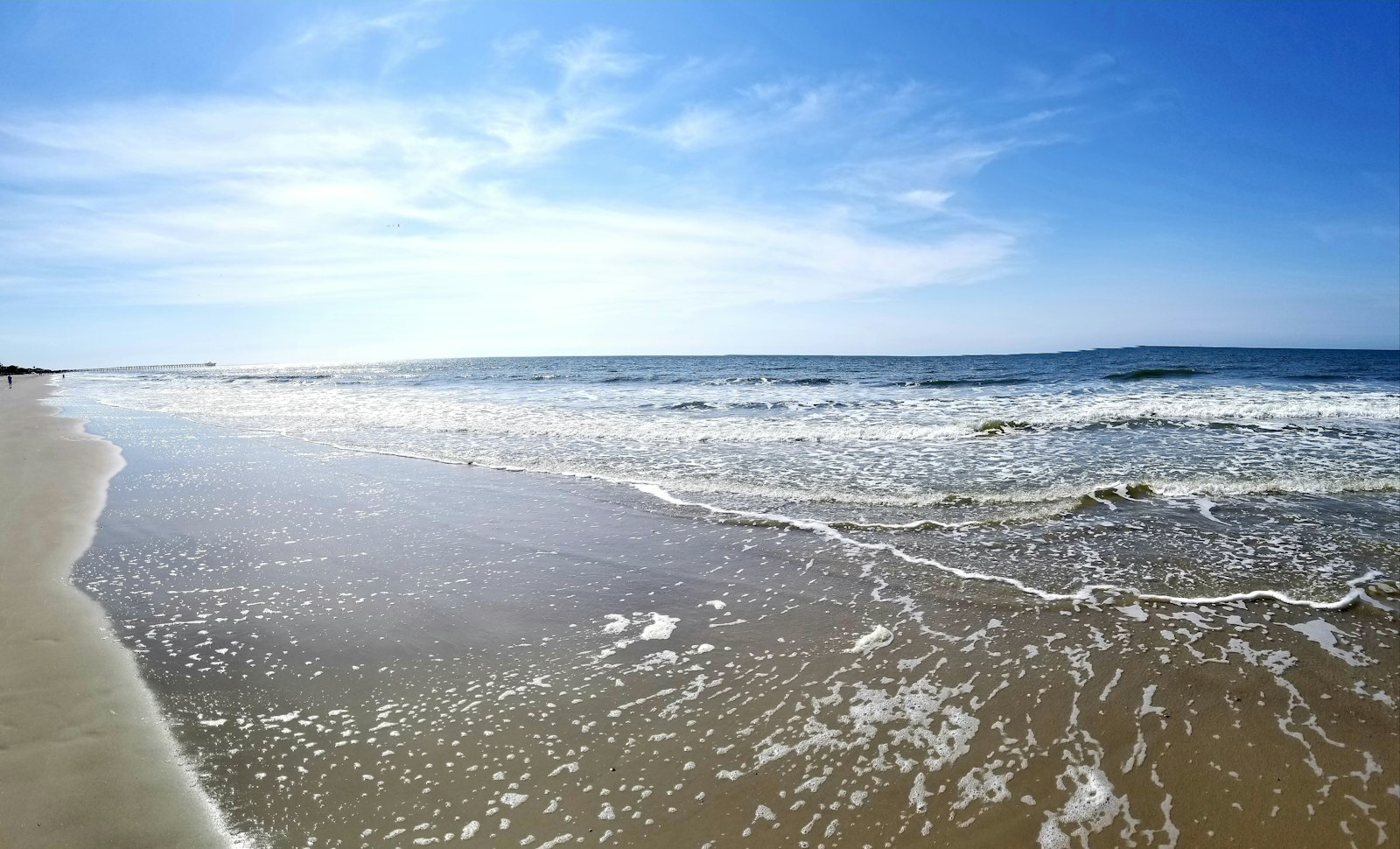
Oak Island's nine miles of beach are dotted with everything from decades-old family cottages to newer, amenity-rich builds, giving investors real range in both price point and rental strategy. Its quieter, more residential character, paired with a loyal base of repeat vacationers, sets it apart from some of the busier, higher-density beach markets along the Southeast coast. That steady underlying demand is part of what makes Oak Island's current pricing, which has cooled from its 2021-2022 peak, worth a closer look.
What the Redfin data shows is a market with real slack, even as Zillow's typical value has risen: the median sale price down 9.5%, homes taking 89 days to sell instead of 57, and a Compete Score of 28, a pattern consistent with the broader 2021-2022 coastal Carolina boom working its way out of the system. For investors, a slower, more patient seller pool can translate into more room to negotiate than Oak Island offered three years ago, particularly with owners who bought near the peak and are now less leveraged for a quick sale.
Oak Island posts a submarket score of 76/100, with a strong Investability score of 88 and an excellent Revenue Growth score of 85, though Seasonality (44) drags on the composite the same way it does in the Outer Banks. Annual revenue per listing averages $68,488, up a striking 12.7% year-over-year, the highest dollar figure of any North Carolina market in this article. Average daily rate is $469.02 (up 12.0%), also the highest on this list. Occupancy sits at 57% (up 0.4%). Total active listings sit at 2,180, up 4.3% over the past year.
Financing note: Oak Island deals bought below a 2021-2022 peak often work well as cash-out refinance or BRRRR plays once stabilized, qualified on TTM actuals or projected STR revenue.
Sources: Zillow Home Value Index↗ · Redfin Housing Market↗ · AirDNA↗
Investor Takeaway: Oak Island's STR revenue numbers are the strongest in North Carolina by a wide margin, and the softening sale prices suggest this could be a better entry point than the market offered at its 2021-2022 peak. Verify pricing against recent comps, since Zillow and Redfin currently point in different directions.
| MARKET | AIRDNA SCORE |
ANNUAL REVENUE |
AVG. DAILY RATE |
OCCUPANCY | YOY LISTING GROWTH |
|---|---|---|---|---|---|
| Asheville | 94 | $42,301 (+17.6%) |
$234.31 (+12.3%) |
55% (+3.9%) | +1.3% (5,416 listings) |
| Raleigh/Durham | 94 | $32,354 (+4.7%) |
$154.94 (+4.1%) |
62% (+0.4%) | +3.0% (5,067 listings) |
| Charlotte | 83 | $33,793 (-0.8%) |
$168.23 (+1.9%) |
60% (-2.4%) | +5.5% (5,715 listings) |
| Oak Island | 76 | $68,488 (+12.7%) |
$469.02 (+12.0%) |
57% (+0.4%) | +4.3% (2,180 listings) |
| Pinehurst | 58 | $42,490 (+0.0%) |
$244.99 (-4.6%) |
53% (+3.9%) | +5.7% (780 listings) |
| Outer Banks | 48 | $57,401 (-2.2%) |
$410.55 (+5.5%) |
59% (-6.9%) | +0.3% (6,937 listings) |
Source: AirDNA, current as of 2026. Scores and figures reflect each market or submarket as defined by AirDNA and may not correspond 1:1 with city or county boundaries. As of October 2026
A few patterns stand out. Oak Island and the Outer Banks post the two highest revenue figures in this article despite middling-to-low composite scores, driven down by seasonality rather than weak demand. Asheville's near-perfect Revenue Growth score sits in tension with real zoning limits on new STR supply, worth resolving before assuming the headline number applies to a property you can actually buy. Charlotte and Pinehurst are adding listings fastest (+5.5% and +5.7%), and in Charlotte that new supply comes with falling occupancy (-2.4%) and slightly lower revenue (-0.8%), a combination worth watching for signs of oversupply.
North Carolina's real estate landscape offers a strategy for nearly every type of investor:
Market-level data is a starting point, not a substitute for underwriting the specific property, neighborhood, and rental strategy in front of you. North Carolina's STR rules vary sharply by city, Asheville's zoning is meaningfully more restrictive than Raleigh's or Charlotte's, so confirm what's actually legal at your specific address before you close, not just what the metro-level data suggests.
If you are ready to invest in one of these markets, start with our North Carolina DSCR loans page.
Sources: Zillow Home Value Index & Rental data, Redfin housing market data, BiggerPockets Market Finder, AirDNA market and submarket data (airdna.co), BNBCalc North Carolina, Raleigh, Charlotte and Asheville STR guides, The Short Term Shop's Outer Banks guide and Stacker's Asheville market review. Data collected as of October 2026, ahead of the 2027 investing season.
Yes. North Carolina has no rent control, though state law caps security deposits at up to two months' rent depending on the lease term. Short-term rentals are governed by the statewide Vacation Rental Act, but zoning and licensing for STRs are set city by city, and the differences can be significant, Asheville limits whole-home rentals to one small district, Raleigh requires an annual permit, and Charlotte requires no STR permit at all.
No. Out-of-state and first-time investors can buy investment property in North Carolina without any license. A DSCR loan qualifies you primarily based on the property itself rather than your personal income or professional credentials, which is part of why it's such a common financing tool for out-of-state buyers.
A DSCR (Debt Service Coverage Ratio) loan qualifies a borrower primarily based on the property (its rent, value and location) relative to its mortgage payment, rather than the borrower's personal income or tax returns. If the property's projected or actual rent covers the mortgage payment (a DSCR of 1.00x or higher), it's generally easier to qualify, and Harpoon Capital also offers options for deals below 1.00x.
The Outer Banks' AirDNA score is pulled down by weak Seasonality and Revenue Growth scores (42 each), reflecting how concentrated its tourism demand is in the summer months. Its Annual Revenue ($57,401) and Average Daily Rate ($410.55) are both second only to Oak Island in this article, so the low composite score reflects seasonal concentration, not weak underlying demand.
Probably not, and this is worth confirming before you buy. Asheville's zoning code limits new whole-unit short-term rentals to a small Resort district, much of which is already occupied by hotel-style properties. Outside that district, the legal option for most hosts is the homestay model: living in the property and renting one or two bedrooms, not the entire unit.
Harpoon Capital's DSCR loan program allows as little as 15% down on qualifying purchases, up to 85% LTV, with cash-out refinances available up to 80% LTV. Exact terms depend on the property, credit profile, and DSCR ratio. Fill out our DSCR Loan Application to see specific numbers for your deal.
Ready to Run the Numbers on a North Carolina Deal?
Whether you're eyeing Raleigh's Research Triangle growth or a beach deal in Oak Island, get a same-day rate and terms with our two-minute DSCR quote form, or explore the full North Carolina DSCR Loans Program to see how we qualify the property, not just the borrower.
This article is for informational purposes only and does not constitute investment, legal, or financial advice. Harpoon Capital encourages investors to conduct independent due diligence before making any real estate investment decision.


